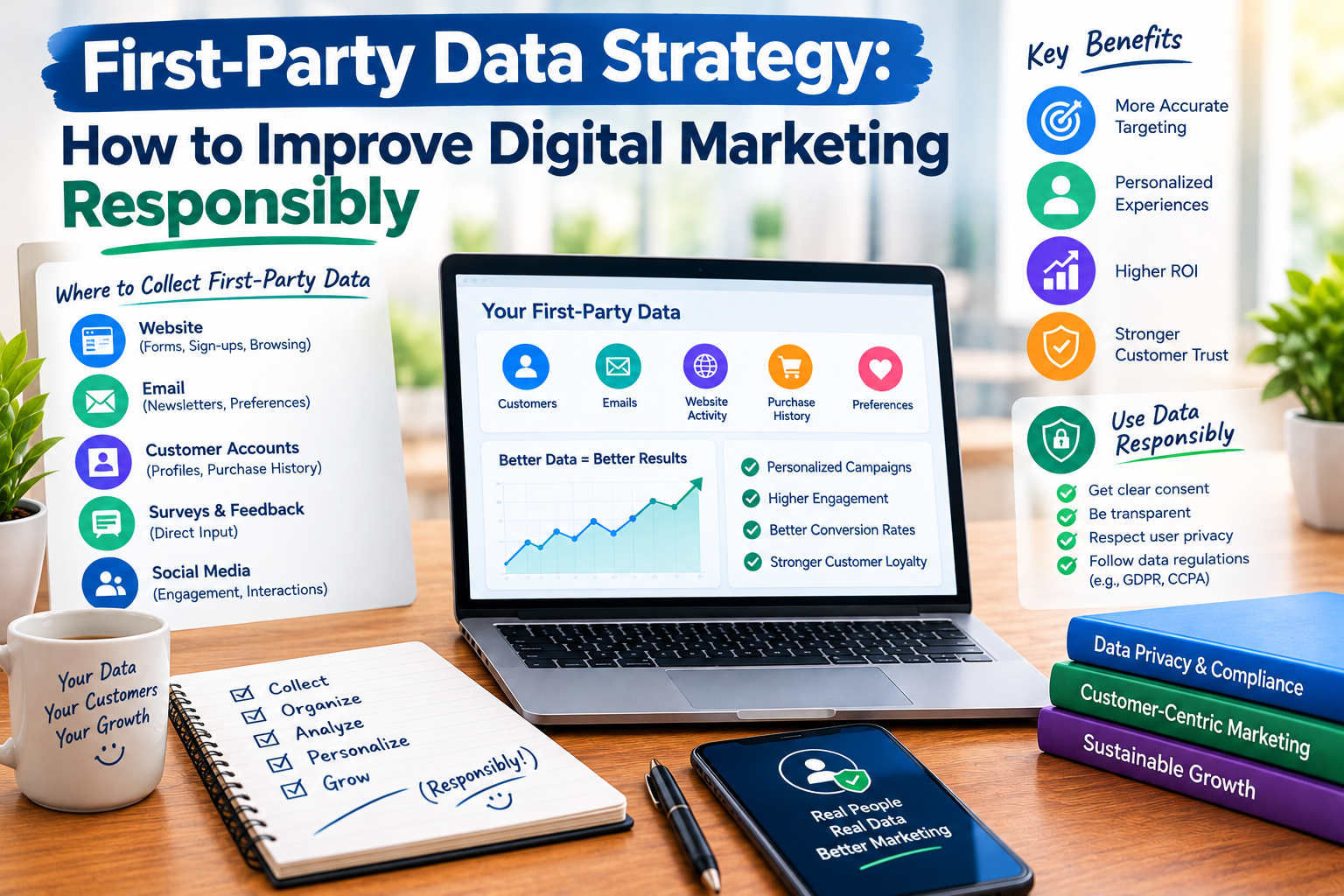
What Is First-Party Data?
First-party data is information that a business collects directly through its own interactions with customers or website visitors.
Examples include:
- Newsletter subscriptions
- Purchase records
- Customer feedback
- Website interactions
- Service inquiries
- Voluntarily provided preferences
Businesses should explain their data practices and follow applicable privacy and consent requirements.
Why First-Party Data Matters
A responsible first-party data strategy can help businesses:
- Understand customer needs
- Improve communication relevance
- Identify common customer questions
- Support customer retention
- Evaluate marketing performance
- Improve customer experiences
The value of data depends on its accuracy, relevance, and appropriate use.
Define Your Data Collection Goals
Before collecting information, decide what you need to understand.
For example, a digital marketing agency might collect service preferences through a contact form to respond to inquiries more effectively.
Avoid collecting information that is unnecessary for the stated purpose.
Use Consent and Privacy Controls
Explain what information you collect and how you intend to use it.
Depending on the applicable requirements, businesses may need to obtain consent, provide opt-out options, or offer additional privacy controls.
Do not assume that information shared for one purpose can automatically be used for every marketing activity.
Organize and Protect Customer Data
Businesses should:
- Maintain accurate records
- Limit access to authorized staff
- Use appropriate security measures
- Review data retention periods
- Remove information when no longer needed
- Document relevant data-processing practices
Avoid storing sensitive information without a clear, lawful, and necessary reason.
Use Data to Improve Marketing
Where permitted, first-party data can support activities such as:
- Sending relevant educational emails
- Improving customer onboarding
- Identifying frequently requested services
- Understanding customer feedback
- Evaluating campaign performance
- Improving support communication
Personalization should be useful and respectful rather than intrusive.
Measure Results Responsibly
Depending on your goals, track:
- Email engagement
- Qualified leads
- Conversion rates
- Customer retention
- Customer satisfaction
- Data accuracy
Use appropriate aggregation and access controls to reduce unnecessary exposure of personal information.
Leave a Reply