Tag: Digital Marketing

  • Digital Marketing Dashboard: The Essential KPIs Every Business Should Track

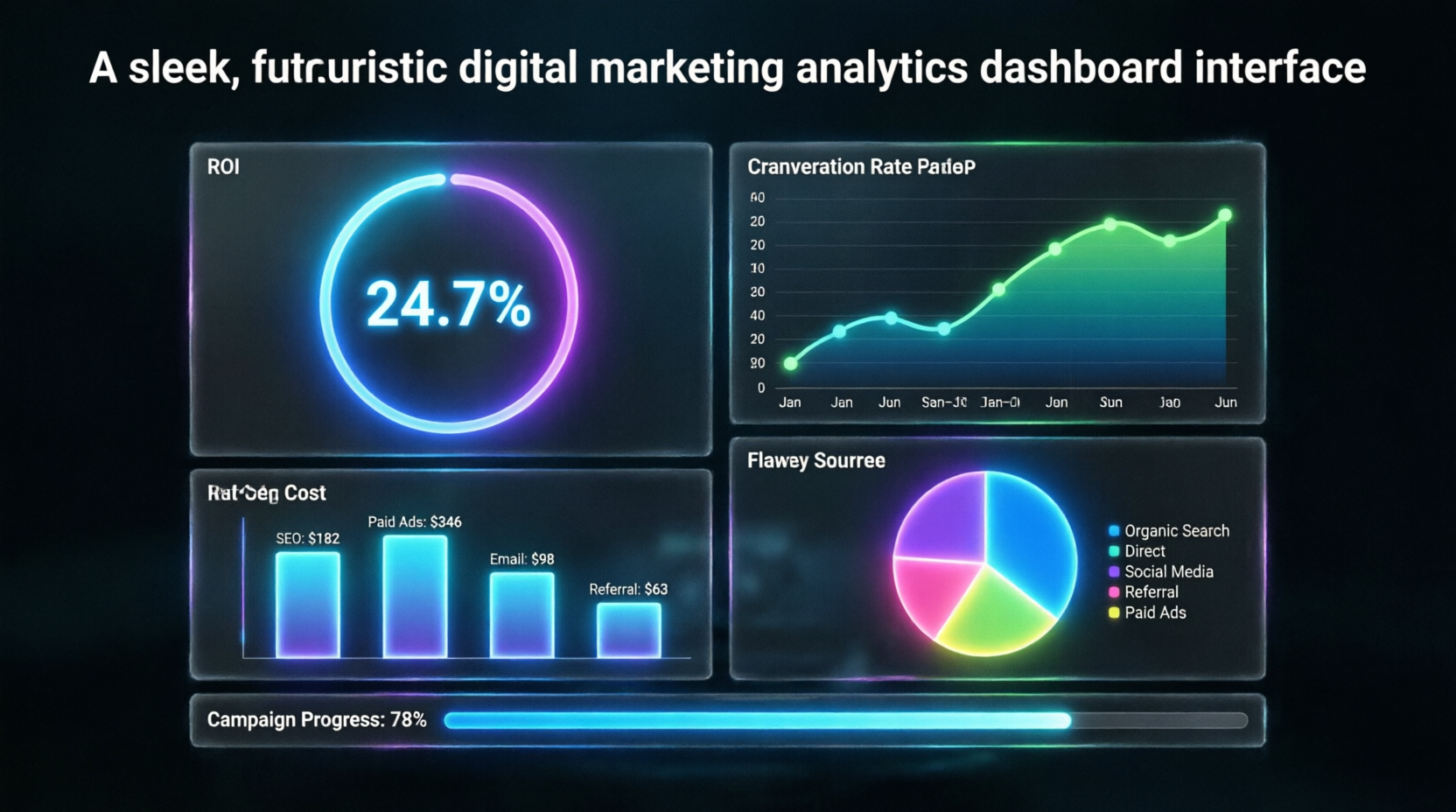
    Digital Marketing Dashboard: The Essential KPIs Every Business Should Track

    Introduction

    Digital marketing generates large amounts of data.

    The challenge isn’t collecting data.

    The challenge is understanding which numbers actually matter.

    SEO KPIs

    Track:

    • Organic clicks
    • Impressions
    • Search visibility
    • Important keyword performance
    • Organic conversions
    • Indexed pages

    PPC KPIs

    Monitor:

    • Ad spend
    • Clicks
    • CTR
    • CPC
    • Conversions
    • Cost per conversion
    • ROAS

    Website KPIs

    Track:

    • Users
    • Engagement
    • Landing pages
    • Conversion rate
    • Form submissions
    • Revenue

    Social Media KPIs

    Depending on your goals:

    • Reach
    • Engagement
    • Video views
    • Website traffic
    • Leads
    • Conversions

    Business KPIs

    Ultimately, the most important metrics are:

    Leads → Customers → Revenue → Profitability

    Google Analytics continues to add features for better cross-channel reporting, campaign analysis, attribution, and budgeting in 2026.

    Build a Simple Dashboard

    A useful dashboard should answer:

    1. How much traffic are we receiving?
    2. Where is it coming from?
    3. How many leads are we generating?
    4. What does each lead cost?
    5. Which channels generate customers?
    6. How much revenue is marketing producing?

    Conclusion

    A marketing dashboard should make decision-making easier—not simply display hundreds of numbers.
  • AI Agents and Digital Marketing: What Businesses Need to Prepare For

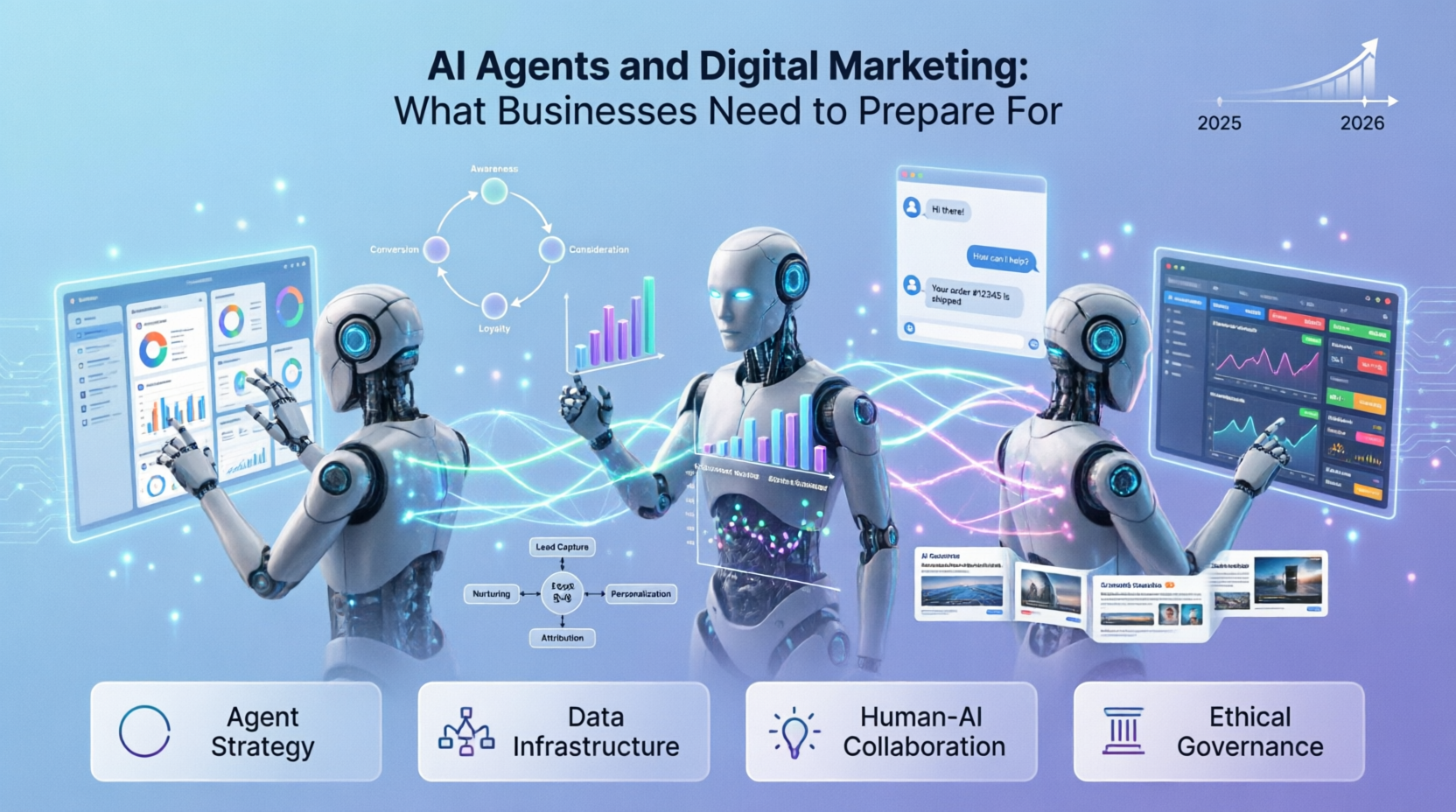
    AI Agents and Digital Marketing: What Businesses Need to Prepare For

    Introduction

    AI is moving beyond simple chat interfaces.

    AI agents can increasingly assist users with research, comparison, planning, and other digital tasks.

    Google’s 2026 generative AI search guidance includes initial discussion of AI agents as an emerging area.

    What Does This Mean for Businesses?

    Businesses need accurate and accessible digital information.

    Important information includes:

    • Services
    • Products
    • Prices where applicable
    • Business details
    • Contact information
    • Policies
    • Availability
    • FAQs

    Make Your Website Machine-Understandable

    Use:

    • Clear headings
    • Structured information
    • Logical navigation
    • Accurate metadata
    • Appropriate structured data
    • Consistent business information

    AI Agents and Conversion

    As AI-assisted journeys develop, customers may discover and evaluate businesses without visiting multiple websites manually.

    This makes brand accuracy and website authority increasingly important.

    Conclusion

    Businesses should prepare for a digital ecosystem where customers interact with both websites and AI systems.

  • How to Build a Complete Digital Marketing Strategy for 2026

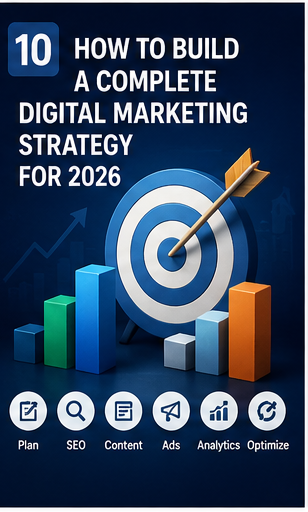
    How to Build a Complete Digital Marketing Strategy for 2026

    Introduction

    Digital marketing has become a connected ecosystem.

    A business may use:

    • SEO
    • Google Ads
    • Social media
    • Content marketing
    • Email marketing
    • Analytics
    • Automation
    • Conversion optimization

    The challenge is making these channels work together.

    Step 1: Define Business Objectives

    Start with measurable objectives.

    Examples include:

    • Generate 100 qualified leads per month
    • Increase online sales
    • Reduce customer acquisition cost
    • Increase organic traffic
    • Improve conversion rate

    Step 2: Understand the Audience

    Identify:

    • Customer problems
    • Search behavior
    • Buying motivations
    • Objections
    • Preferred platforms
    • Decision-making process

    Step 3: Build the Website Foundation

    Your website should have:

    • Clear navigation
    • Fast performance
    • Mobile compatibility
    • Strong calls to action
    • Useful content
    • Technical SEO
    • Analytics

    Step 4: Build Organic Visibility

    SEO should focus on relevant search intent and useful content.

    Google’s current Search guidance continues to emphasize technical accessibility and helpful content as important foundations.

    Step 5: Add Paid Advertising

    Paid campaigns can generate traffic quickly while organic strategies develop over time.

    Campaigns should be connected to:

    • Specific landing pages
    • Conversion tracking
    • Audience targeting
    • Budget controls
    • Performance reporting

    Step 6: Use Content Marketing

    Create content for different stages of the customer journey.

    Awareness: Educational articles

    Consideration: Comparisons and guides

    Decision: Case studies, testimonials, service pages

    Step 7: Measure Everything

    Monitor:

    • Traffic
    • Leads
    • Conversion rate
    • Cost per lead
    • Customer acquisition cost
    • Revenue
    • Return on advertising spend

    Step 8: Improve Continuously

    Digital marketing should operate as a cycle:

    Research → Strategy → Implementation → Measurement → Optimization

    This prevents businesses from spending money on channels simply because they are popular.

    Conclusion

    The strongest digital marketing strategy in 2026 combines technical foundations, AI-aware search optimization, high-quality content, paid acquisition, first-party data, automation, and conversion optimization.

    A professional digital marketing company can bring these components together into one measurable growth strategy rather than treating every marketing channel as a separate activity.

  • First-Party Data Strategy for Digital Marketing in 2026

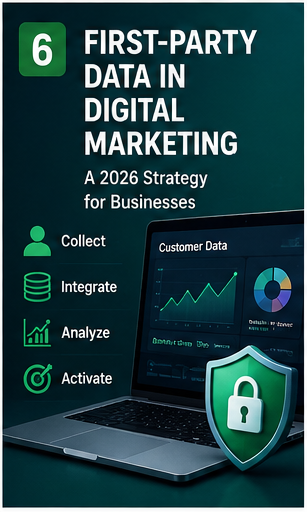
    First-Party Data Strategy for Digital Marketing in 2026

    Introduction

    Digital marketing is increasingly moving toward data that businesses collect directly from their customers.

    This is known as first-party data.

    Examples include:

    • Email subscribers
    • Customer purchases
    • Website interactions
    • CRM records
    • Form submissions
    • Loyalty-program activity
    • Customer preferences

    Why First-Party Data Matters

    Direct customer data can help businesses understand audiences without depending entirely on external targeting systems.

    It can support:

    • Personalization
    • Customer segmentation
    • Email marketing
    • Retargeting strategies
    • Customer retention
    • Predictive analysis

    Industry analysis in 2026 continues to identify first-party data as an important response to changing privacy and tracking conditions.

    How to Build a First-Party Data Strategy

    Create useful conversion points

    Offer valuable resources, newsletters, consultations, or tools that encourage voluntary sign-ups.

    Connect data systems

    CRM, website analytics, email platforms, and sales systems should work together where appropriate.

    Segment customers

    Not every customer has the same needs.

    Segment audiences according to meaningful business criteria.

    Respect consent

    Data collection should be transparent and aligned with applicable privacy requirements.

    First-Party Data and AI

    AI can help marketers identify patterns within properly collected and governed data.

    For example, businesses can analyze:

    • Customer behavior
    • Purchase history
    • Lead quality
    • Campaign performance
    • Engagement patterns

    Conclusion

    The future of data-driven marketing is not simply about collecting more information.

    It is about collecting useful information responsibly and turning it into better customer experiences.

    A digital marketing company can help businesses build an integrated strategy connecting data, CRM, advertising, analytics, and conversion optimization.