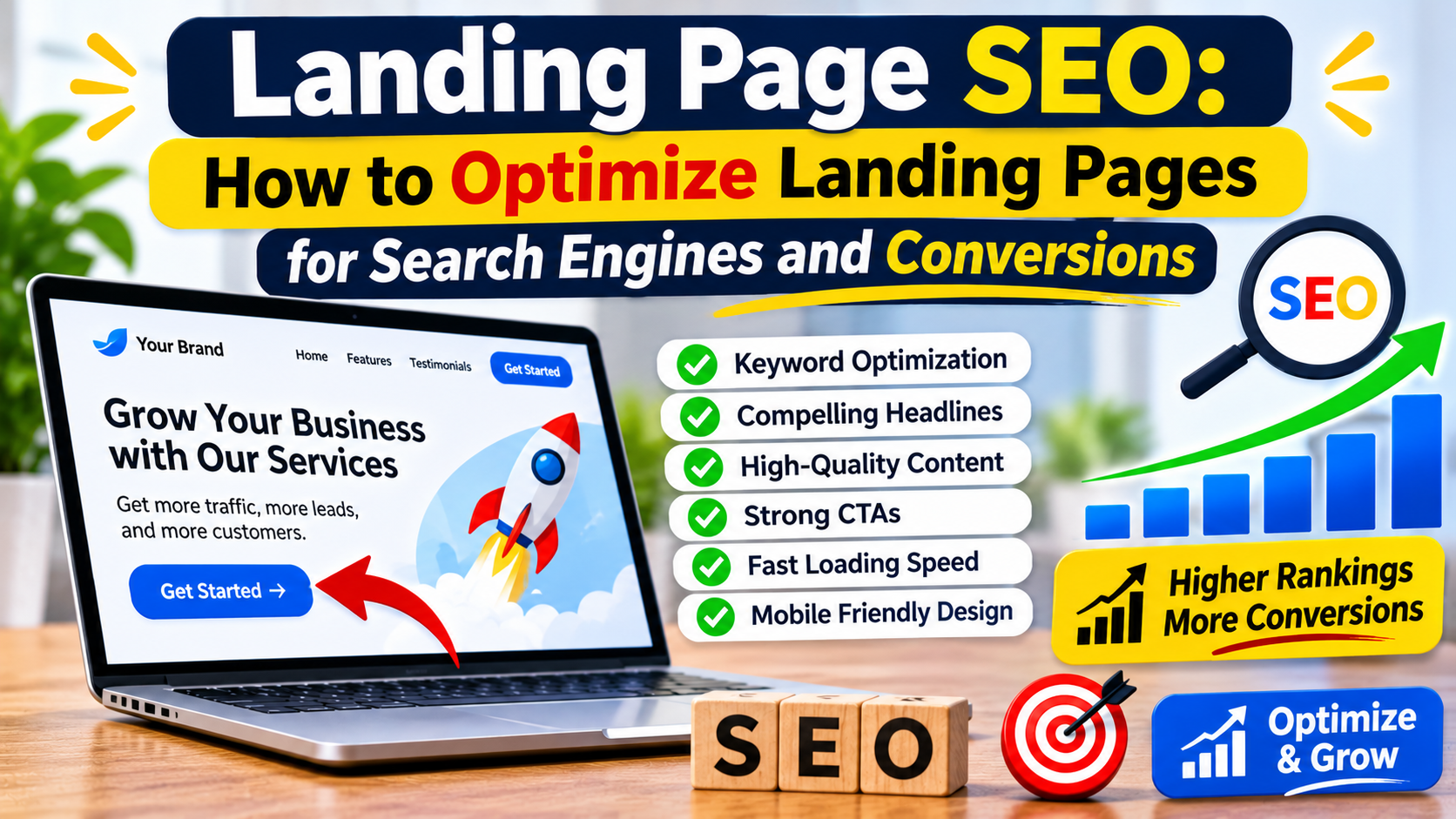
Why Landing Page SEO Matters
Landing page optimization can help businesses:
- Attract relevant organic traffic
- Improve keyword targeting
- Communicate service benefits
- Increase qualified inquiries
- Improve user experience
- Support lead generation
Choose the Right Target Keywords
Start by identifying keywords related to the landing page’s purpose.
Consider:
- Primary service keywords
- Location-based keywords where relevant
- Customer problem-related searches
- Commercial search queries
- Related supporting keywords
Choose keywords that match the actual service being offered.
Create Relevant Landing Page Content
A useful landing page should clearly explain:
- What your business offers
- Which problems your service solves
- Who can benefit from the service
- How the service works
- What makes your approach useful
- How visitors can contact you
Avoid unnecessary keyword repetition and generic promotional statements.
Optimize On-Page SEO Elements
Review the following elements:
- SEO title
- Meta description
- Main heading (H1)
- Supporting headings (H2 and H3)
- Image alt text
- Descriptive URL
- Internal links
Ensure that each element accurately describes the page.
Improve Landing Page User Experience
Visitors should be able to understand your offer without confusion.
Improve the experience by:
- Using clear calls to action
- Keeping contact forms simple
- Making important information easy to find
- Improving mobile usability
- Using readable fonts
- Avoiding distracting elements
- Displaying genuine customer testimonials where appropriate
Measure Landing Page Performance
Depending on your business goals, track:
- Organic clicks
- Search impressions
- Landing page visits
- Form submissions
- Qualified leads
- Conversion rate
- Mobile performance
Use the results to identify opportunities for improvement.
Leave a Reply