Author: Saad Ansari

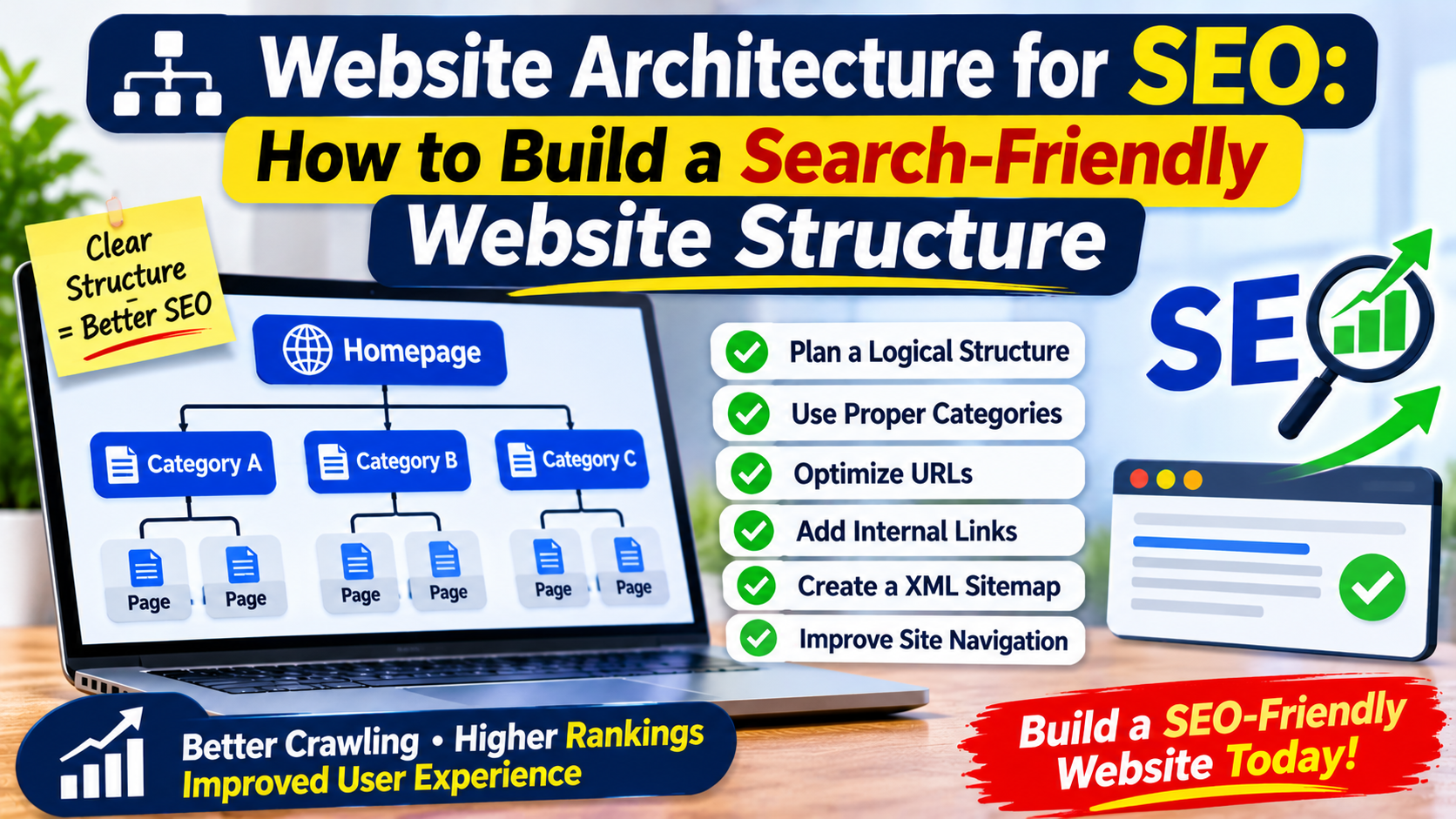
  • Website Architecture for SEO: How to Build a Search-Friendly Website Structure

    Website Architecture for SEO: How to Build a Search-Friendly Website Structure

    Why Website Architecture Matters

    A strong website structure can help businesses:

    • Improve website navigation
    • Make important pages easier to discover
    • Support search engine crawling
    • Organize related content
    • Improve internal linking
    • Create a better user experience

    Organize Your Main Website Pages

    Start by identifying the most important sections of your website.

    For a digital marketing company, these may include:

    • Home
    • About Us
    • SEO Services
    • PPC Advertising
    • Social Media Marketing
    • Content Marketing
    • Blog
    • Contact Us

    Use a logical structure that reflects the services and information your customers need.

    Create Relevant Content Categories

    Organize blog articles into meaningful categories.

    For example:

    • Search Engine Optimization
    • Technical SEO
    • Digital Marketing
    • Content Marketing
    • Paid Advertising
    • Social Media Marketing

    Avoid creating too many unnecessary categories with only one or two unrelated articles.

    Use Internal Linking Strategically

    Internal links connect related pages on the same website.

    They can help visitors discover useful information and help search engines understand relationships between pages.

    For example, an article about keyword research could link naturally to your SEO services page and a related article about on-page SEO.

    Use descriptive anchor text that explains the destination.

    Maintain a Logical URL Structure

    Create simple and descriptive URLs.

    Examples:

    • /seo-services/
    • /technical-seo-guide/
    • /digital-marketing-strategy/

    Avoid unnecessarily long URLs and complicated parameter structures.

    Review Website Navigation

    Make sure important pages are accessible through clear menus and relevant internal links.

    Visitors should not need to navigate through many unrelated pages to find essential services.

    Monitor Technical Structure

    Review:

    • XML sitemaps
    • Robots.txt
    • Canonical tags
    • Broken internal links
    • Redirects
    • Crawlability
    • Indexing status

    Use Google Search Console to investigate indexing and crawling issues.

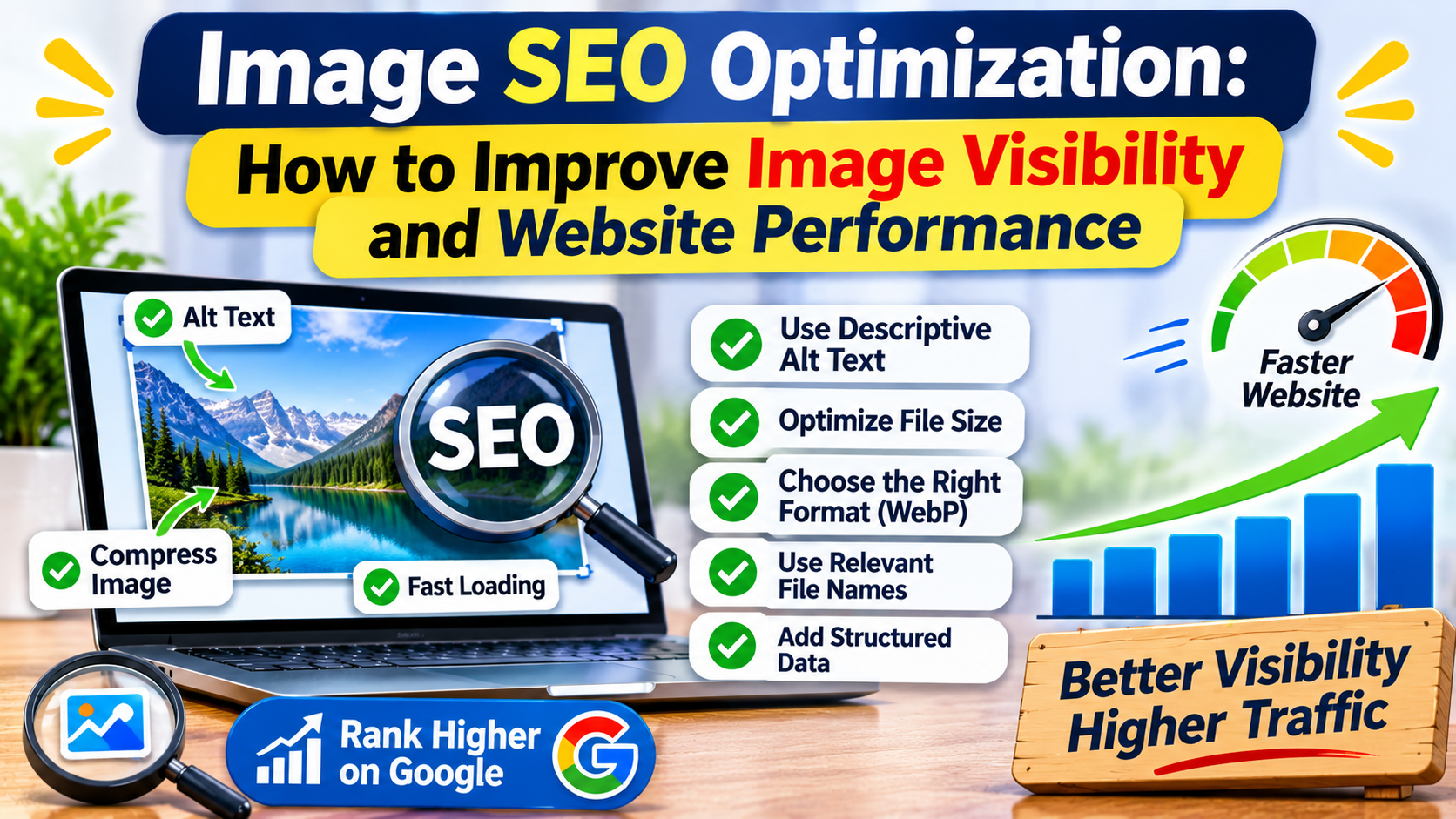
  • Image SEO Optimization: How to Improve Image Visibility and Website Performance

    Image SEO Optimization: How to Improve Image Visibility and Website Performance

    Why Image SEO Matters

    Image optimization can help businesses:

    • Improve website loading performance
    • Support accessibility
    • Provide useful visual information
    • Improve image search discoverability
    • Enhance user experience
    • Reduce unnecessary page weight

    Choose Relevant Images

    Use images that directly support the topic of your webpage.

    For example, a digital marketing agency publishing an article about SEO audits could use a relevant technical SEO illustration or website performance screenshot.

    Avoid decorative images that do not add meaningful value.

    Use Descriptive Image File Names

    Give image files meaningful names before uploading them.

    For example:

    • seo-audit-checklist.jpg
    • digital-marketing-strategy.webp
    • local-seo-optimization.png

    Avoid generic names such as image001.jpg when a descriptive name is practical.

    Write Useful Alt Text

    Alt text helps describe an image to people who use screen readers and provides context when an image cannot load.

    Good alt text should:

    • Describe the actual image
    • Be concise and meaningful
    • Reflect the image’s purpose
    • Avoid unnecessary keyword stuffing

    Not every decorative image needs descriptive alt text. Decorative images can use empty alt text where appropriate.

    Choose the Right Image Format

    Common image formats include:

    • WebP: Often provides good compression and quality.
    • AVIF: Can offer efficient compression with suitable browser support.
    • JPEG: Commonly used for photographs.
    • PNG: Useful for graphics requiring transparency.
    • SVG: Suitable for scalable vector graphics and icons.

    Choose a format according to image requirements and browser compatibility.

    Improve Image Loading Performance

    Consider these optimization practices:

    • Resize images according to display dimensions.
    • Compress images without excessive quality loss.
    • Use responsive image delivery.
    • Set image dimensions to reduce layout shifts.
    • Lazy-load suitable below-the-fold images.
    • Avoid lazy-loading the main above-the-fold image unnecessarily.

    Measure Image Performance

    Review:

    • Image file sizes
    • Page loading performance
    • Core Web Vitals
    • Mobile usability
    • Image indexing where relevant
    • Image search traffic
  • Landing Page SEO: How to Optimize Landing Pages for Search Engines and Conversions

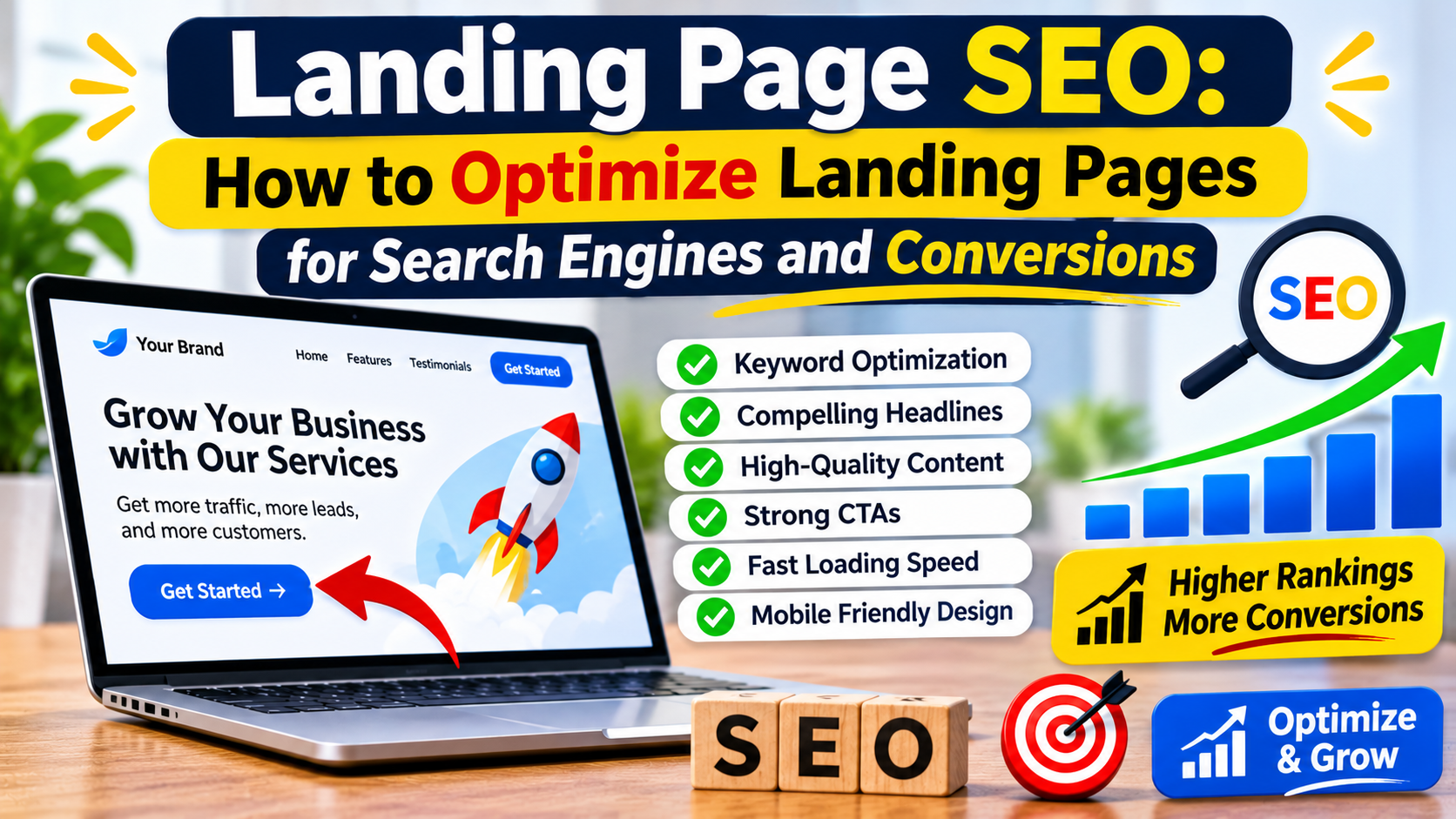
    Landing Page SEO: How to Optimize Landing Pages for Search Engines and Conversions

    Why Landing Page SEO Matters

    Landing page optimization can help businesses:

    • Attract relevant organic traffic
    • Improve keyword targeting
    • Communicate service benefits
    • Increase qualified inquiries
    • Improve user experience
    • Support lead generation

    Choose the Right Target Keywords

    Start by identifying keywords related to the landing page’s purpose.

    Consider:

    • Primary service keywords
    • Location-based keywords where relevant
    • Customer problem-related searches
    • Commercial search queries
    • Related supporting keywords

    Choose keywords that match the actual service being offered.

    Create Relevant Landing Page Content

    A useful landing page should clearly explain:

    • What your business offers
    • Which problems your service solves
    • Who can benefit from the service
    • How the service works
    • What makes your approach useful
    • How visitors can contact you

    Avoid unnecessary keyword repetition and generic promotional statements.

    Optimize On-Page SEO Elements

    Review the following elements:

    • SEO title
    • Meta description
    • Main heading (H1)
    • Supporting headings (H2 and H3)
    • Image alt text
    • Descriptive URL
    • Internal links

    Ensure that each element accurately describes the page.

    Improve Landing Page User Experience

    Visitors should be able to understand your offer without confusion.

    Improve the experience by:

    • Using clear calls to action
    • Keeping contact forms simple
    • Making important information easy to find
    • Improving mobile usability
    • Using readable fonts
    • Avoiding distracting elements
    • Displaying genuine customer testimonials where appropriate

    Measure Landing Page Performance

    Depending on your business goals, track:

    • Organic clicks
    • Search impressions
    • Landing page visits
    • Form submissions
    • Qualified leads
    • Conversion rate
    • Mobile performance

    Use the results to identify opportunities for improvement.

  • How to Build a Strong Online Presence for Your Business

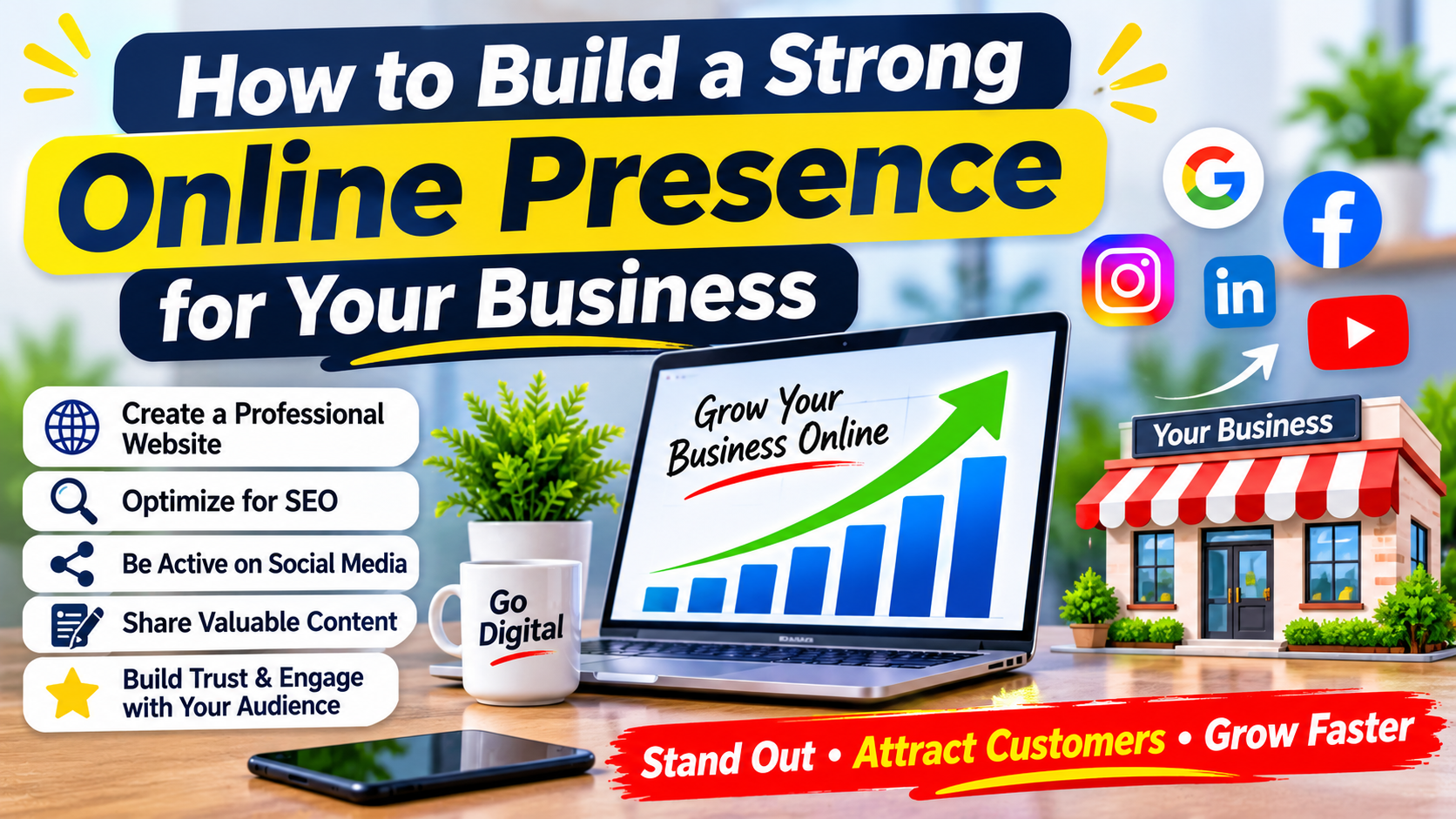
    How to Build a Strong Online Presence for Your Business

    In today’s digital world, having an online presence is essential for businesses that want to reach more customers and grow. People often search online before choosing a product, service, or company. If your business is difficult to find online, you may miss valuable opportunities to connect with potential customers.

    Building a strong online presence involves more than creating a website or opening social media accounts. It requires a clear strategy that combines website optimization, search engine optimization (SEO), content marketing, social media, and customer engagement.

    In this guide, we will explore practical ways to strengthen your business’s online presence and build long-term digital growth.

    1. Create a Professional Business Website

    Your website is often the first place potential customers visit to learn about your business. It should communicate what you offer, who you serve, and how visitors can contact you.

    A professional website should include:

    • A clear homepage explaining your business
    • Detailed product or service pages
    • Easy-to-find contact information
    • Simple navigation
    • Mobile-friendly layouts
    • Fast-loading pages
    • Clear calls to action

    Avoid overcrowding pages with unnecessary information. Keep the design simple and make important details easy to find. A well-organized website helps visitors understand your services and builds confidence in your brand.

    2. Improve Your Search Engine Visibility

    Search engine optimization helps people discover your website through search engines. When your pages provide useful answers to relevant searches, they have a better opportunity to appear in search results.

    Start by researching keywords related to your products, services, and industry. Use relevant phrases naturally in page titles, headings, descriptions, and website content.

    Other useful SEO practices include:

    • Publishing original and helpful articles
    • Improving website speed
    • Optimizing images
    • Using descriptive URLs
    • Creating relevant internal links
    • Fixing broken pages and technical errors
    • Making your website mobile-friendly

    SEO requires consistent effort, so review your website regularly and update content when necessary.

    3. Publish Valuable and Informative Content

    Content marketing gives people a reason to visit your website. Helpful articles and resources can answer customer questions, explain your services, and demonstrate your knowledge.

    You can publish different types of content, such as:

    • How-to guides
    • Educational blog posts
    • Industry updates
    • Frequently asked questions
    • Product explanations
    • Practical tips and tutorials

    For example, a digital marketing agency might publish articles about SEO, website design, online advertising, and content strategy.

    Focus on quality rather than publishing large amounts of content without a clear purpose. Every article should provide useful information and address a real audience need.

    4. Build an Active Social Media Presence

    Social media platforms help businesses connect with their audiences, share updates, and increase brand awareness.

    Choose platforms that are relevant to your target customers. Develop a realistic posting schedule and share a mixture of educational posts, business updates, short videos, and useful resources.

    To improve engagement:

    • Respond to comments and messages.
    • Share helpful information regularly.
    • Use relevant images and videos.
    • Participate in appropriate discussions.
    • Share links to useful website pages.
    • Maintain consistent brand messaging.

    Social media should be used to build relationships, not just promote products. Meaningful interactions can help customers become more familiar with your business.

    5. Optimize Your Business for Local Searches

    If your business serves customers in a particular city or area, local SEO can help people discover your services nearby.

    Create and maintain an accurate Google Business Profile. Include your business name, address, phone number, website, working hours, and relevant service information.

    You should also:

    • Use location-based keywords naturally.
    • Keep business details consistent online.
    • Add genuine photos of your business.
    • Encourage honest customer reviews.
    • Respond professionally to customer feedback.
    • Publish useful content relevant to your service area.

    These steps can improve your local online visibility and make it easier for nearby customers to find your business.

    6. Use Email Marketing to Stay Connected

    Email marketing allows businesses to communicate directly with people who have chosen to receive updates.

    You can use email campaigns to share new articles, product announcements, special offers, and helpful resources.

    For better results:

    • Build an email list through voluntary sign-ups.
    • Send relevant and useful messages.
    • Write clear subject lines.
    • Keep emails easy to read.
    • Include links to relevant website pages.
    • Provide an unsubscribe option.

    Consistent and respectful email communication can help maintain customer relationships and encourage repeat visits to your website.

    7. Build Trust Through Customer Reviews

    Online trust plays an important role in purchasing decisions. Many people look for customer feedback before choosing a business.

    Encourage genuine customers to share their experiences. Display authentic testimonials where appropriate and respond politely to both positive and negative feedback.

    Avoid fake reviews or misleading claims. Honest communication and reliable customer service are essential for developing a trustworthy brand.

    8. Use Analytics to Measure Your Progress

    A strong online presence should be supported by regular performance tracking. Analytics tools can help you understand how people discover and interact with your website.

    Monitor important information such as:

    • Website visitors
    • Organic search traffic
    • Popular website pages
    • Social media engagement
    • Contact form submissions
    • Conversion rates
    • Traffic sources

    Google Analytics 4 and Google Search Console can provide useful insights into website activity and search performance.

    Review your results regularly to identify what is working and where improvements are needed.

    9. Maintain Consistency Across Digital Platforms

    Your business should have a recognizable identity across its website, social media accounts, business listings, and email communications.

    Use consistent branding, accurate contact details, and clear descriptions of your products or services.

    Make sure your information stays updated when your business changes its services, location, or contact details.

    Consistency makes it easier for customers to recognize your business and helps create a more professional online experience.

  • Content Decay in SEO: How to Identify and Recover Declining Blog Traffic

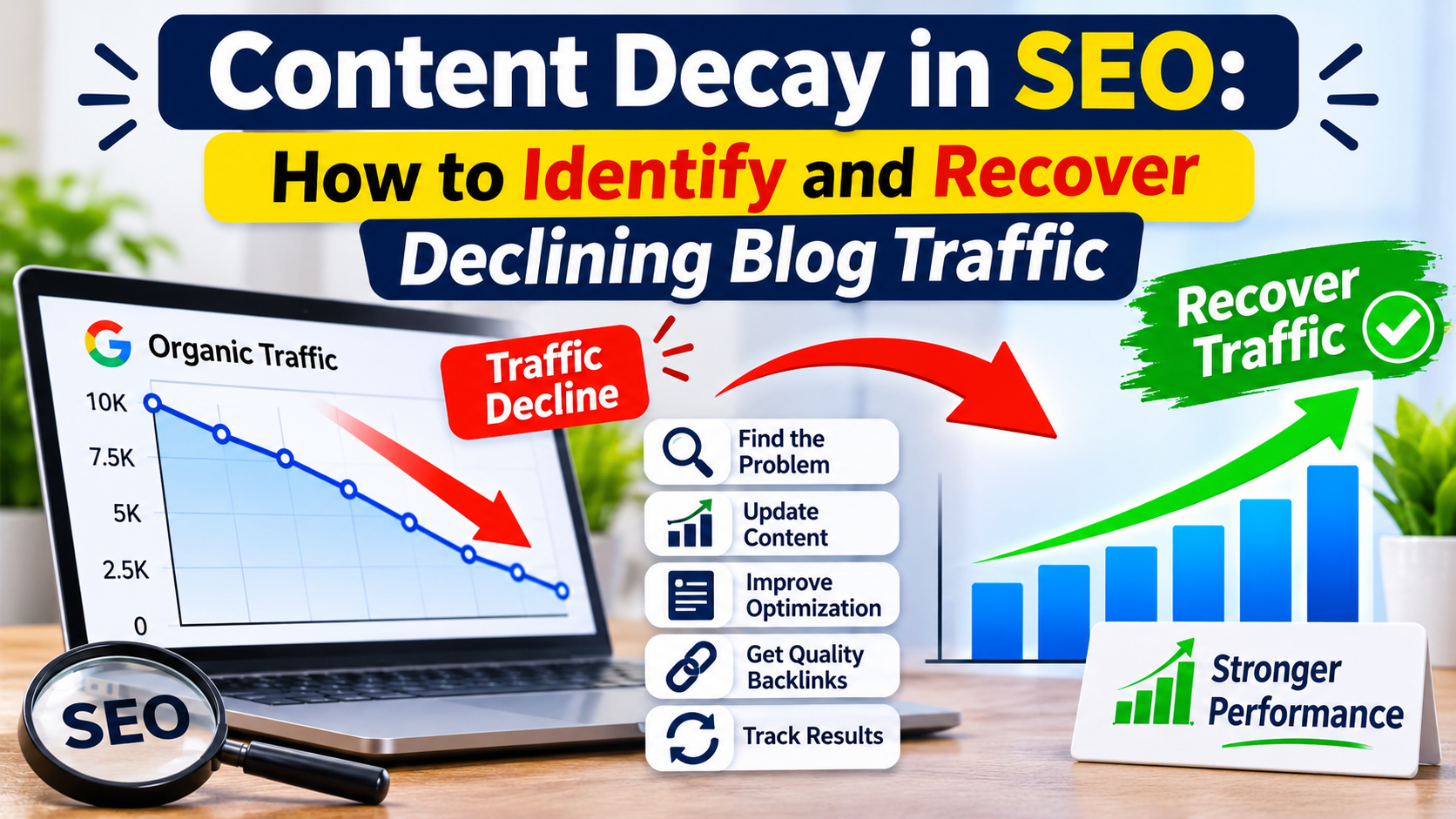
    Content Decay in SEO: How to Identify and Recover Declining Blog Traffic

    Why Content Decay Matters

    Identifying content decay can help businesses:

    • Recover declining organic traffic
    • Maintain content accuracy
    • Improve search relevance
    • Identify outdated information
    • Strengthen existing blog posts
    • Make better use of published content

    Identify Pages With Declining Performance

    Google Search Console can help you identify pages that are losing organic clicks or impressions.

    Compare performance across different periods and look for pages experiencing consistent declines.

    Also investigate whether the decline is related to search demand, seasonal changes, or technical problems.

    Understand Why Content Is Losing Traffic

    Common reasons include:

    • Outdated information
    • Changes in search intent
    • New competitors publishing better resources
    • Missing information
    • Broken internal links
    • Technical SEO problems
    • Declining relevance of the target keyword

    Identify the actual problem before making changes.

    Update and Improve Existing Content

    A content refresh strategy may include:

    • Updating outdated statistics
    • Adding relevant information
    • Improving headings and readability
    • Replacing broken links
    • Adding useful examples
    • Improving internal linking
    • Updating screenshots where necessary
    • Improving the introduction and conclusion

    Avoid changing content simply to make it appear new.

    Improve Search Intent Alignment

    Review the search results for your target keyword and understand what users currently expect.

    For example, a keyword that previously attracted informational articles may now show comparison guides or practical tutorials.

    Update your article only when the changes genuinely improve its usefulness.

    Measure Content Recovery

    After updating an article, monitor:

    • Organic clicks
    • Search impressions
    • Average search position
    • Click-through rate
    • Relevant keyword visibility
    • Organic conversions

    Allow enough time for search engines to recrawl and reassess the updated page.

  • How to Improve Website Traffic and Generate More Online Leads

    How to Improve Website Traffic and Generate More Online Leads

    ‘Every business wants more visitors to its website, but attracting traffic alone is not enough. The real goal is to bring the right audience to your website and turn those visitors into potential customers.

    Whether you run a small business, an online store, or a professional service, improving website traffic requires a combination of search engine optimization, valuable content, social media marketing, and a user-friendly website.

    In this guide, we will explore practical ways to increase website traffic and generate more online leads.

    1. Focus on Search Engine Optimization

    Search engine optimization (SEO) is one of the most effective ways to attract organic visitors. It helps your website appear in search results when people look for information, products, or services related to your business.

    Start by researching keywords that your target audience uses. Include relevant keywords naturally in page titles, headings, descriptions, and website content.

    You should also:

    • Write helpful and original content.
    • Improve website loading speed.
    • Make your website mobile-friendly.
    • Use descriptive image alt text.
    • Fix broken links and technical errors.
    • Create relevant internal links between pages.

    SEO takes time, but consistent improvements can help your website gain visibility and attract relevant visitors.

    2. Publish Helpful and Relevant Content

    Content marketing is an important part of building website traffic. When you publish useful information, people have more reasons to visit your website and learn about your business.

    Consider creating:

    • Step-by-step tutorials
    • Informative blog articles
    • Industry news and updates
    • Frequently asked questions
    • Product and service guides
    • Practical tips and checklists

    Before writing an article, think about the questions your audience wants answered. Make your content clear, informative, and easy to read.

    Regular publishing can also give search engines more useful pages to discover and index.

    3. Improve Your Website User Experience

    Getting visitors to your website is only the first step. You also need to provide a positive experience so they can easily find the information they need.

    A good website should have:

    • Simple and clear navigation
    • Fast-loading pages
    • Readable fonts and layouts
    • Mobile-friendly design
    • Clear contact information
    • Easy-to-understand service descriptions

    Avoid unnecessary pop-ups, confusing menus, and excessive advertisements. A smooth browsing experience encourages visitors to explore more pages and interact with your business.

    4. Use Social Media to Increase Visibility

    Social media platforms can help businesses share website content and connect with potential customers.

    Choose platforms that are relevant to your audience. Share blog posts, useful tips, product updates, short videos, and other informative content.

    Do not focus only on promotional messages. Answer questions, participate in relevant discussions, and provide information that helps your followers.

    You can also include links to relevant website pages when sharing content, making it easier for interested users to visit your website.

    5. Create Strong Calls to Action

    A website should guide visitors toward a meaningful next step. A call to action (CTA) tells users what they can do after reading a page or exploring a service.

    Examples include:

    • Contact us for more information.
    • Request a free consultation.
    • Explore our services.
    • Subscribe to our newsletter.
    • Get a quote today.

    Place calls to action where they make sense. Keep the wording clear and make sure the destination page works correctly.

    A well-designed CTA can help turn interested visitors into inquiries and potential customers.

    6. Build Trust With Useful Information

    People are more likely to contact a business when they feel confident about its products or services.

    Build trust by providing accurate business information, clear service details, helpful answers, and genuine customer feedback.

    You can also publish case studies, examples of completed work, and customer testimonials when you have permission to share them.

    Avoid exaggerated promises or misleading claims. Honest communication helps create stronger relationships with potential customers.

    7. Use Email Marketing to Bring Visitors Back

    Email marketing can help businesses stay connected with people who have voluntarily subscribed to updates.

    You can use email campaigns to share:

    • New blog articles
    • Helpful industry resources
    • Product announcements
    • Special offers
    • Company updates

    Keep your messages relevant and avoid sending emails too frequently. Include links to useful pages on your website and provide an easy unsubscribe option.

    Email marketing can encourage previous visitors to return and explore your latest content.

    8. Monitor Website Performance

    You cannot improve your website effectively without understanding how it performs.

    Use analytics and search performance tools to monitor important metrics such as:

    • Total website visitors
    • Organic search traffic
    • Most visited pages
    • Visitor engagement
    • Lead submissions
    • Conversion rates
    • Traffic sources

    Review these metrics regularly. If a page receives visitors but generates very few inquiries, consider improving its content, layout, or call to action.

    Use real performance data to guide your decisions instead of making changes based only on assumptions.

    9. Develop a Consistent Marketing Plan

    Website growth requires consistent effort. Publishing one article or running a single campaign is unlikely to create lasting results.

    Create a realistic marketing schedule that includes content publishing, SEO improvements, social media activity, and performance reviews.

    Set achievable monthly goals and focus on activities that bring relevant visitors. Review your progress and adjust your strategy when needed.

    Consistency helps businesses build a stronger online presence and create more opportunities to connect with potential customers.

  • How to Create a Strong Digital Marketing Strategy for Business Growth

    Digital marketing has become an important part of growing a business online. Whether you run a small business, an online store, or a service-based company, having a clear digital marketing strategy can help you reach the right audience, build trust, and generate more leads.

    However, success does not come from simply posting on social media or running advertisements. Businesses need a structured approach that combines search engine optimization (SEO), content marketing, social media, email campaigns, and performance tracking.

    In this guide, we will explore practical steps to develop a digital marketing strategy that supports long-term business growth.

    1. Define Your Marketing Goals

    Before launching any campaign, decide what you want to achieve. Clear goals help you select the right marketing channels and measure progress.

    Common digital marketing goals include:

    • Increasing website traffic
    • Generating qualified leads
    • Improving brand awareness
    • Increasing online sales
    • Building long-term customer relationships

    Make your goals specific and measurable. For example, instead of saying you want more website visitors, set a target to increase relevant organic traffic over the next three months. Choose targets based on your current performance and available resources.

    2. Understand Your Target Audience

    A successful marketing campaign begins with understanding your potential customers. Research their needs, interests, challenges, and purchasing habits.

    Consider these questions:

    • Who is most likely to purchase your product or service?
    • What problems are they trying to solve?
    • Which platforms do they use to find information?
    • What questions do they ask before making a decision?

    You can gather insights from customer feedback, website analytics, social media interactions, and sales conversations. Use this information to create content that answers real questions instead of relying on assumptions.

    3. Improve Your Website With SEO

    Search engine optimization helps people discover your website when they search for relevant products, services, or information. A well-planned SEO strategy can attract visitors who are already interested in what your business offers.

    Start with these essential practices:

    • Research relevant keywords that match your audience’s search intent.
    • Write useful page titles and meta descriptions.
    • Organize content with clear headings.
    • Improve website loading speed and mobile usability.
    • Fix broken links and technical issues.
    • Add relevant internal links between related pages.

    Focus on creating genuinely useful content rather than repeating keywords unnaturally. For more guidance, explore this digital marketing and SEO guide for practical ways to strengthen your online presence.

    4. Create Valuable Content

    Content marketing allows businesses to educate their audience, answer common questions, and demonstrate their knowledge. Useful content can also support SEO and help potential customers make informed decisions.

    Consider publishing a mix of:

    • Detailed blog posts and how-to guides
    • Frequently asked questions
    • Product or service explanations
    • Case studies based on genuine results
    • Short educational videos
    • Practical checklists and tutorials

    Each piece of content should serve a clear purpose. For example, a web design company could publish an article explaining how to improve website usability, while a local service provider could answer common questions about its services.

    Keep your content accurate, easy to understand, and updated when necessary.

    5. Use Social Media Strategically

    Social media can help businesses connect with customers, share content, and increase brand awareness. However, you do not need to be active on every platform.

    Choose platforms based on where your target audience spends time. Develop a realistic posting schedule and share content that provides value rather than making every post promotional.

    You can publish educational tips, behind-the-scenes updates, customer stories with permission, product demonstrations, and answers to common questions.

    Respond to comments and messages professionally. Consistent engagement helps your business build relationships and understand what customers care about.

    6. Use Email Marketing to Build Relationships

    Email marketing gives businesses a direct way to communicate with people who have chosen to receive updates. It can be useful for sharing helpful resources, announcing new products, and encouraging repeat purchases.

    To make email campaigns more effective:

    • Build your list through clear, voluntary sign-up forms.
    • Send relevant information to subscribers.
    • Write descriptive subject lines.
    • Keep messages useful and easy to read on mobile devices.
    • Include a clear next step when appropriate.
    • Provide an easy way to unsubscribe.

    Avoid sending unwanted messages or purchasing questionable email lists. Respecting customer preferences helps protect trust in your brand.

    7. Set a Realistic Advertising Budget

    Paid advertising can help businesses reach specific audiences and test marketing messages. Options include search ads, social media advertisements, and other relevant digital advertising platforms.

    Before spending money, define your target audience, campaign objective, budget, and success metrics. Start with a manageable test budget, compare results, and make improvements based on actual performance.

    Track metrics such as cost per lead, conversion rate, and return on advertising spend where appropriate. Do not judge a campaign solely by clicks or impressions if your real goal is to generate sales.

    8. Measure Results and Improve Your Strategy

    Digital marketing works best when businesses regularly review performance and adjust their approach.

    Use suitable analytics and advertising tools to monitor:

    • Website visits and traffic sources
    • Organic search performance
    • Engagement with published content
    • Leads and completed conversions
    • Email open and click activity
    • Advertising costs and sales results

    Review these figures regularly to identify what is working and what needs improvement. If a blog post attracts visitors but generates few inquiries, consider whether it answers the reader’s needs and offers a relevant next step.

    Make changes based on evidence rather than assumptions, and give meaningful experiments enough time to produce useful results.

    9. Keep Your Brand Consistent

    A consistent brand experience helps customers recognize and understand your business. Use clear messaging, consistent visual elements, and accurate business information across your website and social profiles.

    Ensure that your contact details, services, pricing information where applicable, and business descriptions are up to date. Make it easy for visitors to understand what you offer and how they can contact you.

    Consistency across marketing channels can make your business appear more professional and help customers feel confident when evaluating your services.
  • Digital Marketing Funnel Optimization: From First Visit to Paying Customer

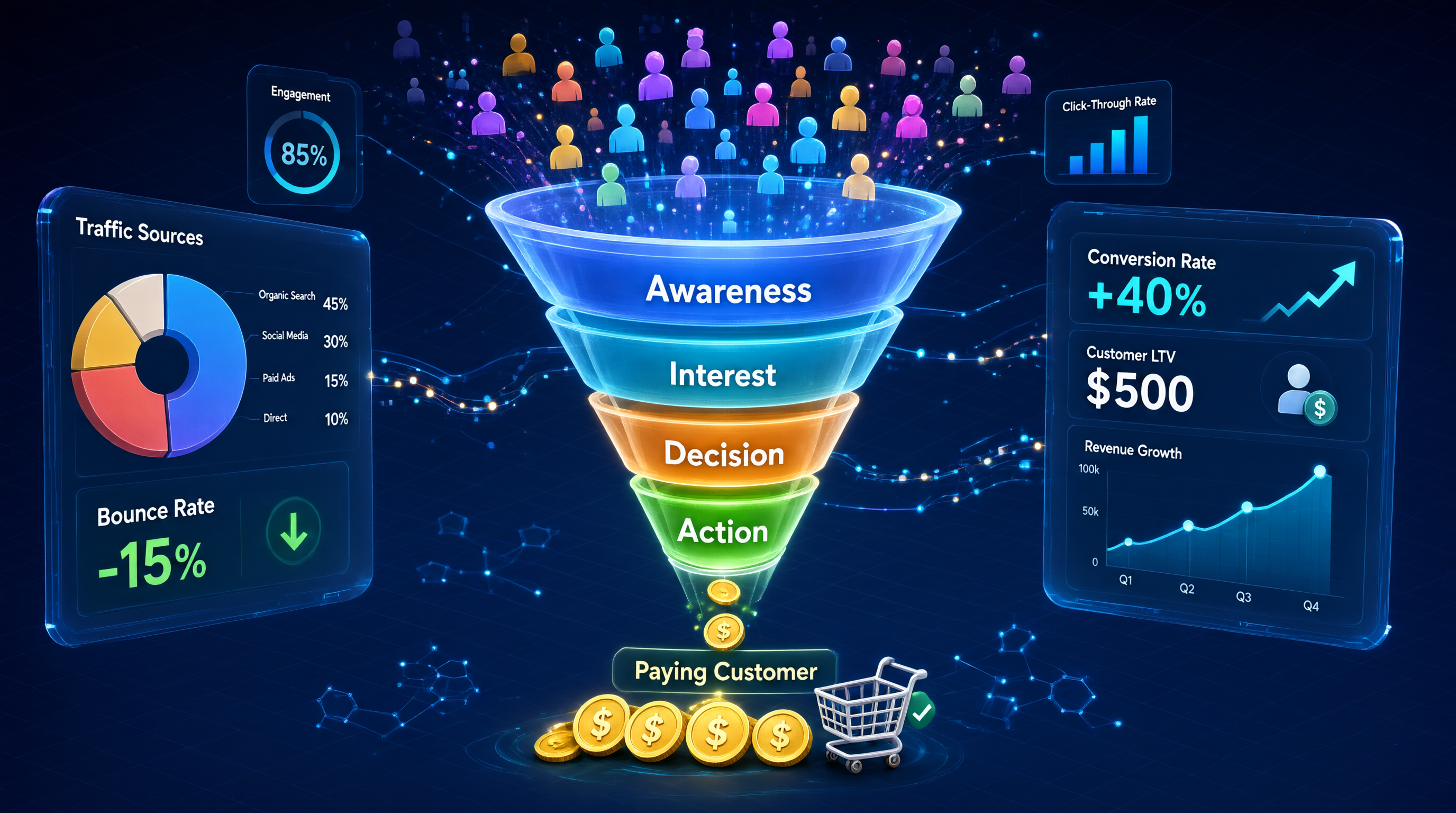
    Digital Marketing Funnel Optimization: From First Visit to Paying Customer

    What Is a Digital Marketing Funnel?

    A digital marketing funnel is a framework for understanding how potential customers may move from discovering a business to becoming paying customers.

    A simplified funnel includes awareness, consideration, conversion, and retention.

    Real customer journeys are not always linear. Customers may revisit earlier stages or interact with several marketing channels before making a decision.

    Why Funnel Optimization Matters

    A well-planned marketing funnel can help businesses:

    • Understand customer needs
    • Improve the website experience
    • Generate qualified leads
    • Identify conversion barriers
    • Improve follow-up communication
    • Encourage customer retention

    Build Awareness With Helpful Content

    At the awareness stage, potential customers are discovering a business or researching a problem.

    Businesses can use:

    • SEO blog posts
    • Educational videos
    • Social media content
    • Helpful guides
    • Relevant industry resources
    • Informational service pages

    Focus on answering real questions rather than promoting services in every piece of content.

    Help Customers Evaluate Their Options

    During the consideration stage, visitors may compare different services, providers, or solutions.

    Useful content can include:

    • Detailed service pages
    • Case studies
    • Comparison guides
    • Frequently asked questions
    • Process explanations
    • Transparent pricing information where appropriate

    Provide accurate information that helps visitors make informed decisions.

    Improve the Conversion Experience

    When visitors are ready to take action, make the next step clear and straightforward.

    Businesses can:

    • Use clear calls to action
    • Simplify contact forms
    • Explain what happens after submission
    • Improve mobile usability
    • Provide accessible contact information
    • Address common customer concerns

    Avoid misleading claims or unnecessary pressure tactics.

    Focus on Customer Retention

    The customer journey continues after a purchase.

    Businesses can encourage long-term relationships through:

    • Helpful onboarding
    • Reliable customer support
    • Relevant educational resources
    • Feedback collection
    • Appropriate follow-up communication
    • Useful loyalty or renewal programs

    Retention strategies should reflect the business model and customer preferences.

    Measure Funnel Performance

    Depending on your business, monitor:

    • Qualified website visits
    • Landing-page engagement
    • Contact form submissions
    • Lead qualification rate
    • Conversion rate
    • Customer acquisition cost
    • Repeat purchase rate
    • Customer retention

    Use these metrics to identify where customers may be experiencing difficulties.

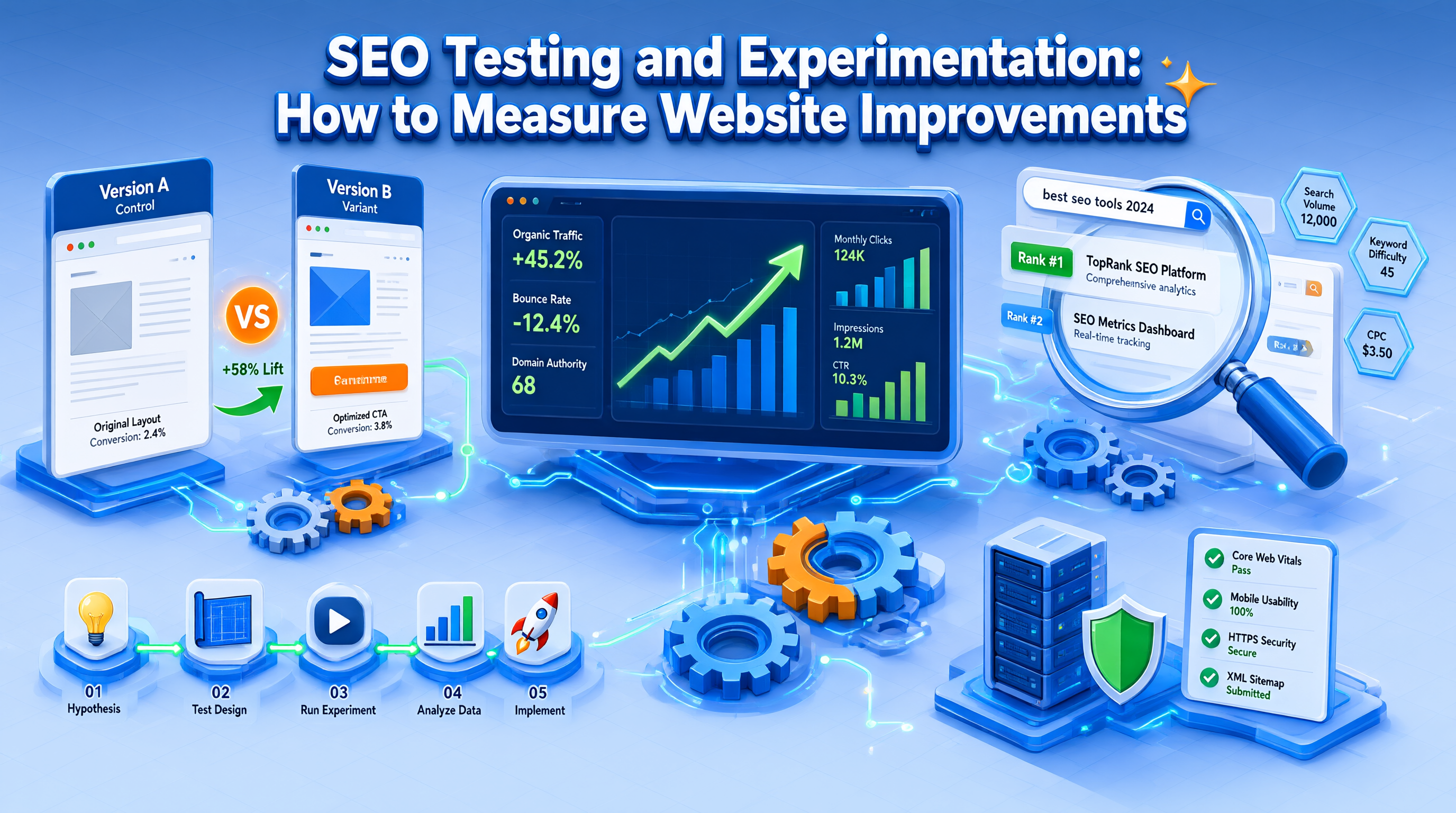
  • SEO Testing and Experimentation: How to Measure Website Improvements

    SEO Testing and Experimentation: How to Measure Website Improvements

    What Is SEO Testing?

    SEO testing is a method of evaluating how website changes relate to search performance.

    Depending on the situation, it may involve controlled experiments, groups of comparable pages, before-and-after analysis, or monitoring selected metrics.

    Not every SEO change can be evaluated through a traditional A/B test.

    Why SEO Testing Matters

    A structured testing process can help businesses:

    • Evaluate optimization ideas
    • Reduce guesswork
    • Identify possible improvements
    • Understand performance changes
    • Avoid repeating ineffective approaches
    • Make better-informed SEO decisions

    Develop a Clear SEO Hypothesis

    Start by explaining what you want to change and what result you expect.

    For example, updating outdated information on selected pages may improve their usefulness and organic search performance.

    A clear hypothesis makes it easier to choose relevant metrics and evaluate the results.

    Choose Suitable Pages and Metrics

    Select pages that are relevant to the test and sufficiently comparable.

    Depending on your objective, monitor:

    • Organic clicks
    • Search impressions
    • Click-through rate
    • Relevant search queries
    • Qualified organic visits
    • Conversion rates

    Record baseline performance before making changes.

    Implement the Changes Carefully

    Document exactly what you change and when.

    Where practical, avoid changing several unrelated elements simultaneously if you want to understand which change may have influenced the result.

    Ensure that the changes do not introduce technical problems such as broken links, accidental noindex directives, or incorrect canonical tags.

    Analyze Results and External Factors

    Review performance over an appropriate period.

    Consider factors such as:

    • Seasonality
    • Changes in search demand
    • Search engine updates
    • Competitor activity
    • Website migrations
    • Changes in tracking or reporting

    A simple before-and-after comparison does not prove that a change caused the observed result.

    Document What You Learn

    Maintain a record of:

    • The original problem
    • The hypothesis
    • Pages included in the test
    • Changes made
    • Metrics monitored
    • Results observed
    • Limitations
    • Recommended next steps

    Even an inconclusive test can provide useful information.

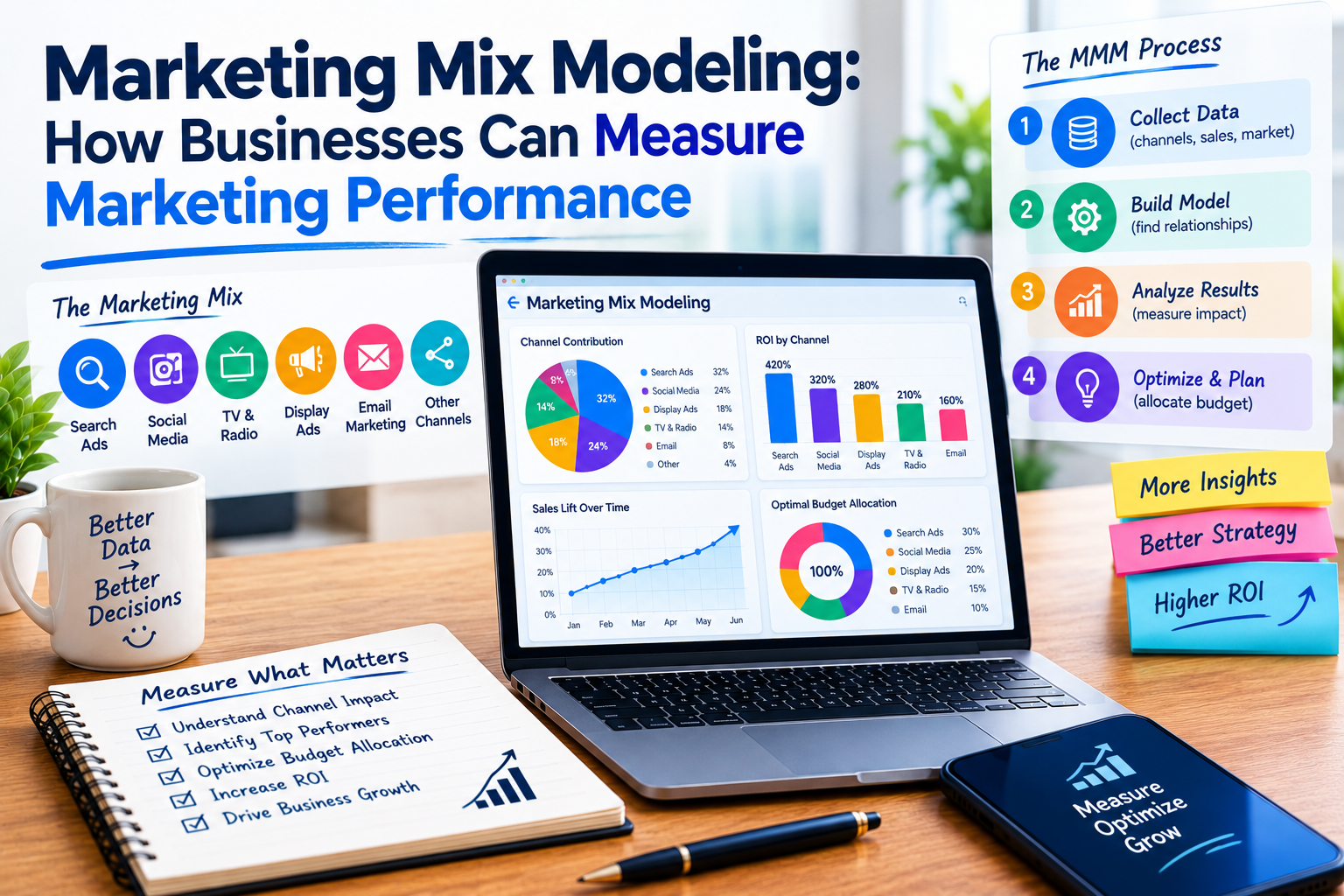
  • Marketing Mix Modeling: How Businesses Can Measure Marketing Performance

    Marketing Mix Modeling: How Businesses Can Measure Marketing Performance

    What Is Marketing Mix Modeling?

    Marketing mix modeling (MMM) analyzes historical business and marketing data to estimate relationships between marketing inputs and outcomes such as sales or revenue.

    Depending on the model, it may consider advertising expenditure, promotions, pricing, seasonality, distribution, and other relevant factors.

    Its results are estimates and should be interpreted carefully.

    Why Marketing Mix Modeling Matters

    Businesses can use marketing mix modeling to:

    • Evaluate marketing effectiveness
    • Explore channel contributions
    • Understand seasonal changes
    • Compare potential budget allocations
    • Support long-term planning
    • Identify areas for further investigation

    Collect Reliable Marketing Data

    A useful model requires consistent historical information.

    Depending on the business, relevant data may include:

    • Marketing expenditure
    • Advertising activity
    • Sales or revenue
    • Promotional activity
    • Pricing changes
    • Seasonal trends
    • Distribution changes
    • Relevant external factors

    Data quality has a significant impact on the usefulness of the results.

    Build and Validate the Model

    A structured process typically includes:

    1. Define the business outcome.
    2. Gather relevant historical data.
    3. Check for missing or inconsistent information.
    4. Select an appropriate statistical approach.
    5. Estimate relationships between marketing inputs and outcomes.
    6. Validate the model using suitable methods.
    7. Document assumptions and uncertainty.

    Complex models may require specialist analytical expertise.

    Understand Marketing Mix Modeling and Attribution

    Marketing attribution often examines observed customer journeys and assigns credit to different interactions.

    Marketing mix modeling generally analyzes aggregated historical data over time or across markets.

    Both approaches can provide useful insights, but they answer different questions.

    Neither method automatically proves causation. Experiments and other validation methods can strengthen conclusions.

    Use Findings to Improve Budget Decisions

    Businesses can use model estimates to explore different budget scenarios.

    However, avoid reallocating budgets based on a single estimate without considering uncertainty, business objectives, operational limits, and other evidence.

    Small businesses may begin with simpler reporting and controlled experiments before investing in advanced modeling.

    Measure Marketing Effectiveness

    Depending on your business, evaluate:

    • Revenue trends
    • Marketing expenditure
    • Cost per acquisition
    • Lead generation
    • Channel performance estimates
    • Return on marketing investment

    Choose measures that align with your business goals.