Category: Uncategorized

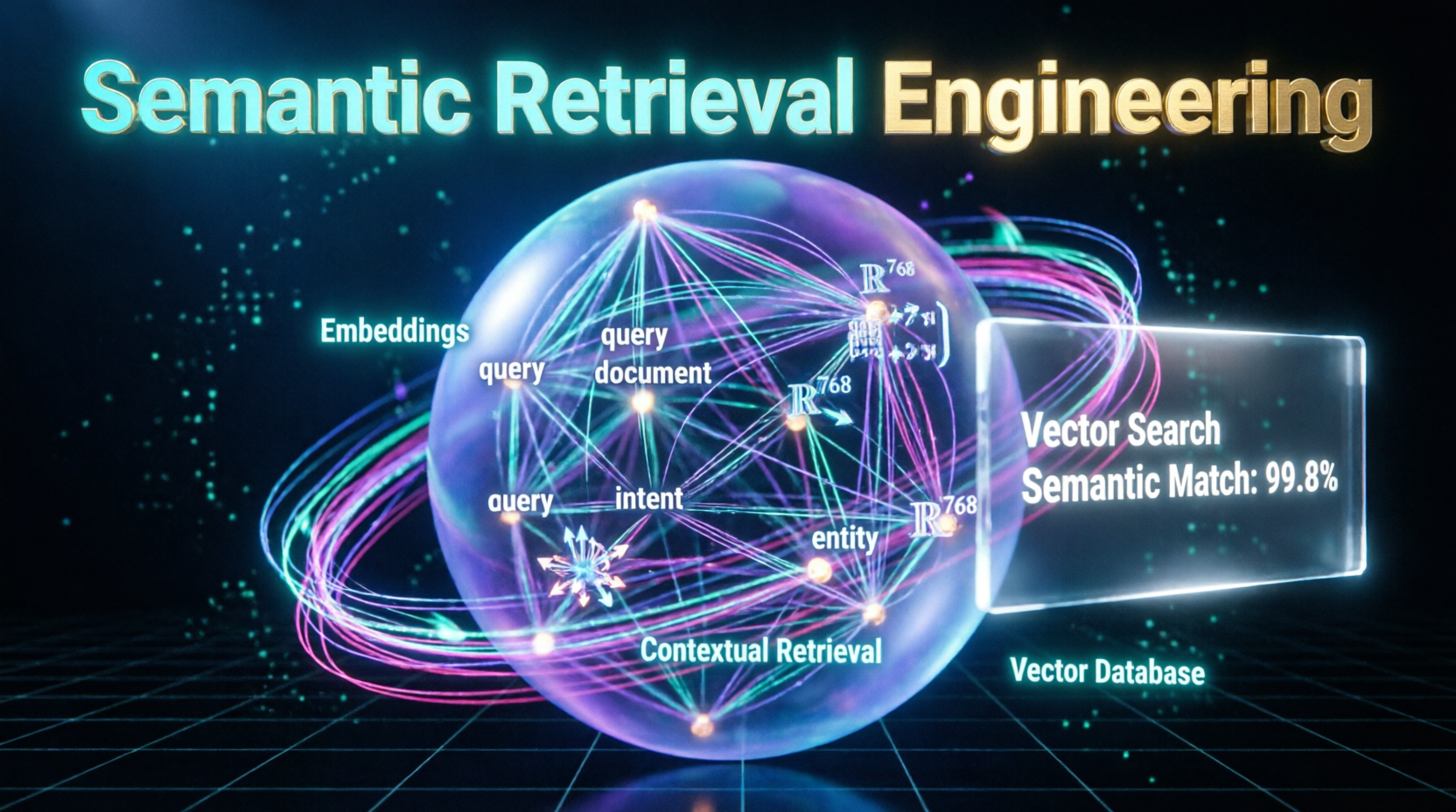
  • Semantic Retrieval Engineering for SEO: Optimizing Content for Vector-Based Search Systems

    Semantic Retrieval Engineering for SEO: Optimizing Content for Vector-Based Search Systems

    Introduction

    Traditional SEO often focused on matching a target keyword with a page. Modern search is considerably more sophisticated. Search systems can interpret concepts, relationships, entities and user intent rather than depending exclusively on exact keyword matches.

    Google’s current guidance for generative AI search emphasizes that AI features are built on Google’s existing Search ranking and quality systems. It also highlights query fan-out, where a complex query can lead to multiple related searches to find information from different sources.

    This creates a new technical opportunity: semantic retrieval engineering.

    What Is Semantic Retrieval?

    Semantic retrieval attempts to find information based on meaning rather than exact wording.

    For example, a user searching:

    “How can a small company get customers online?”

    may be looking for information about:

    • SEO
    • paid advertising
    • conversion optimization
    • social media
    • local search
    • content marketing

    A technically strong website should make these relationships clear.

    Build Topic-Level Content Architecture

    Instead of creating dozens of pages targeting tiny keyword variations, build a structured information architecture.

    For example:

    Digital Marketing
    → SEO
    → Technical SEO
    → Local SEO
    → Content Marketing
    → PPC
    → Conversion Optimization

    Each section should contain authoritative pages connected through meaningful internal links.

    Optimize for Concepts, Not Keyword Density

    Advanced SEO should focus on:

    • entities
    • relationships
    • terminology
    • supporting concepts
    • user questions
    • original evidence
    • contextual internal links

    Avoid artificially inserting keywords into every paragraph.

    Google explicitly states that there is no requirement to rewrite content specifically for AI systems or create artificially short “chunks” for AI.

    Build Retrieval-Friendly Pages

    A technically strong page should have:

    1. A clear primary topic
    2. Descriptive headings
    3. Strong contextual relationships
    4. Supporting evidence
    5. Relevant internal links
    6. Structured information where appropriate
    7. Crawlable and indexable HTML

    Structured data can help search engines understand page information, although it is not a special requirement for appearing in generative AI features.

    Final Takeaway

    The future of SEO is not about repeating keywords. It is about making your website understandable as an information system.

    A professional digital marketing company can help businesses build semantic content architectures that improve discoverability across traditional search and emerging AI search experiences.
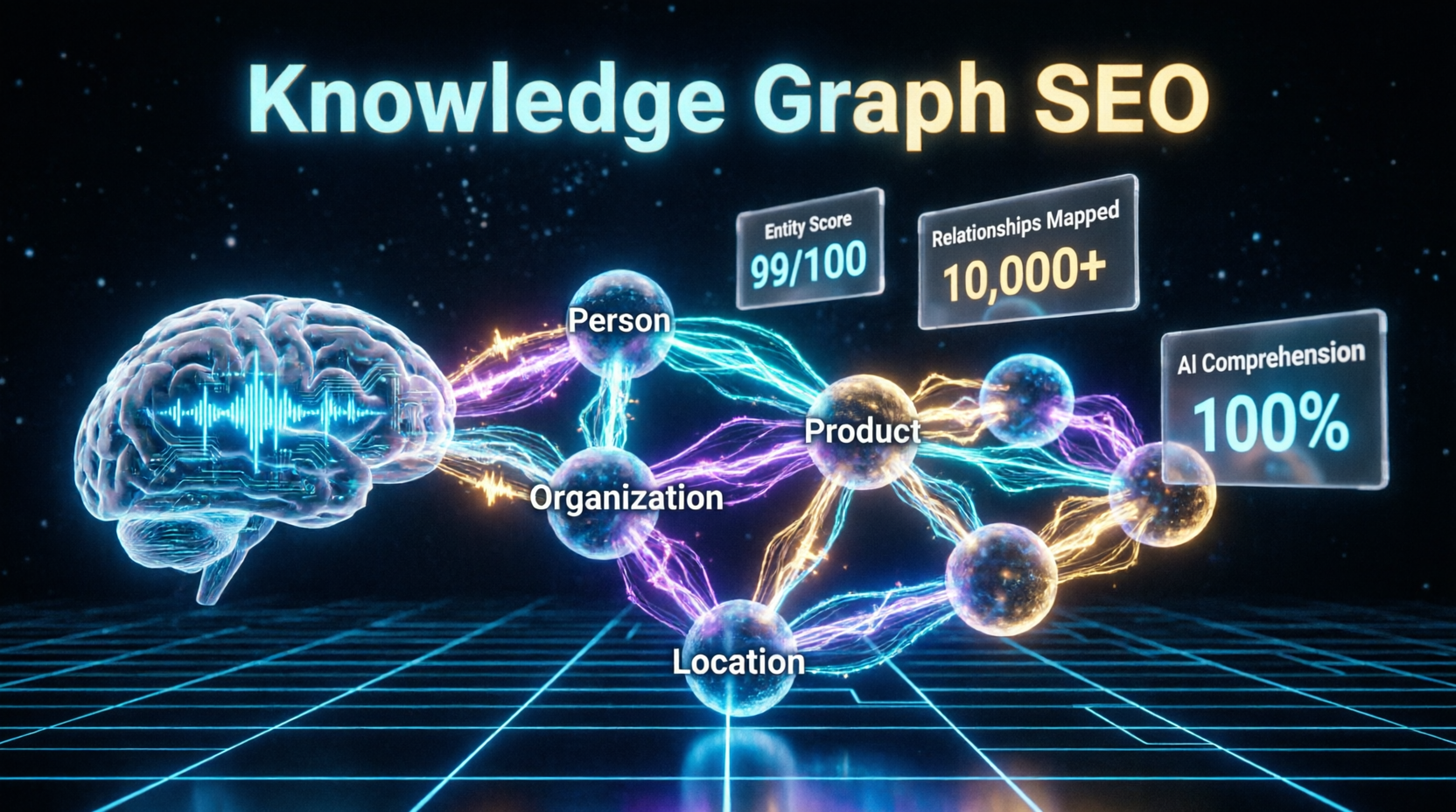
  • Knowledge Graph SEO: Building Entity Relationships for Search Engines and AI Systems

    Knowledge Graph SEO: Building Entity Relationships for Search Engines and AI Systems

    Introduction

    A website is no longer just a collection of pages.

    For advanced search systems, it can be viewed as a network of:

    Entities → Relationships → Attributes → Evidence → Content

    This makes entity architecture an important part of advanced technical SEO.

    What Is an Entity?

    An entity is a clearly identifiable thing such as:

    • a company
    • person
    • product
    • service
    • location
    • organization
    • software
    • topic

    For a digital marketing company, important entities might include the company itself, SEO, PPC, technical SEO, content marketing, Google Ads and specific locations served.

    Build a Consistent Entity Identity

    Your company’s:

    • name
    • website
    • logo
    • business description
    • services
    • locations
    • social profiles
    • author information

    should communicate a consistent identity.

    Structured data can help Google understand information about organizations and other entities. Google supports structured data for organization information and other search features.

    Create Entity Relationships

    Instead of simply publishing:

    SEO Services

    connect the topic to meaningful supporting concepts:

    Company → provides → SEO Services

    SEO Services → includes → Technical SEO

    Technical SEO → improves → Crawling and Indexing

    Local SEO → supports → Local Business Visibility

    These relationships should be reflected naturally through your content and internal linking.

    Use Structured Data Carefully

    JSON-LD can provide machine-readable information about supported entities and page types.

    However, structured data must accurately represent visible page content and follow Google’s guidelines. Misleading or hidden structured data can make a page ineligible for rich results.

    Entity Consistency Across the Web

    Your entity signals should also be consistent across legitimate external sources.

    Examples include:

    • business directories
    • professional profiles
    • industry publications
    • company profiles
    • authoritative mentions

    The goal is not to manufacture mentions. Google specifically warns against focusing on inauthentic mentions as an AI Search strategy.

    Final Takeaway

    Advanced SEO increasingly requires businesses to think beyond keywords.

    Your website should clearly communicate:

    Who you are → what you offer → who you serve → where you operate → what expertise you have → how your services relate to broader topics.

    That creates a stronger foundation for modern search understanding.

  • Enterprise SEO Automation: Building an AI-Powered Technical SEO Operations System

    Enterprise SEO Automation: Building an AI-Powered Technical SEO Operations System

    Introduction

    Enterprise SEO cannot depend entirely on spreadsheets and manual audits.

    Large organizations need systems that continuously answer:

    • What changed?
    • Where did it change?
    • How many URLs are affected?
    • Is organic traffic affected?
    • Which issue should be fixed first?
    • Did the deployment create an SEO problem?

    The Enterprise SEO Stack

    A mature system can combine:

    Crawler

    → technical URL information

    Search Console

    → search visibility

    Analytics

    → users and conversions

    Server Logs

    → crawler behavior

    CMS

    → content changes

    Deployment System

    → code changes

    AI Analysis

    → issue classification and prioritization

    Automate Technical Audits

    Automation can detect:

    • broken links
    • redirect chains
    • canonical inconsistencies
    • noindex problems
    • sitemap anomalies
    • structured-data errors
    • duplicate content patterns
    • sudden indexing changes
    • server errors

    Google recommends using tools such as Search Console and URL Inspection for technical investigation, while structured data should also be monitored after website changes.

    Add AI-Assisted Prioritization

    Not every technical issue deserves the same priority.

    Consider:

    Issue A

    100 broken URLs with almost no traffic.

    Issue B

    500 server errors affecting pages generating 40% of organic revenue.

    An intelligent system should prioritize Issue B.

    Create SEO Change Detection

    Every major deployment can automatically compare:

    Before vs After

    • indexability
    • canonicals
    • internal links
    • metadata
    • structured data
    • response codes
    • page rendering
    • organic performance

    This creates an SEO quality-control layer inside the development lifecycle.

    Human Review Still Matters

    AI should assist SEO professionals rather than blindly making every change.

    For example:

    AI detects anomaly → SEO specialist investigates → developer fixes → automated system validates

    This is safer than automatically changing thousands of URLs.

    Build an SEO Command Center

    A mature enterprise SEO dashboard could display:

    Technical Health

    Crawl Health

    Indexation

    Organic Visibility

    AI Search Visibility

    Revenue Impact

    Open SEO Incidents

    This transforms SEO into an operational discipline.

    Final Takeaway

    Enterprise SEO is moving toward continuous systems rather than periodic audits.

    The strongest architecture combines:

    Data + Automation + Technical SEO + AI Assistance + Human Expertise

    Google’s 2026 Search guidance continues to emphasize foundational SEO and valuable content even as AI Search experiences evolve.

  • Search Retrieval Architecture: How Modern Search Systems Discover, Rank and Retrieve Web Content

    Search Retrieval Architecture: How Modern Search Systems Discover, Rank and Retrieve Web Content

    Introduction

    To optimize advanced websites, marketers need to understand the search pipeline.

    At a simplified level:

    Crawling → Processing → Indexing → Retrieval → Ranking → Search Experience

    Google describes Search as an automated system where crawlers discover pages, content is processed and pages may become part of the Search index.

    Stage 1: Discovery

    Search engines need ways to discover URLs.

    Discovery can come through:

    • internal links
    • external links
    • sitemaps
    • previously known URLs

    A technically isolated page may be harder to discover efficiently.

    Stage 2: Processing

    The search system processes page resources and content.

    For JavaScript websites, rendering becomes particularly important because content can depend on browser-side execution. Google provides dedicated JavaScript SEO guidance for this reason.

    Stage 3: Indexing

    A URL being crawled does not automatically guarantee that it will appear in Search.

    Google explicitly states that it does not guarantee that every page will be crawled, indexed or served, even when a website follows Search Essentials.

    Stage 4: Retrieval

    For a query, search systems identify potentially relevant documents.

    Modern AI Search can expand complex queries through related searches. Google calls this query fan-out.

    This makes topical depth and clear relationships increasingly important.

    Stage 5: Ranking

    Candidate documents are evaluated using Google’s ranking systems.

    This is why technical SEO alone cannot guarantee rankings.

    Technical accessibility creates eligibility and discoverability; content quality, relevance and other signals influence performance.

    Stage 6: Search Experience

    The final result may include:

    • traditional results
    • images
    • videos
    • rich results
    • AI Overviews
    • AI Mode

    Google launched dedicated Search Console reporting for visibility from generative AI features in June 2026.

    Final Takeaway

    Advanced SEO requires understanding the entire retrieval pipeline rather than optimizing isolated page elements.

    A successful website should be:

    Discoverable → Crawlable → Renderable → Indexable → Understandable → Relevant → Valuable

  • Information Gain SEO: Engineering Content That Adds New Knowledge Instead of Repeating the Web

    Information Gain SEO: Engineering Content That Adds New Knowledge Instead of Repeating the Web

    Introduction

    Publishing another article that says the same thing as thousands of existing pages is becoming less valuable.

    The stronger strategy is:

    Don’t just summarize existing information. Add something new.

    Google’s current guidance emphasizes unique, valuable, non-commodity content and recommends focusing on helpful, reliable, people-first information.

    What Creates Information Gain?

    Examples include:

    • original research
    • customer surveys
    • proprietary datasets
    • experiments
    • case studies
    • expert interviews
    • original screenshots
    • industry benchmarks
    • unique calculations
    • firsthand experience

    Example

    Instead of publishing:

    “What Is SEO?”

    create:

    “We Analyzed 500 Local Business Websites: The Technical SEO Issues Most Often Associated With Poor Visibility.”

    The second concept provides original evidence.

    AI Makes This More Important

    Generative AI can produce generic explanations quickly.

    That means businesses should compete through information AI cannot easily reproduce from common knowledge.

    A digital marketing company could publish:

    “Our 2026 Technical SEO Audit Benchmark: 1,000 Issues Categorized Across Client Websites.”

    That creates a stronger content asset.

    Build Evidence Layers

    Advanced content can contain:

    Claim


    Evidence


    Methodology


    Interpretation


    Practical recommendation

    This creates content with depth rather than superficial keyword coverage.

    Avoid Scaled Low-Value Publishing

    Google warns that generating many pages with AI without adding value can violate its spam policies concerning scaled content abuse.

    AI can assist with research, structure and analysis, but the final content should contribute real value.

    Final Takeaway

    The question for every advanced SEO content project should be:

    “What does this page provide that users cannot easily get from ten other pages?”

    If the answer is unclear, the content probably needs more original value.

  • AI Agent Optimization: Designing Websites for Autonomous Search and Browser Agents

    AI Agent Optimization: Designing Websites for Autonomous Search and Browser Agents

    Introduction

    The next search interface may not always be a list of ten blue links.

    Users can increasingly interact with AI-powered search experiences that retrieve information from multiple sources.

    Google’s 2026 documentation describes AI Search experiences such as AI Overviews and AI Mode and explains that these systems rely on Search’s existing ranking and quality systems.

    This creates a broader technical question:

    Can an AI system reliably understand and navigate your website?

    Build Machine-Understandable Pages

    Important information should be available through accessible HTML.

    Avoid making critical information available only through:

    • inaccessible interactive elements
    • images without text alternatives
    • complex JavaScript states
    • hidden navigation
    • authentication barriers where public access is expected

    Design Clear Actions

    For transactional websites, clearly identify actions such as:

    • contact
    • request quote
    • book consultation
    • compare services
    • view pricing
    • download information

    Clear architecture helps both users and software systems understand what each page does.

    Use Structured Data Where Appropriate

    Structured data can help search engines understand supported content types.

    However, Google does not require special AI markup for generative AI visibility. Its current guidance specifically says there is no special structured-data requirement for AI Search.

    Therefore, businesses should avoid chasing unofficial “AI markup hacks.”

    Build Reliable Information

    AI systems need trustworthy information to retrieve.

    Your website should clearly communicate:

    • company identity
    • service information
    • expertise
    • contact details
    • policies
    • authorship where relevant
    • evidence supporting important claims

    Final Takeaway

    AI agent optimization is not about manipulating AI systems.

    It is about building websites that are:

    Accessible + crawlable + understandable + structured + trustworthy + useful.

    Those principles also support traditional SEO.

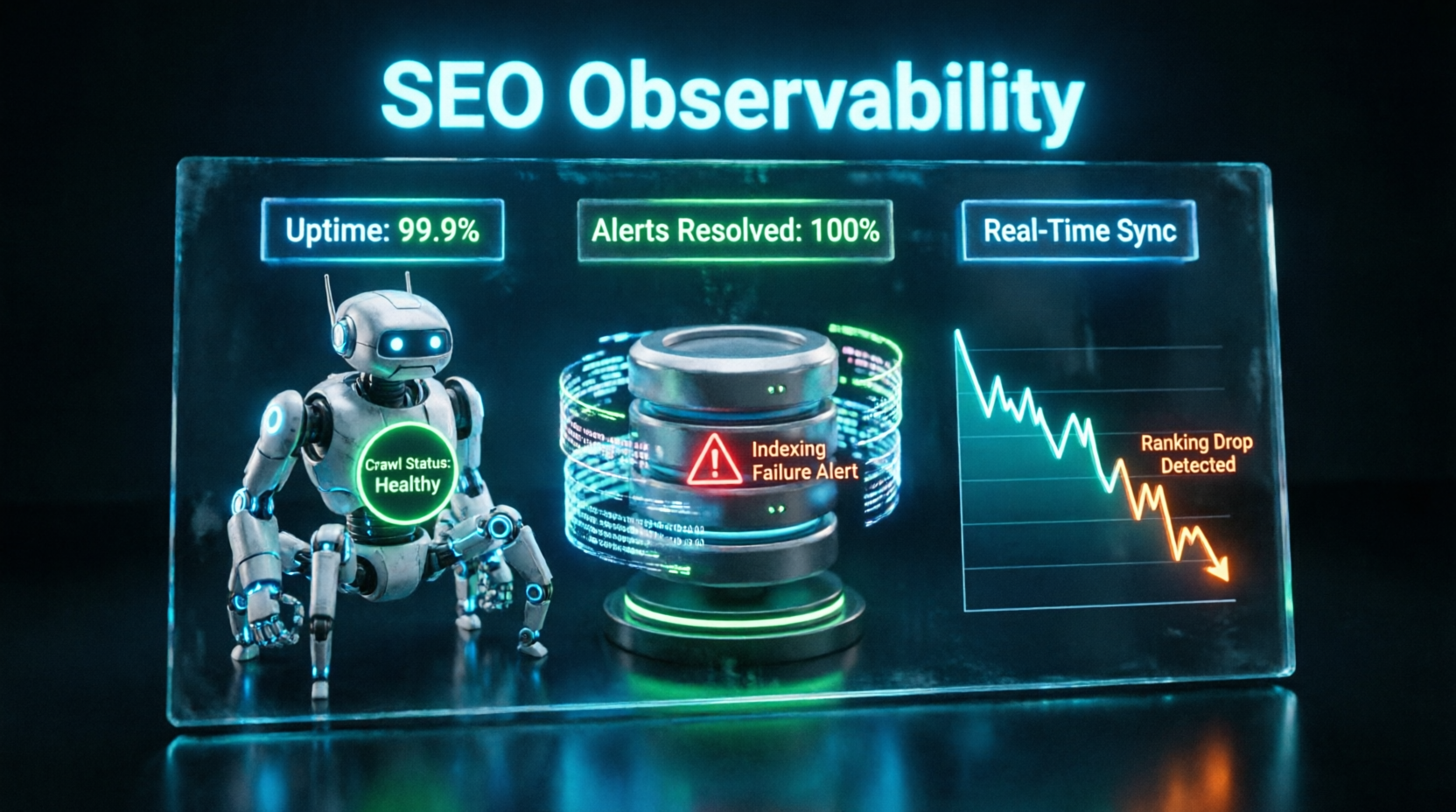
  • SEO Observability: Building Real-Time Monitoring for Crawling, Indexing and Ranking Failures

    SEO Observability: Building Real-Time Monitoring for Crawling, Indexing and Ranking Failures

    Introduction

    Imagine your website suddenly returns:

    500 errors on 30% of product pages.

    A traditional SEO process may discover the problem after traffic falls.

    An observable SEO system can detect the anomaly immediately.

    What Is SEO Observability?

    SEO observability means continuously monitoring the technical signals that influence search accessibility and performance.

    Important monitoring layers include:

    Infrastructure

    • uptime
    • server errors
    • response time

    Crawling

    • bot activity
    • crawl patterns
    • status codes

    Indexing

    • indexed URLs
    • excluded URLs
    • canonical changes

    Search Performance

    • impressions
    • clicks
    • CTR
    • visibility

    Google’s Search Console reporting can help site owners monitor search performance, including dedicated reporting for generative AI visibility introduced in 2026.

    Build SEO Alerts

    Examples:

    Alert: Organic clicks decreased 30%

    Alert: 404 responses increased 400%

    Alert: Canonical mismatch detected

    Alert: Indexable URLs decreased

    Alert: Robots.txt changed

    These alerts can be routed to technical teams.

    Use Baselines

    A simple threshold is not always enough.

    For example, traffic naturally changes by:

    • weekday
    • season
    • holidays
    • promotions
    • market

    A smarter monitoring system compares current performance with historical baselines.

    Connect Technical and Business Data

    The most valuable alert isn’t:

    “500 error detected.”

    It is:

    “500 errors detected on 8,500 product URLs representing 34% of organic revenue.”

    This changes prioritization immediately.

    SEO Disaster Prevention

    Observability can also monitor deployment changes.

    Before and after a website release, compare:

    • indexability
    • canonicals
    • robots directives
    • internal links
    • structured data
    • response codes

    This creates an SEO safety layer around development.

    Final Takeaway

    SEO should not operate like a monthly inspection.

    For large businesses, SEO observability can transform technical SEO from reactive troubleshooting into continuous operational monitoring.

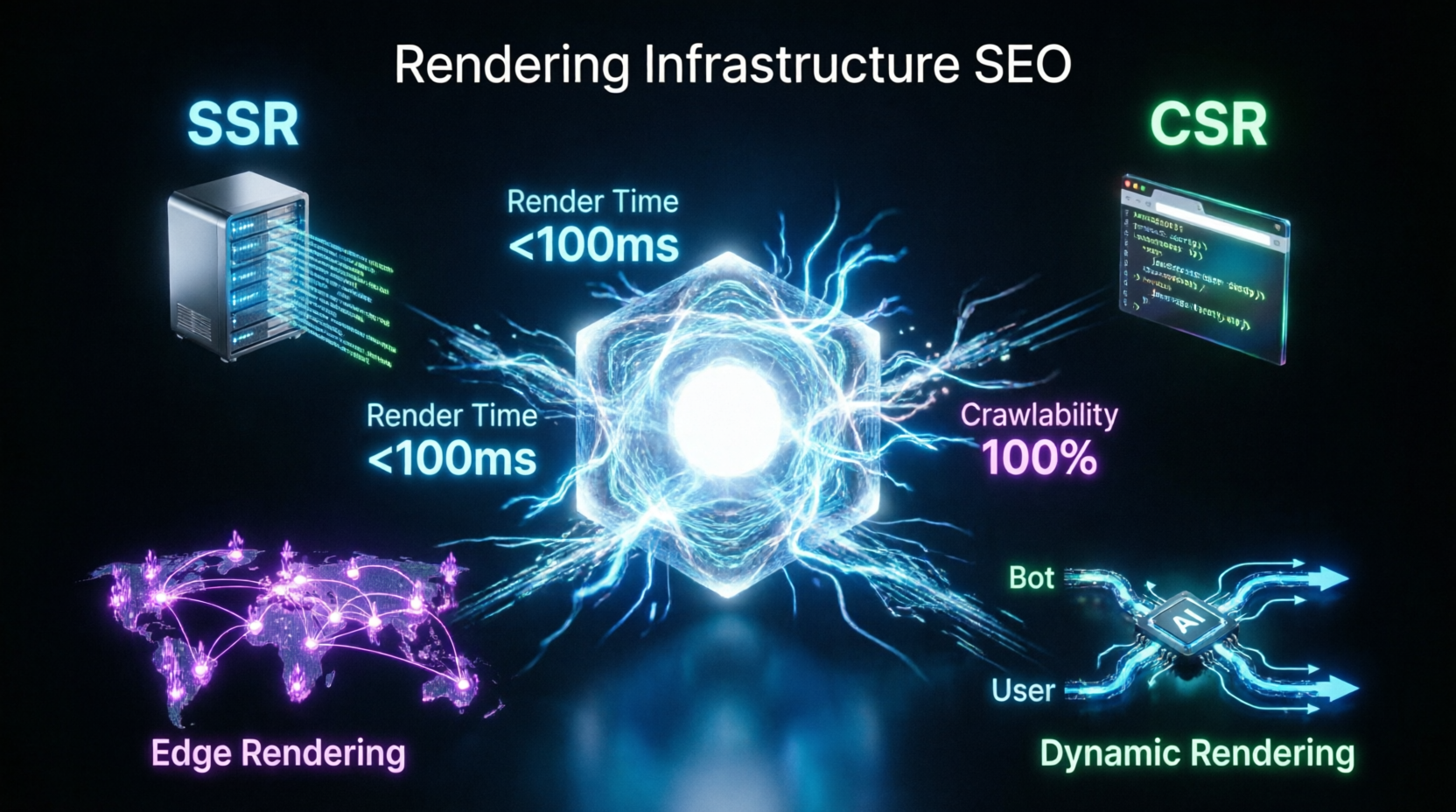
  • Rendering Infrastructure SEO: SSR, CSR, Edge Rendering and Dynamic Rendering at Enterprise Scale

    Rendering Infrastructure SEO: SSR, CSR, Edge Rendering and Dynamic Rendering at Enterprise Scale

    Introduction

    JavaScript has transformed website development.

    Modern businesses use frameworks and applications that can generate interfaces dynamically. But advanced SEO teams must understand how content becomes available to search engines.

    Google explains that its Search systems process JavaScript and provides dedicated guidance for JavaScript SEO.

    CSR: Client-Side Rendering

    With client-side rendering, the browser receives a relatively small HTML document and JavaScript generates much of the page.

    Advantages:

    • highly interactive applications
    • rich user experiences
    • flexible frontend architecture

    Potential SEO challenges:

    • rendering complexity
    • delayed content availability
    • accidental non-indexable states
    • dependency failures

    SSR: Server-Side Rendering

    Server-side rendering generates HTML on the server before sending it to the browser.

    This can provide search engines with meaningful HTML earlier in the process.

    It can also improve initial page delivery when implemented correctly.

    Edge Rendering

    Edge infrastructure can generate or transform responses closer to users.

    This can be useful for:

    • international websites
    • personalization
    • performance optimization
    • dynamic content systems

    But the architecture must be carefully tested for crawler behavior and caching.

    SEO Rendering Audit

    An advanced audit should compare:

    Raw HTML

    vs.

    Rendered DOM

    vs.

    User-visible content

    Check whether important elements such as:

    • titles
    • canonical tags
    • internal links
    • structured data
    • main content
    • metadata

    are correctly available.

    Don’t Forget Performance

    Rendering architecture also interacts with user experience.

    Google’s Core Web Vitals measure real-world loading performance, interactivity and visual stability.

    Therefore, SEO teams should work alongside developers rather than treating rendering as a separate marketing issue.

    Final Takeaway

    At enterprise scale, SEO is partly an architecture discipline.

    The best rendering solution is not simply “SSR everywhere” or “CSR everywhere.” It is the architecture that reliably delivers crawlable, indexable, useful content while maintaining excellent user experience.

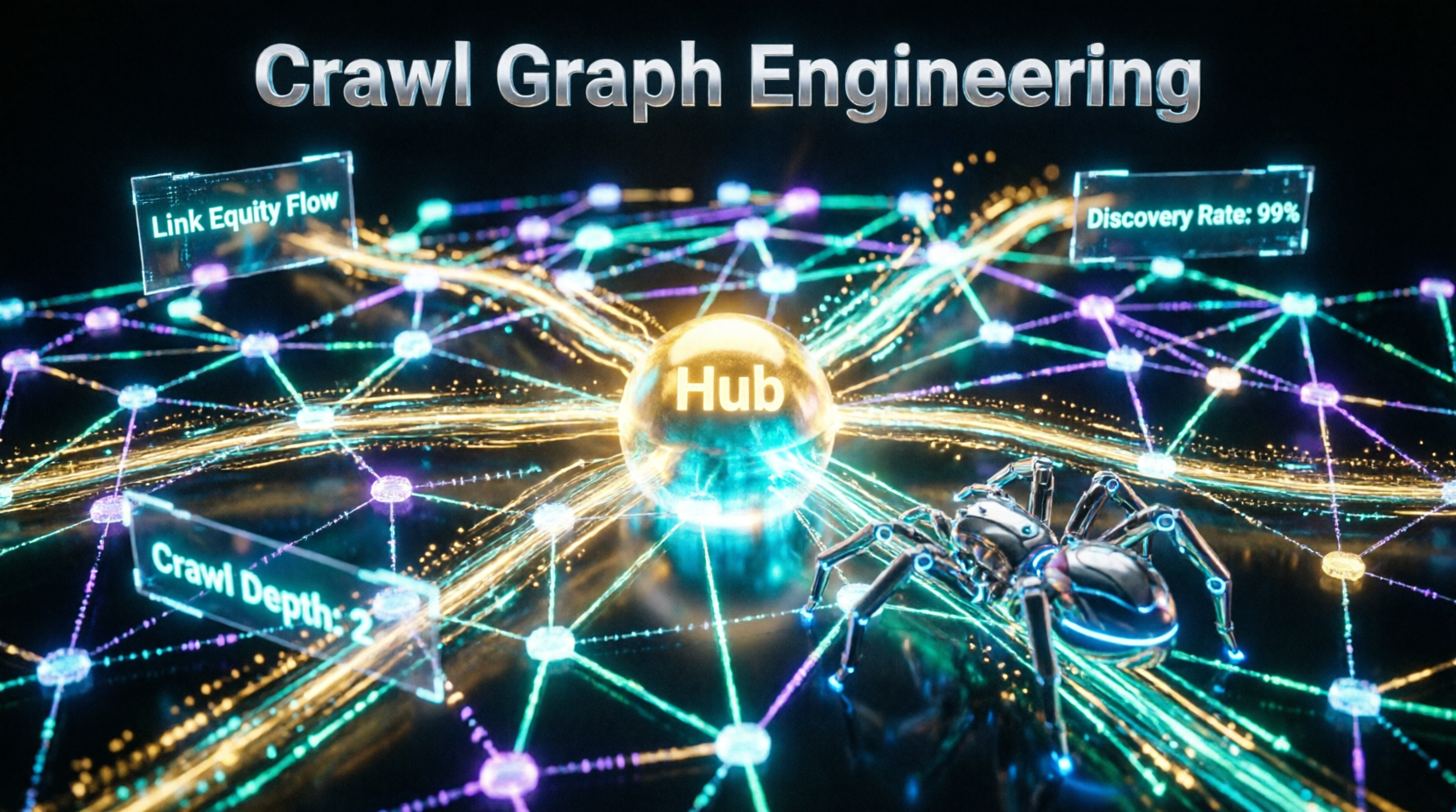
  • Crawl Graph Engineering: Optimizing Internal Link Equity and Search Engine Discovery Paths

    Crawl Graph Engineering: Optimizing Internal Link Equity and Search Engine Discovery Paths

    Introduction

    Most SEO audits treat internal links as a simple checklist.

    Advanced technical SEO looks at them as a graph problem.

    Imagine every URL as a node and every internal link as an edge.

    Your website becomes a graph:

    Homepage → Category → Subcategory → Product → Supporting Content

    The quality of this graph can affect how efficiently search engines discover your important content.

    What Is Crawl Graph Engineering?

    Crawl graph engineering means analyzing:

    • link depth
    • internal link frequency
    • orphan URLs
    • crawl paths
    • category relationships
    • pagination
    • parameter URLs
    • redirects
    • canonical targets

    The goal is to create efficient discovery paths.

    Identify Orphan Pages

    An orphan page may exist in your sitemap but have few or no internal links pointing toward it.

    This creates a structural problem.

    Instead of asking only:

    “Is the page indexed?”

    ask:

    “How does a crawler naturally discover this page?”

    Analyze Click Depth

    Important commercial pages should not be buried behind excessive navigation layers.

    A typical architecture might look like:

    Homepage

    Service Category

    Service

    Detailed Service Page

    The exact number of levels depends on the website, but the principle is simple: important content should have clear discovery paths.

    Reduce Crawl Waste

    Large websites can contain:

    • filters
    • tracking parameters
    • duplicate URLs
    • session URLs
    • endless calendars
    • internal search pages

    These can create enormous URL spaces.

    Google’s crawling guidance specifically recommends managing crawlability carefully, particularly for very large or frequently updated sites.

    Build Contextual Link Networks

    A blog about:

    “Technical SEO for Ecommerce”

    could naturally link to:

    • ecommerce SEO
    • crawl budget
    • faceted navigation
    • structured data
    • product SEO
    • JavaScript SEO

    This creates meaningful semantic relationships.

    Measure the Graph

    Advanced teams can track:

    • orphan URL percentage
    • average click depth
    • internal links per important page
    • redirected internal links
    • broken internal links
    • crawl frequency by URL group

    Final Takeaway

    Internal linking should not be treated as a last-minute SEO task.

    For large websites, it is part of the technical infrastructure that helps search engines discover and understand important content.

  • SEO Data Engineering: Building an Automated Technical SEO Data Warehouse

    SEO Data Engineering: Building an Automated Technical SEO Data Warehouse

    Introduction

    At enterprise scale, manually opening SEO tools is not enough.

    Large websites can contain:

    • millions of URLs
    • thousands of templates
    • constantly changing content
    • JavaScript applications
    • international versions
    • product databases
    • dynamic parameters

    The solution is to treat SEO as a data engineering problem.

    What Is an SEO Data Warehouse?

    An SEO data warehouse centralizes data from different sources.

    Possible inputs include:

    Google Search Console

    → clicks
    → impressions
    → queries
    → pages
    → countries
    → search appearance

    Google Analytics

    → users
    → conversions
    → engagement
    → revenue

    Crawler

    → status codes
    → canonicals
    → directives
    → links
    → page depth

    Server Logs

    → Googlebot activity
    → crawl frequency
    → response codes
    → resource requests

    Google recommends combining Search Console and Analytics data for a more complete view of search performance.

    Build a Common URL Identifier

    One major technical challenge is that different systems represent URLs differently.

    For example:

    https://example.com/page

    and

    https://www.example.com/page/

    could be interpreted differently by different systems.

    Normalize URLs before analysis.

    Create SEO Fact Tables

    An enterprise system can maintain tables such as:

    URL_Facts

    • URL
    • status code
    • canonical
    • indexability
    • word count
    • crawl date

    Search_Facts

    • query
    • URL
    • clicks
    • impressions
    • CTR
    • position

    Crawl_Facts

    • bot
    • timestamp
    • response
    • bytes
    • URL

    This allows cross-system analysis.

    Automate Anomaly Detection

    Instead of discovering problems weeks later, create automated alerts.

    Examples:

    Indexable URLs ↓ 20%

    5xx errors ↑ 300%

    Organic clicks ↓ 25%

    Crawl requests suddenly concentrated on parameter URLs

    These signals can trigger technical investigations.

    Create Executive SEO Dashboards

    A professional dashboard should connect technical metrics with business outcomes.

    For example:

    Technical issue → affected URLs → organic traffic → conversions → revenue

    This turns SEO from a marketing activity into a measurable business system.

    Final Takeaway

    The next generation of enterprise SEO will increasingly depend on data pipelines, automated analysis and real-time monitoring.

    Businesses that combine SEO expertise with data engineering can detect problems faster and prioritize changes based on measurable business impact.