Author: Saad Ansari

  • AI Search Technical Architecture: Building a Website Ready for the Next Search Era

    AI Search Technical Architecture: Building a Website Ready for the Next Search Era

    Introduction

    The future of search is becoming increasingly multi-layered.

    Users may discover a business through traditional results, AI-generated answers, visual search, video results or other search experiences.

    Businesses therefore need websites that are technically accessible and information-rich.

    Start With Indexability

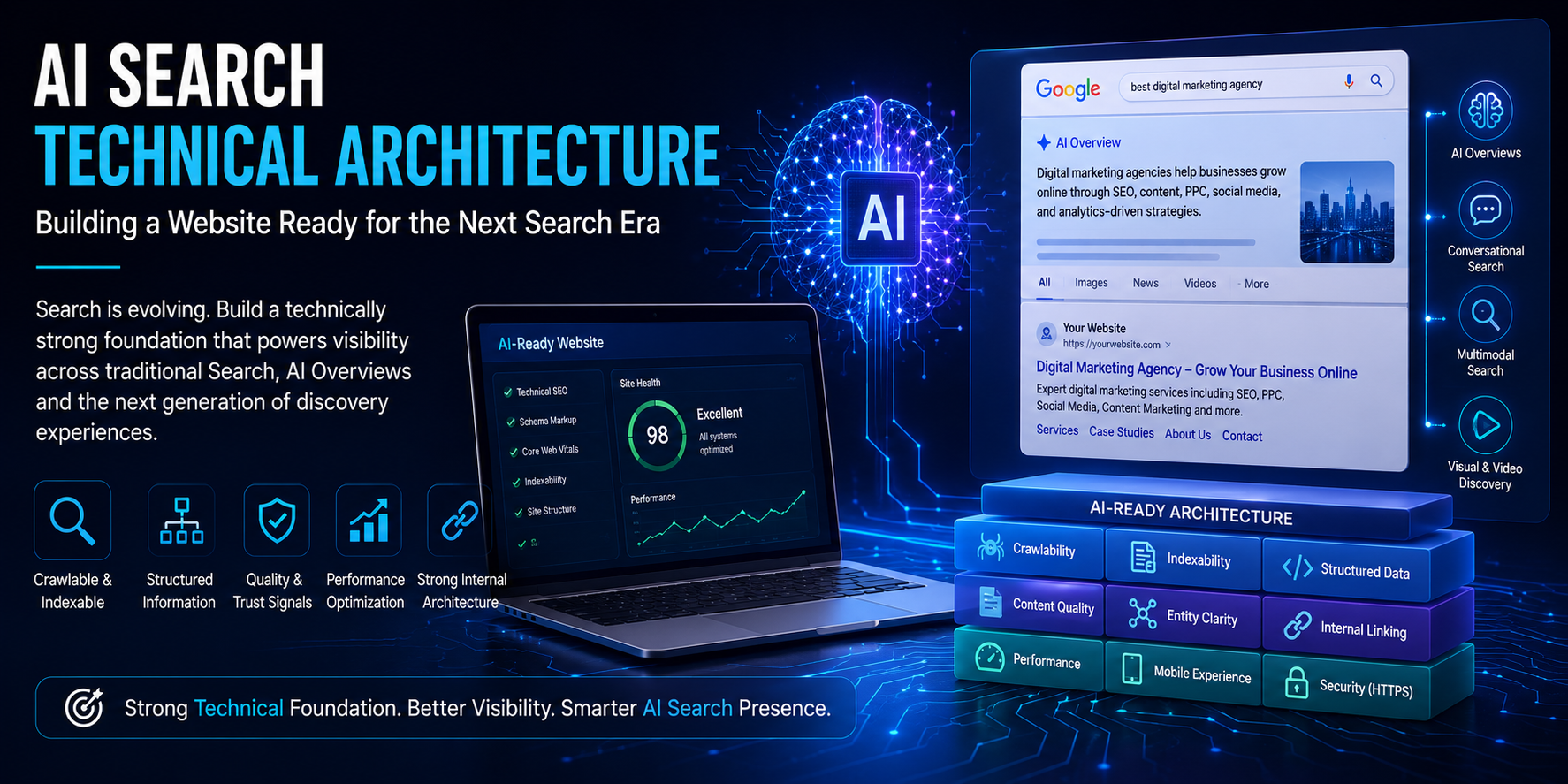
    A page cannot provide search visibility if search engines cannot properly access and index it.

    Important technical foundations include:

    • Crawlable pages
    • Correct status codes
    • Logical URLs
    • Internal links
    • XML sitemaps
    • Mobile usability
    • Correct canonicalization

    Google’s current guidance explicitly states that pages need to be indexed to be eligible for generative AI search features, while existing SEO best practices remain relevant.

    Create Machine-Understandable Information

    Important business information should be clear and consistently represented.

    For example:

    Company → Services → Locations → Experts → Case Studies → Resources

    This structure helps users navigate and gives search systems clearer context.

    Build Non-Commodity Content

    AI can generate generic explanations very quickly.

    Businesses therefore need information that is harder to reproduce:

    • Original research
    • Expert experience
    • Unique case studies
    • First-hand insights
    • Proprietary data
    • Original frameworks

    Google’s current AI-search guidance specifically emphasizes creating valuable, non-commodity content rather than relying on generic material.

    Technical SEO + AI Search

    The strongest architecture is not a separate “AI SEO website.”

    It is a technically strong website that combines:

    Technical SEO + Quality Content + Entity Clarity + Structured Information + Strong Internal Linking + Measurement

    Businesses should also avoid tactics designed to manipulate generative AI results. Google’s spam policies apply to generative AI responses in Search as well as traditional Search.

    The Long-Term Strategy

    AI search will continue evolving.

    Specific interfaces may change, but the fundamentals remain:

    Make your website accessible.
    Make your information useful.
    Make your expertise clear.
    Make your brand trustworthy.
    Measure what actually produces business results.
  • Search Console API and Automated SEO Intelligence for Enterprise Websites

    Search Console API and Automated SEO Intelligence for Enterprise Websites

    Introduction

    A website with thousands of pages can generate too much SEO data for manual analysis.

    Automation allows teams to transform raw search data into actionable intelligence.

    Google provides programmatic access to Search Console data through its API, while Search Console itself continues evolving to include newer search experiences. Google has also clarified that AI Mode data contributes to overall Search Console Performance totals.

    Build an Automated Pipeline

    A basic architecture can look like:

    Search Console API → Data Warehouse → Processing → Dashboard → Alerts

    Data can be segmented by:

    • URL
    • Query
    • Country
    • Device
    • Search appearance
    • Date
    • Page type

    Automated Anomaly Detection

    A system can alert marketers when:

    • Organic clicks fall sharply
    • Impressions suddenly decline
    • Important URLs disappear
    • CTR changes significantly
    • A page group loses visibility

    Combine Multiple Data Sources

    Enterprise SEO intelligence becomes stronger when Search Console data is combined with:

    • Analytics
    • Server logs
    • CRM data
    • Revenue data
    • Rank tracking
    • Crawling data

    This connects search visibility with business outcomes.

  • SEO Experimentation: How to Test Technical Changes Without Guessing

    SEO Experimentation: How to Test Technical Changes Without Guessing

    Introduction

    SEO teams frequently make changes without knowing whether those changes actually caused an improvement.

    Advanced SEO teams use experimentation to reduce uncertainty.

    Possible experiments include:

    • Title changes
    • Internal-link improvements
    • Template modifications
    • Content changes
    • Navigation changes
    • Structured-data implementation
    • Page-speed improvements

    Establish a Baseline

    Before making a change, record:

    • Organic clicks
    • Impressions
    • CTR
    • Rankings
    • Conversions
    • Indexed URLs
    • Revenue

    Define a Hypothesis

    For example:

    “Improving internal links to important service pages will increase their organic visibility.”

    Then implement the change in a controlled environment.

    Measure the Impact

    Compare performance before and after the change while accounting for:

    • Seasonality
    • Algorithm updates
    • Marketing campaigns
    • Website-wide changes

    A/B-style experimentation can be difficult in SEO because search engines and external variables introduce noise, so tests should be interpreted carefully.

    Build an SEO Testing Culture

    The goal isn’t to test everything.

    The goal is to identify high-impact assumptions and validate them with evidence.

  • SEO During Website Migration: Preventing Traffic Loss in Large Site Moves

    SEO During Website Migration: Preventing Traffic Loss in Large Site Moves

    Introduction

    Website migrations are among the highest-risk technical SEO projects.

    A migration may involve:

    • Domain changes
    • URL restructuring
    • CMS changes
    • HTTP to HTTPS
    • Platform migration
    • Website redesign
    • International restructuring

    Even small mistakes can cause significant traffic losses.

    Build a URL Mapping System

    Before launching, create a mapping table:

    Old URL → New URL → Redirect → Status → Validation

    Every valuable old URL should have a planned destination.

    Redirect Strategy

    Permanent redirects should point users and search engines toward the most relevant new page.

    Avoid redirecting thousands of unrelated URLs to the homepage.

    Pre-Launch Testing

    Test:

    • Canonical tags
    • Robots directives
    • XML sitemaps
    • Internal links
    • Status codes
    • Structured data
    • Mobile versions
    • Metadata

    Post-Launch Monitoring

    After migration, monitor:

    • Organic clicks
    • Impressions
    • Indexing
    • Crawl errors
    • Redirect chains
    • 404 responses
    • Rankings
    • Conversions

    Google’s 2026 documentation has continued updating site-move guidance, including handling domain variants during migrations.

  • Entity-Based SEO Architecture: Connecting Your Brand, Services and Topics

    Entity-Based SEO Architecture: Connecting Your Brand, Services and Topics

    Introduction

    Keyword-focused SEO treats pages primarily as targets for search phrases.

    Entity-based SEO takes a broader approach.

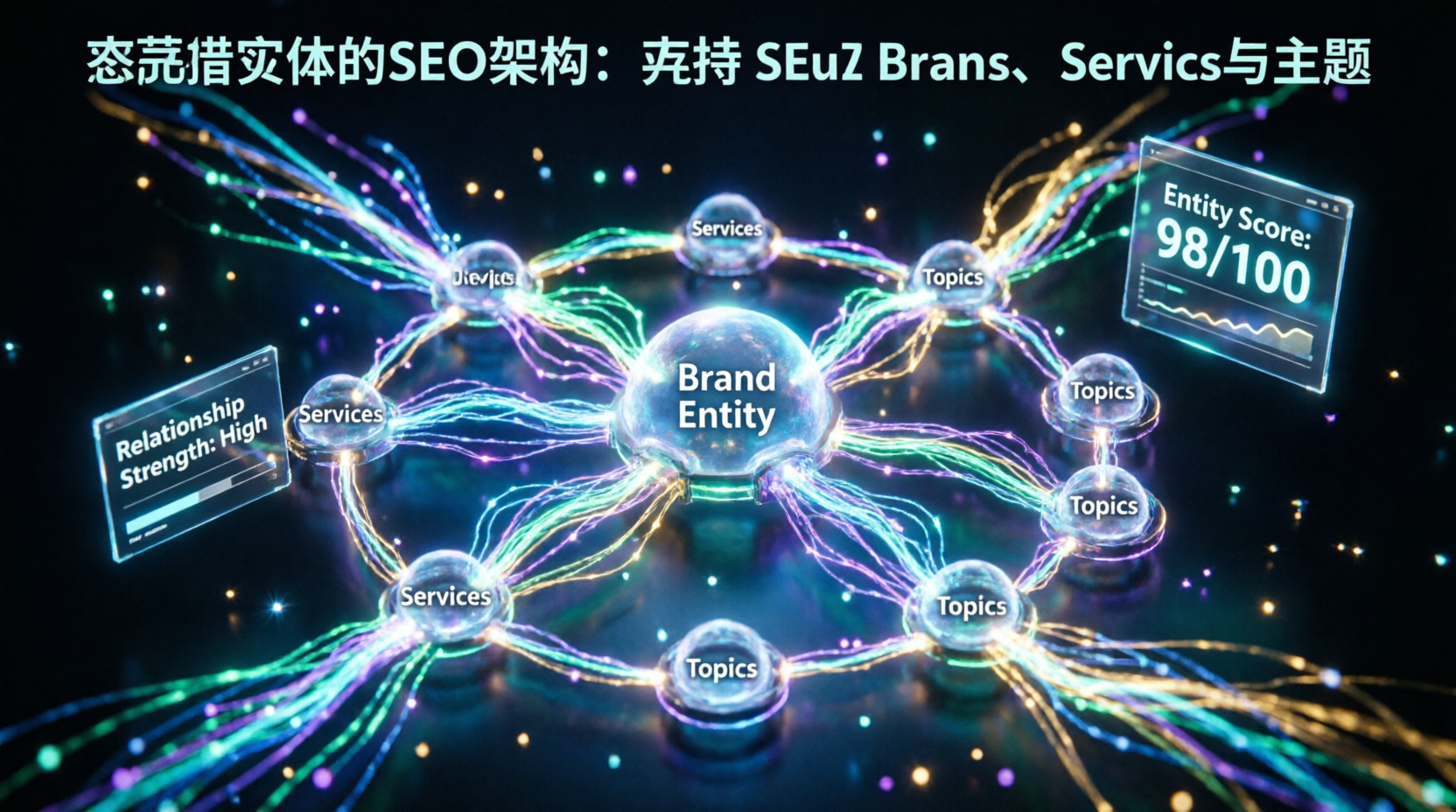
    A digital marketing company, for example, may be associated with entities such as:

    Brand → Digital Marketing → SEO → PPC → Content → Analytics → Local SEO

    The website should make these relationships clear.

    Build Entity Relationships

    Create dedicated pages for important services and connect them through internal links.

    For example:

    Digital Marketing

    → SEO

    → Technical SEO

    → Local SEO

    → PPC

    → Content Marketing

    → Analytics

    This creates a semantic network.

    Use Consistent Business Information

    Your brand name, services and business information should remain consistent across your website and relevant external profiles.

    Structured Data

    Where appropriate, structured data can help machines interpret entities and relationships.

    However, markup should represent information actually present on the page.

    Entity SEO and AI Search

    Google’s current generative-AI guidance emphasizes that traditional SEO remains important because AI Search features rely on Google’s core Search systems and indexed content.

    This makes strong information architecture more valuable than chasing short-lived “GEO hacks.”

  • Structured Data Governance in 2026: Building a Maintainable Schema Strategy

    Structured Data Governance in 2026: Building a Maintainable Schema Strategy

    Introduction

    Structured data is often implemented once and then forgotten.

    That approach can become risky as websites, templates and Google’s supported search features change.

    Google has continued to simplify its structured-data ecosystem and has announced retirement or deprecation of several structured-data features.

    This makes structured-data governance increasingly important.

    Create a Schema Inventory

    Maintain a list containing:

    • Schema type
    • Page template
    • Properties used
    • Validation status
    • Business owner
    • Last review date

    This makes large websites easier to manage.

    Validate Markup Automatically

    Enterprise websites can integrate structured-data testing into development workflows.

    When developers change a template, automated checks can detect:

    • Missing required properties
    • Invalid values
    • Broken JSON-LD
    • Incorrect nesting
    • Template-specific errors

    Google recommends monitoring structured-data issues after major website changes.

    Avoid Unsupported Markup

    Not every schema type produces a visible search feature.

    Therefore, businesses should prioritize structured data that accurately represents the page and is supported by current search documentation.

    Future-Proof Architecture

    A strong schema system should be:

    Accurate → Valid → Relevant → Maintainable → Monitored

  • International SEO Architecture: Hreflang, Localization and Global Search

    International SEO Architecture: Hreflang, Localization and Global Search

    Introduction

    A business operating across multiple countries may have several versions of the same website.

    For example:

    • English
    • Urdu
    • Arabic
    • French
    • German

    Or country-specific versions such as:

    • Pakistan
    • UAE
    • UK
    • USA

    The technical challenge is helping search engines understand which version is intended for which audience.

    Hreflang

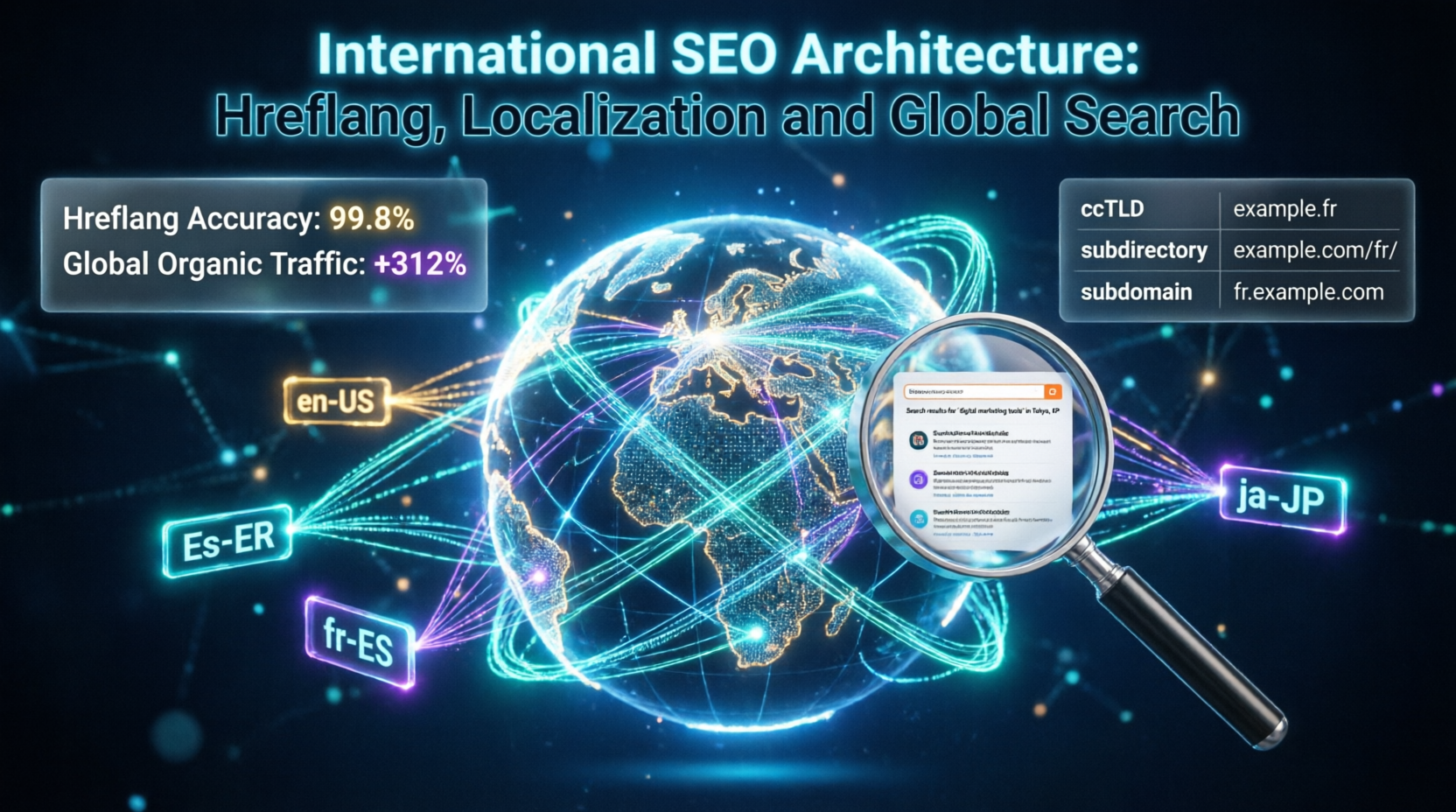
    The hreflang system can communicate language and regional alternatives.

    For example:

    en-gb

    can represent English content intended for Great Britain.

    en-us

    can represent English content intended for the United States.

    Correct implementation requires reciprocal relationships between alternate pages.

    Localization vs Translation

    Simply translating text is not always enough.

    Localized pages may need:

    • Local currency
    • Regional terminology
    • Local contact details
    • Local shipping information
    • Country-specific regulations
    • Local examples
    • Appropriate spelling

    URL Architecture

    Common approaches include:

    Country subdirectories

    example.com/uk/

    Country subdomains

    uk.example.com

    Country-code domains

    example.co.uk

    Each architecture has technical and operational implications.

    Advanced Validation

    International SEO teams should test:

    • Hreflang reciprocity
    • Canonicals
    • XML sitemaps
    • Redirects
    • Language consistency
    • Regional internal links

    Google’s Search documentation continues to update technical guidance regularly, making ongoing validation important for international websites.


  • Faceted Navigation SEO: Controlling Millions of Ecommerce URLs

    Faceted Navigation SEO: Controlling Millions of Ecommerce URLs

    Introduction

    Ecommerce websites often use filters such as:

    • Brand
    • Price
    • Size
    • Color
    • Material
    • Rating
    • Availability

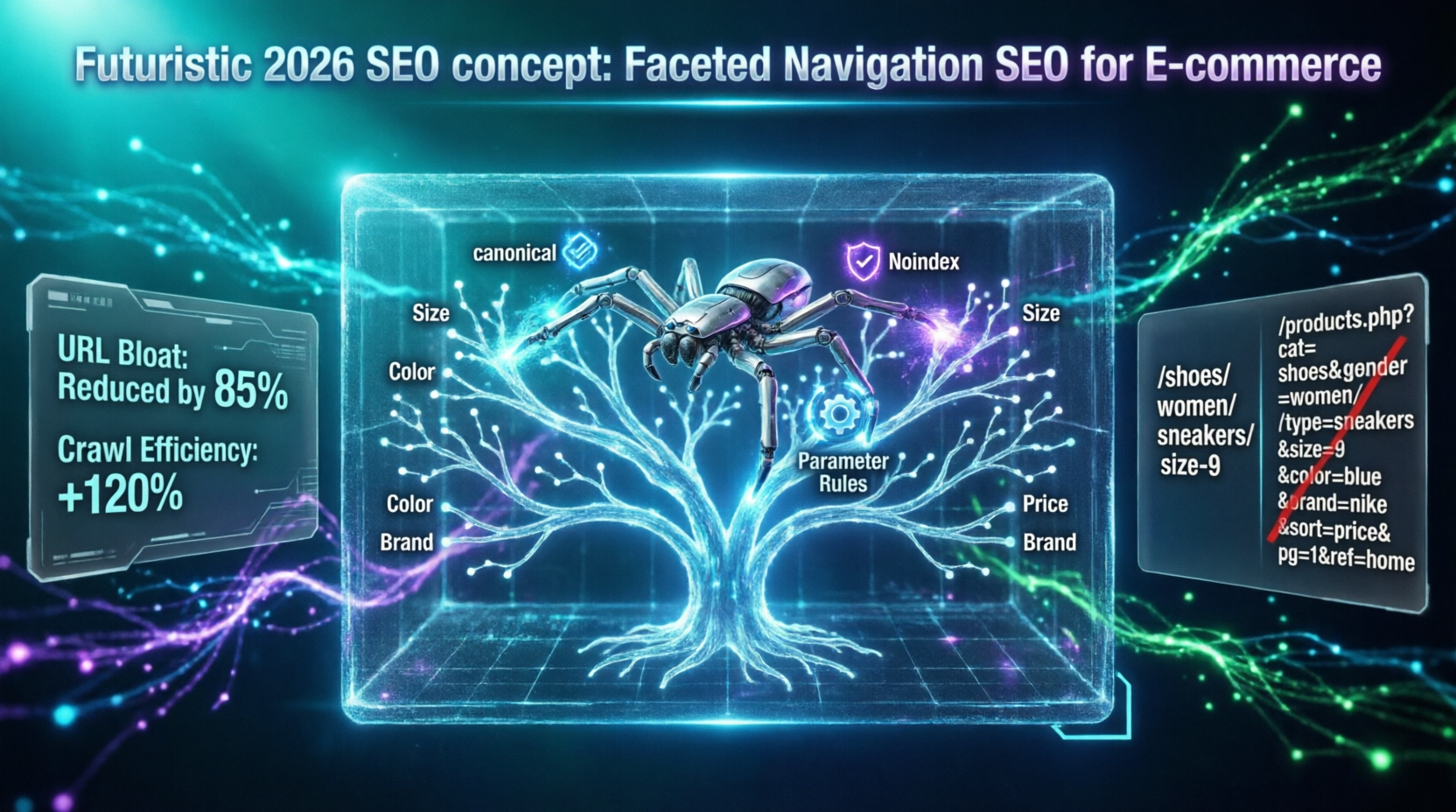
    These features are excellent for shoppers but can create thousands of URL combinations.

    For example:

    /shoes

    could become:

    /shoes?brand=x&color=black&size=10

    and then:

    /shoes?brand=x&color=black&size=10&sort=price

    If every variation is treated as an indexable page, the website can experience URL explosion.

    Build a URL Classification System

    Every URL pattern should be classified as:

    Indexable → Potentially indexable → Non-indexable

    Pages with genuine search demand and unique value may deserve indexing.

    Low-value combinations generally should not compete for indexation.

    Internal Linking Matters

    Do not accidentally create massive internal-link networks pointing to every possible filter combination.

    Important category and product pages should receive stronger internal signals.

    Canonical Strategy

    Canonical tags can help consolidate duplicate or substantially similar versions, but canonicalization should not be used as a universal solution for every URL-management problem.

    Monitoring

    Enterprise ecommerce teams should regularly monitor:

    • Indexed URLs
    • Crawl activity
    • Parameter patterns
    • Duplicate content
    • Organic traffic
    • Search Console indexing reports
  • Log File SEO Analysis: What Googlebot Is Really Doing on Your Website

    Log File SEO Analysis: What Googlebot Is Really Doing on Your Website

    Introduction

    Most SEO teams analyze rankings, traffic and Search Console reports.

    Advanced technical SEO teams go one step further by analyzing server logs.

    A server log records requests made to a website, including requests from search-engine crawlers.

    This can answer questions such as:

    • Which pages does Googlebot crawl most?
    • Which pages are rarely crawled?
    • Are crawlers spending time on unnecessary URLs?
    • Which status codes are being returned?
    • Are important pages being discovered?

    Log Analysis Workflow

    A technical SEO team can:

    1. Collect server logs.
    2. Identify legitimate search-engine crawlers.
    3. Group URLs by type.
    4. Analyze HTTP status codes.
    5. Compare crawl frequency with SEO value.
    6. Identify wasted crawl patterns.
    7. Optimize website architecture.

    Example

    Imagine an ecommerce website has 100,000 URLs but only 20,000 valuable indexable pages.

    If crawler activity is concentrated heavily on filtering URLs, the website may have an architecture problem.

    Log data can reveal this pattern more clearly than ranking reports alone.

    Combine Logs With Search Console

    Search Console tells you about Google’s search performance and indexing signals.

    Server logs tell you what requests actually reached your server.

    Together, they provide a deeper technical view.

    Google’s current documentation continues to emphasize correct crawling, processing and indexing as foundations for visibility, including in AI-powered Search experiences.

  • Crawl Budget Optimization at Scale: Advanced Technical SEO for Large Websites

    Crawl Budget Optimization at Scale: Advanced Technical SEO for Large Websites

    ntroduction

    For a small website, crawl efficiency may not appear to be a major concern. For enterprise websites containing thousands or millions of URLs, however, crawl management becomes a serious technical SEO discipline.

    Search engines need to discover, crawl, process and index useful pages. If a website generates excessive numbers of unnecessary URLs, search-engine crawlers may spend resources on pages that provide little SEO value.

    Where Crawl Waste Happens

    Common sources include:

    • Faceted navigation
    • URL parameters
    • Duplicate pages
    • Infinite-scroll implementations
    • Calendar URLs
    • Internal search pages
    • Session-based URLs
    • Tracking parameters
    • Duplicate product variations

    The objective is not simply to reduce crawling. The objective is to make crawling more efficient.

    Advanced Crawl Optimization

    Technical teams should analyze server logs to determine which URLs search-engine crawlers actually request.

    Compare:

    Crawled URLs → Indexed URLs → Valuable URLs

    A large gap between these groups may indicate technical inefficiencies.

    Internal linking should also prioritize important pages. Low-value URLs should not receive excessive internal-link signals.

    Robots directives, canonicalization and appropriate URL architecture can help control unnecessary crawling, but they should be implemented carefully because each mechanism serves a different purpose.

    Enterprise SEO Advantage

    A technically efficient website allows search engines to spend more time discovering important pages.

    Google continues to update its crawler and indexing documentation, including guidance around crawler behavior and file-size limits.