Introduction
Many businesses focus heavily on generating website traffic.
But traffic is only one part of the customer journey.
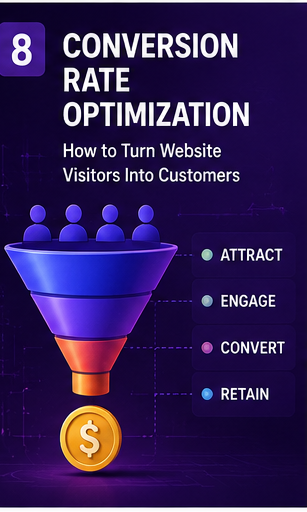
If 10,000 people visit a website but very few take action, the marketing strategy has a conversion problem.
What Is Conversion Rate Optimization?
Conversion Rate Optimization (CRO) is the systematic process of improving a website so that more visitors complete a desired action.
Conversions can include:
- Form submissions
- Phone calls
- Purchases
- Consultation requests
- Newsletter registrations
- Demo bookings
Technical CRO Factors
Page speed
Slow pages can create friction.
Mobile usability
Forms and buttons must work properly on smaller screens.
Website architecture
Visitors should quickly understand where to go next.
Forms
Long or confusing forms can reduce submissions.
Tracking
Businesses need reliable analytics to understand which changes produce results.
Content and CRO
Good content should answer:
- What does the company offer?
- Who is it for?
- Why should customers choose it?
- What proof exists?
- What should the visitor do next?
A/B Testing
A/B testing can compare different versions of:
- Headlines
- CTAs
- Landing pages
- Forms
- Offers
- Page layouts
Testing should be based on a clear hypothesis rather than random changes.
CRO and SEO Together
SEO brings qualified visitors.
CRO helps convert those visitors.
The strongest digital marketing strategies therefore connect acquisition and conversion rather than treating them as separate activities.
Conclusion
The goal of digital marketing is not simply more traffic.
The goal is more valuable business outcomes from the right traffic.
A professional agency can analyze your website funnel and identify opportunities to improve both traffic quality and conversion performance.
Leave a Reply