Category: Uncategorized

  • Keyword Clustering in 2026: A Smarter Approach to SEO Content

    Keyword Clustering in 2026: A Smarter Approach to SEO Content

    Introduction

    Traditional SEO often focused on selecting one primary keyword for each webpage.

    Modern search engines understand topics, entities, synonyms, and relationships between queries.

    Keyword clustering groups related search terms into meaningful topic groups.

    What Is Keyword Clustering?

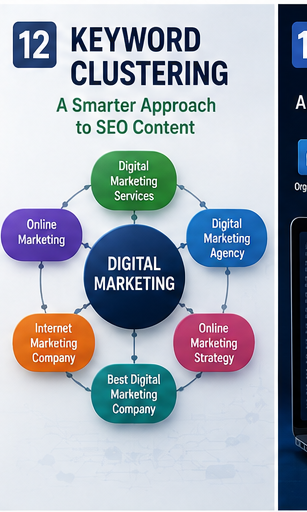
    For example, a digital marketing company might group:

    • Digital marketing services
    • Online marketing services
    • Digital marketing agency
    • Internet marketing company

    These queries may represent similar search intent.

    Benefits

    Keyword clustering can help businesses:

    • Avoid unnecessary duplicate pages
    • Build topic authority
    • Improve content planning
    • Target related queries
    • Strengthen internal linking

    How to Create Keyword Clusters

    1. Collect relevant keywords.
    2. Analyze search intent.
    3. Group similar queries.
    4. Create a primary page for each major topic.
    5. Build supporting content.
    6. Link related pages together.

    Conclusion

    Keyword research should not simply produce a list of keywords.

    It should create a structured content strategy that connects related topics and search intents.
  • How to Build a Complete Digital Marketing Strategy for 2026

    How to Build a Complete Digital Marketing Strategy for 2026

    Introduction

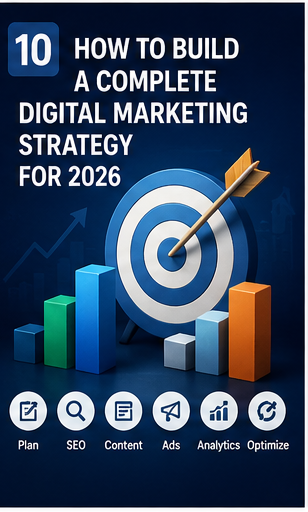
    Digital marketing has become a connected ecosystem.

    A business may use:

    • SEO
    • Google Ads
    • Social media
    • Content marketing
    • Email marketing
    • Analytics
    • Automation
    • Conversion optimization

    The challenge is making these channels work together.

    Step 1: Define Business Objectives

    Start with measurable objectives.

    Examples include:

    • Generate 100 qualified leads per month
    • Increase online sales
    • Reduce customer acquisition cost
    • Increase organic traffic
    • Improve conversion rate

    Step 2: Understand the Audience

    Identify:

    • Customer problems
    • Search behavior
    • Buying motivations
    • Objections
    • Preferred platforms
    • Decision-making process

    Step 3: Build the Website Foundation

    Your website should have:

    • Clear navigation
    • Fast performance
    • Mobile compatibility
    • Strong calls to action
    • Useful content
    • Technical SEO
    • Analytics

    Step 4: Build Organic Visibility

    SEO should focus on relevant search intent and useful content.

    Google’s current Search guidance continues to emphasize technical accessibility and helpful content as important foundations.

    Step 5: Add Paid Advertising

    Paid campaigns can generate traffic quickly while organic strategies develop over time.

    Campaigns should be connected to:

    • Specific landing pages
    • Conversion tracking
    • Audience targeting
    • Budget controls
    • Performance reporting

    Step 6: Use Content Marketing

    Create content for different stages of the customer journey.

    Awareness: Educational articles

    Consideration: Comparisons and guides

    Decision: Case studies, testimonials, service pages

    Step 7: Measure Everything

    Monitor:

    • Traffic
    • Leads
    • Conversion rate
    • Cost per lead
    • Customer acquisition cost
    • Revenue
    • Return on advertising spend

    Step 8: Improve Continuously

    Digital marketing should operate as a cycle:

    Research → Strategy → Implementation → Measurement → Optimization

    This prevents businesses from spending money on channels simply because they are popular.

    Conclusion

    The strongest digital marketing strategy in 2026 combines technical foundations, AI-aware search optimization, high-quality content, paid acquisition, first-party data, automation, and conversion optimization.

    A professional digital marketing company can bring these components together into one measurable growth strategy rather than treating every marketing channel as a separate activity.

  • Digital Marketing Automation: How AI Agents Are Changing Marketing Workflows

    Digital Marketing Automation: How AI Agents Are Changing Marketing Workflows

    Introduction

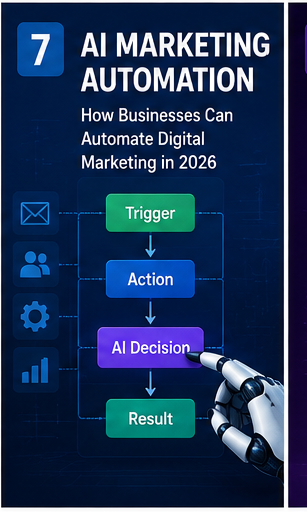
    Marketing automation has traditionally focused on predefined workflows.

    For example:

    Customer submits form → Email sent → Lead added to CRM → Sales notification

    AI is expanding this model by helping systems interpret information and support more complex marketing decisions.

    Recent industry analysis describes a shift from AI experimentation toward deeper integration across marketing workflows.

    What Can Modern Automation Support?

    Depending on the technology stack, businesses can automate:

    • Lead routing
    • Email sequences
    • Customer segmentation
    • Reporting
    • Campaign alerts
    • Content workflows
    • CRM updates
    • Customer support
    • Data analysis

    AI-Assisted Lead Qualification

    An automated system can evaluate incoming leads against predefined criteria.

    For example:

    Lead submits form → Data enrichment → Lead scoring → CRM assignment → Sales notification

    This reduces manual work and can help sales teams prioritize higher-value opportunities.

    Automation Should Not Mean Removing Humans

    Automation works best when repetitive processes are handled by systems while humans manage:

    • Strategy
    • Relationships
    • Complex decisions
    • Creative direction
    • Sensitive customer situations

    How to Build an Automation Strategy

    Start by mapping your current marketing workflow.

    Identify:

    1. Repetitive tasks
    2. Manual bottlenecks
    3. Data sources
    4. Customer touchpoints
    5. Decision points
    6. Reporting requirements

    Then automate the processes where technology can provide measurable value.

    Conclusion

    The future of marketing automation is not simply sending more automated messages.

    It is creating intelligent systems that connect marketing data, customer journeys, sales processes, and analytics.

    A digital marketing company can help businesses identify automation opportunities and build workflows around measurable commercial goals.

  • Core Web Performance and SEO: Why Website Speed Still Matters in 2026

    Core Web Performance and SEO: Why Website Speed Still Matters in 2026

    Introduction

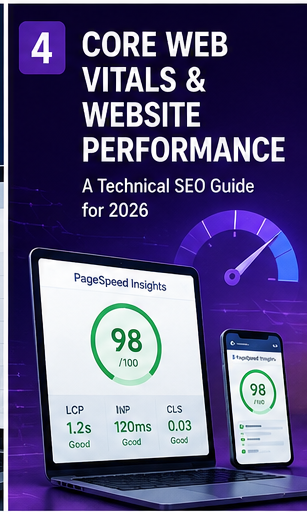
    Website performance is no longer simply a developer concern. It is a marketing concern.

    A slow website can create friction between a potential customer and a conversion.

    For digital marketing companies, performance optimization should therefore be connected with SEO, UX, and conversion-rate optimization.

    What Makes a Website Perform Well?

    Performance depends on several technical factors, including:

    • Server response time
    • Image optimization
    • JavaScript execution
    • CSS delivery
    • Caching
    • Content delivery networks
    • Font loading
    • Third-party scripts

    Why Mobile Performance Matters

    Many customers discover businesses through mobile devices.

    A website that works well on desktop but performs poorly on mobile can lose potential customers before they even read the offer.

    Common Performance Problems

    Oversized images

    Uncompressed images can dramatically increase page weight.

    Excessive JavaScript

    Too much JavaScript can delay page interactivity.

    Unnecessary plugins

    CMS websites can accumulate plugins that add unnecessary scripts.

    Poor hosting

    Server infrastructure affects response time and reliability.

    Too many third-party scripts

    Analytics, advertising, chat widgets, and tracking tools can add processing overhead.

    A Practical Optimization Process

    Start by measuring the website.

    Then:

    1. Identify the slowest pages.
    2. Analyze major resources.
    3. Compress and resize images.
    4. Reduce unnecessary JavaScript.
    5. Improve caching.
    6. Review third-party scripts.
    7. Optimize server response.
    8. Retest after implementation.

    Performance and Conversion Rate

    Speed optimization should not be evaluated only through technical scores.

    Track business outcomes such as:

    • Engagement
    • Lead submissions
    • Calls
    • Purchases
    • Bounce behavior
    • Conversion rate

    The goal is a faster website that also generates better business results.

    Conclusion

    Website performance is an important component of modern digital marketing.

    SEO professionals, developers, and conversion specialists should work together rather than treating speed as an isolated technical task.