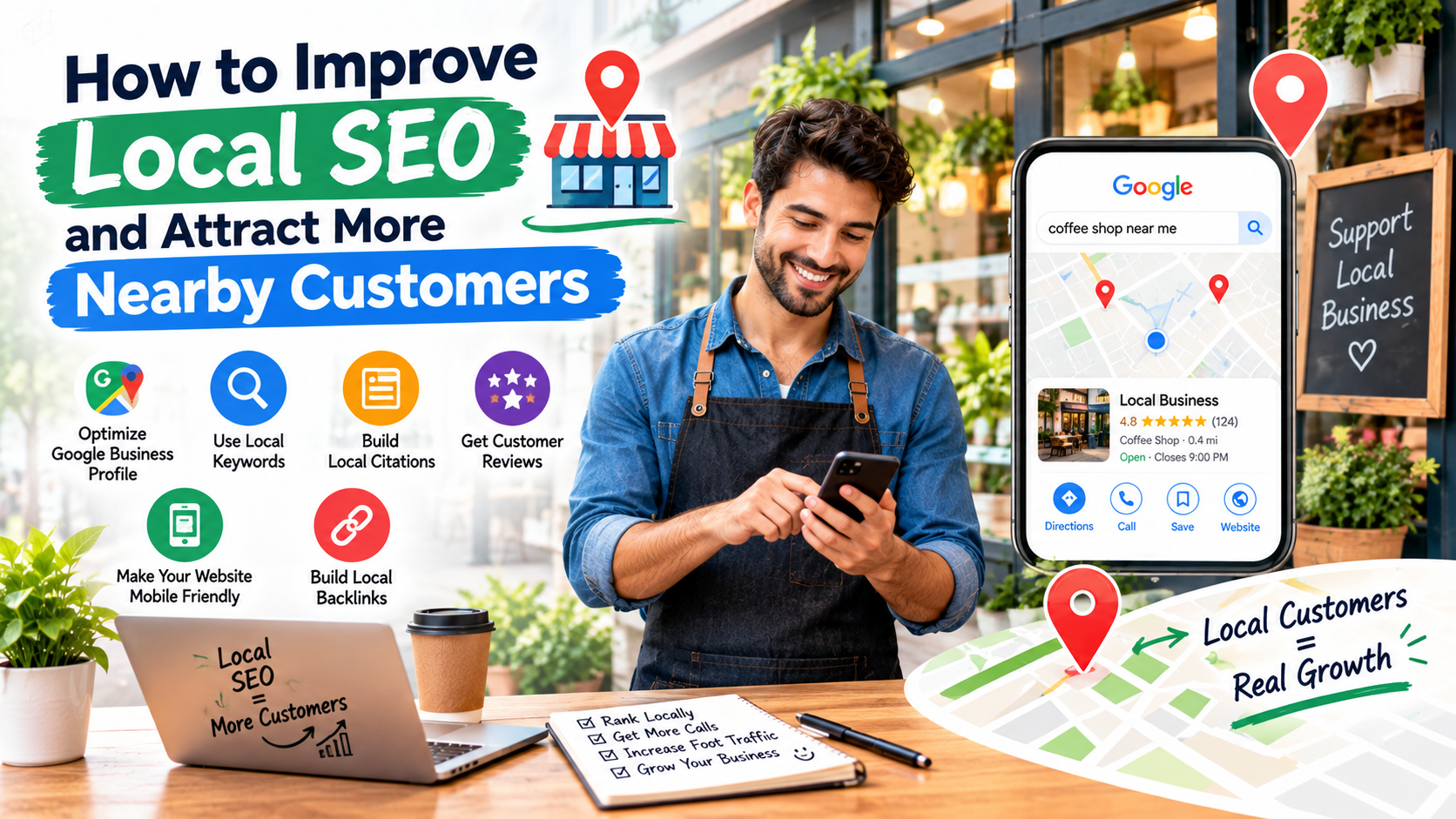
What Is Local SEO?
Local SEO is the process of improving a business’s online presence so it can appear in relevant searches connected to a geographic area. For example, someone might search for a plumber in Lahore, a dentist near them, or a digital marketing agency in Karachi.
Search engines use several signals to determine which businesses and pages may be useful for a local search. These can include the relevance of the business information, the searcher’s location, and the prominence of the business online.
Local SEO is useful for small businesses, service providers, retailers, and companies that want to reach customers in specific locations.
Optimize Your Google Business Profile
A complete and accurate Google Business Profile can help eligible businesses appear in Google Search and Maps. Start by ensuring that your business name, address, phone number, website, and opening hours are accurate.
Choose the most relevant business category and describe your services clearly. Add genuine photographs that help customers understand your business, products, or location.
Keep your profile updated when your hours or services change. If customers ask questions or leave reviews, respond professionally and provide helpful information.
Businesses should follow Google’s profile guidelines and avoid adding misleading details or unnecessary keywords to their business name.
Use Location-Relevant Keywords
Keyword research helps identify how potential customers search for businesses and services in a particular area. Instead of targeting only broad phrases, consider relevant location-based terms.
For example, a web design company might target phrases related to website design services in its city. A local repair service could create pages explaining the services it provides in the areas it genuinely serves.
Use location keywords naturally in page titles, headings, service descriptions, and relevant website content. Avoid repeating city names excessively or creating large numbers of nearly identical pages for different locations.
The goal is to provide useful information that clearly explains where your business operates and how it can help customers.
Create Helpful Local Content
Content can help a business demonstrate its local knowledge and answer questions from potential customers. Consider publishing service guides, frequently asked questions, local project examples, or articles about issues relevant to your audience.
For example, a home maintenance company could explain how seasonal weather affects property maintenance in its region. A marketing agency might share a practical guide for local businesses that want to improve their online presence.
Keep the content accurate, specific, and useful. Avoid publishing articles that mention a location without providing meaningful information about it.
A consistent content plan can help businesses cover relevant topics and give potential customers more reasons to explore their websites.
Keep Business Information Consistent
Customers should be able to find the same essential business details wherever they encounter your company online. Check your website, business directories, professional profiles, and other relevant listings for accurate contact information.
Differences in phone numbers, addresses, or business names can confuse customers. Update outdated listings and remove incorrect information where possible.
Consistency does not mean submitting your business to every directory available. Focus on legitimate, relevant platforms that customers may actually use.
Earn Customer Reviews and Build Trust
Reviews can help potential customers understand other people’s experiences with your business. Encourage genuine customers to share honest feedback after receiving your product or service.
Make the process simple by providing a review link when appropriate. Never purchase fake reviews or offer incentives in exchange for positive ratings. Follow the policies of the platform where reviews are collected.
Respond to feedback politely, including negative reviews. When a customer raises a concern, acknowledge the issue and offer a reasonable way to resolve it.
A professional approach to customer feedback can demonstrate that your business values service quality and customer relationships.
Improve Your Website for Mobile Users
Many people search for nearby services using their smartphones. Your website should therefore be easy to use on smaller screens.
Make sure pages load efficiently, text is readable, and navigation is straightforward. Display essential information such as services, contact details, business hours, and service areas where appropriate.
Include clear calls to action, such as calling your business, requesting a quote, or booking an appointment. Test important forms and links to ensure they work properly.
A helpful mobile experience makes it easier for visitors to move from discovering your business to contacting you.
Track Local SEO Performance
Monitor your performance to understand which improvements are producing useful results. Google Business Profile performance data, Google Search Console, and website analytics can provide insights into customer interactions and search visibility.
Useful indicators include website visits, calls, direction requests where available, search impressions, clicks, and enquiries. Compare performance over time instead of relying on a single day’s results.
Use the information to identify opportunities. If visitors reach your website but do not contact you, review your service pages, contact options, and calls to action.
Leave a Reply