Introduction
Most SEO audits treat internal links as a simple checklist.
Advanced technical SEO looks at them as a graph problem.
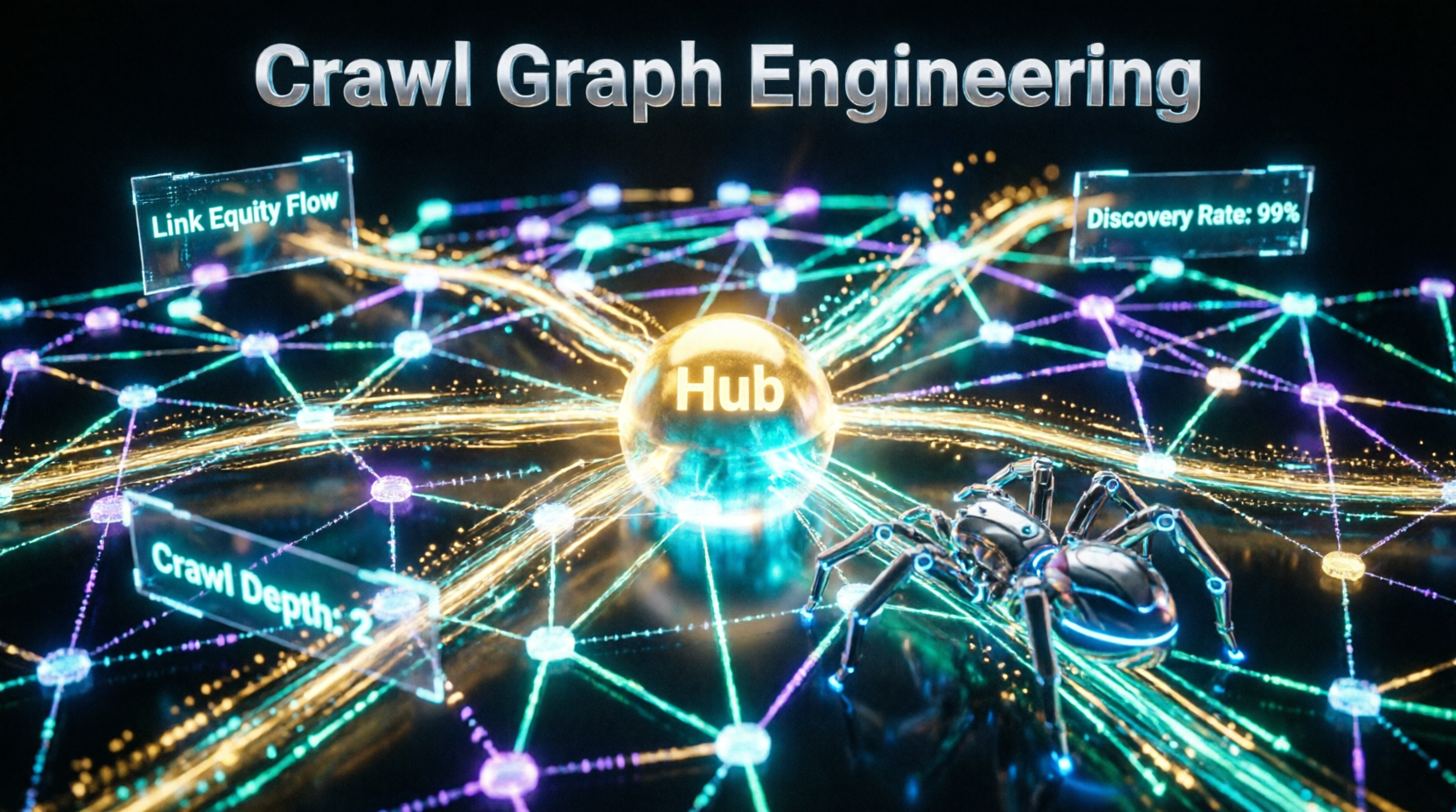
Imagine every URL as a node and every internal link as an edge.
Your website becomes a graph:
Homepage → Category → Subcategory → Product → Supporting Content
The quality of this graph can affect how efficiently search engines discover your important content.
What Is Crawl Graph Engineering?
Crawl graph engineering means analyzing:
- link depth
- internal link frequency
- orphan URLs
- crawl paths
- category relationships
- pagination
- parameter URLs
- redirects
- canonical targets
The goal is to create efficient discovery paths.
Identify Orphan Pages
An orphan page may exist in your sitemap but have few or no internal links pointing toward it.
This creates a structural problem.
Instead of asking only:
“Is the page indexed?”
ask:
“How does a crawler naturally discover this page?”
Analyze Click Depth
Important commercial pages should not be buried behind excessive navigation layers.
A typical architecture might look like:
Homepage
↓
Service Category
↓
Service
↓
Detailed Service Page
The exact number of levels depends on the website, but the principle is simple: important content should have clear discovery paths.
Reduce Crawl Waste
Large websites can contain:
- filters
- tracking parameters
- duplicate URLs
- session URLs
- endless calendars
- internal search pages
These can create enormous URL spaces.
Google’s crawling guidance specifically recommends managing crawlability carefully, particularly for very large or frequently updated sites.
Build Contextual Link Networks
A blog about:
“Technical SEO for Ecommerce”
could naturally link to:
- ecommerce SEO
- crawl budget
- faceted navigation
- structured data
- product SEO
- JavaScript SEO
This creates meaningful semantic relationships.
Measure the Graph
Advanced teams can track:
- orphan URL percentage
- average click depth
- internal links per important page
- redirected internal links
- broken internal links
- crawl frequency by URL group
Final Takeaway
Internal linking should not be treated as a last-minute SEO task.
For large websites, it is part of the technical infrastructure that helps search engines discover and understand important content.
Leave a Reply