Category: Uncategorized

  • Rendering Infrastructure SEO: SSR, CSR, Edge Rendering and Dynamic Rendering at Enterprise Scale

    Rendering Infrastructure SEO: SSR, CSR, Edge Rendering and Dynamic Rendering at Enterprise Scale

    Introduction

    JavaScript has transformed website development.

    Modern businesses use frameworks and applications that can generate interfaces dynamically. But advanced SEO teams must understand how content becomes available to search engines.

    Google explains that its Search systems process JavaScript and provides dedicated guidance for JavaScript SEO.

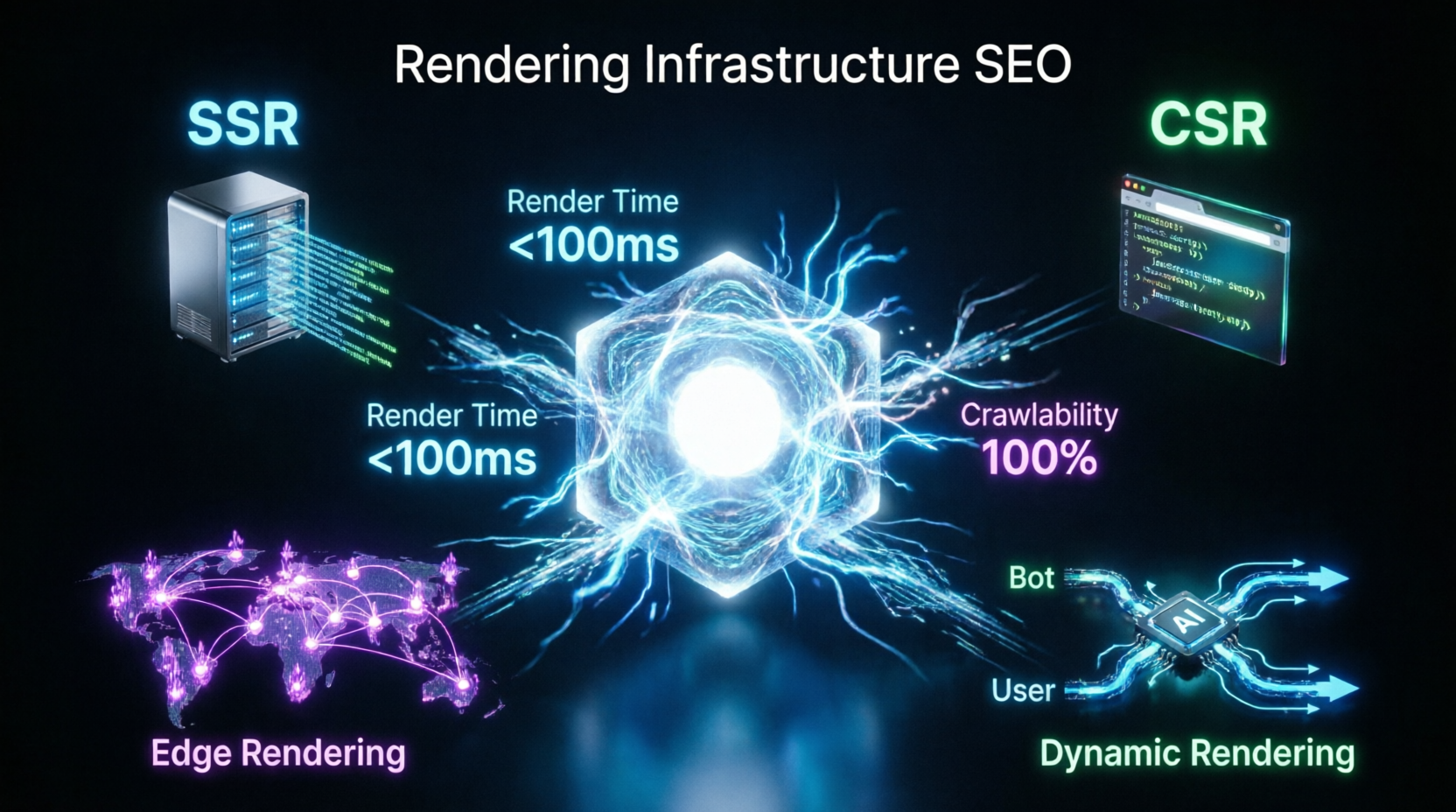
    CSR: Client-Side Rendering

    With client-side rendering, the browser receives a relatively small HTML document and JavaScript generates much of the page.

    Advantages:

    • highly interactive applications
    • rich user experiences
    • flexible frontend architecture

    Potential SEO challenges:

    • rendering complexity
    • delayed content availability
    • accidental non-indexable states
    • dependency failures

    SSR: Server-Side Rendering

    Server-side rendering generates HTML on the server before sending it to the browser.

    This can provide search engines with meaningful HTML earlier in the process.

    It can also improve initial page delivery when implemented correctly.

    Edge Rendering

    Edge infrastructure can generate or transform responses closer to users.

    This can be useful for:

    • international websites
    • personalization
    • performance optimization
    • dynamic content systems

    But the architecture must be carefully tested for crawler behavior and caching.

    SEO Rendering Audit

    An advanced audit should compare:

    Raw HTML

    vs.

    Rendered DOM

    vs.

    User-visible content

    Check whether important elements such as:

    • titles
    • canonical tags
    • internal links
    • structured data
    • main content
    • metadata

    are correctly available.

    Don’t Forget Performance

    Rendering architecture also interacts with user experience.

    Google’s Core Web Vitals measure real-world loading performance, interactivity and visual stability.

    Therefore, SEO teams should work alongside developers rather than treating rendering as a separate marketing issue.

    Final Takeaway

    At enterprise scale, SEO is partly an architecture discipline.

    The best rendering solution is not simply “SSR everywhere” or “CSR everywhere.” It is the architecture that reliably delivers crawlable, indexable, useful content while maintaining excellent user experience.

  • Crawl Graph Engineering: Optimizing Internal Link Equity and Search Engine Discovery Paths

    Crawl Graph Engineering: Optimizing Internal Link Equity and Search Engine Discovery Paths

    Introduction

    Most SEO audits treat internal links as a simple checklist.

    Advanced technical SEO looks at them as a graph problem.

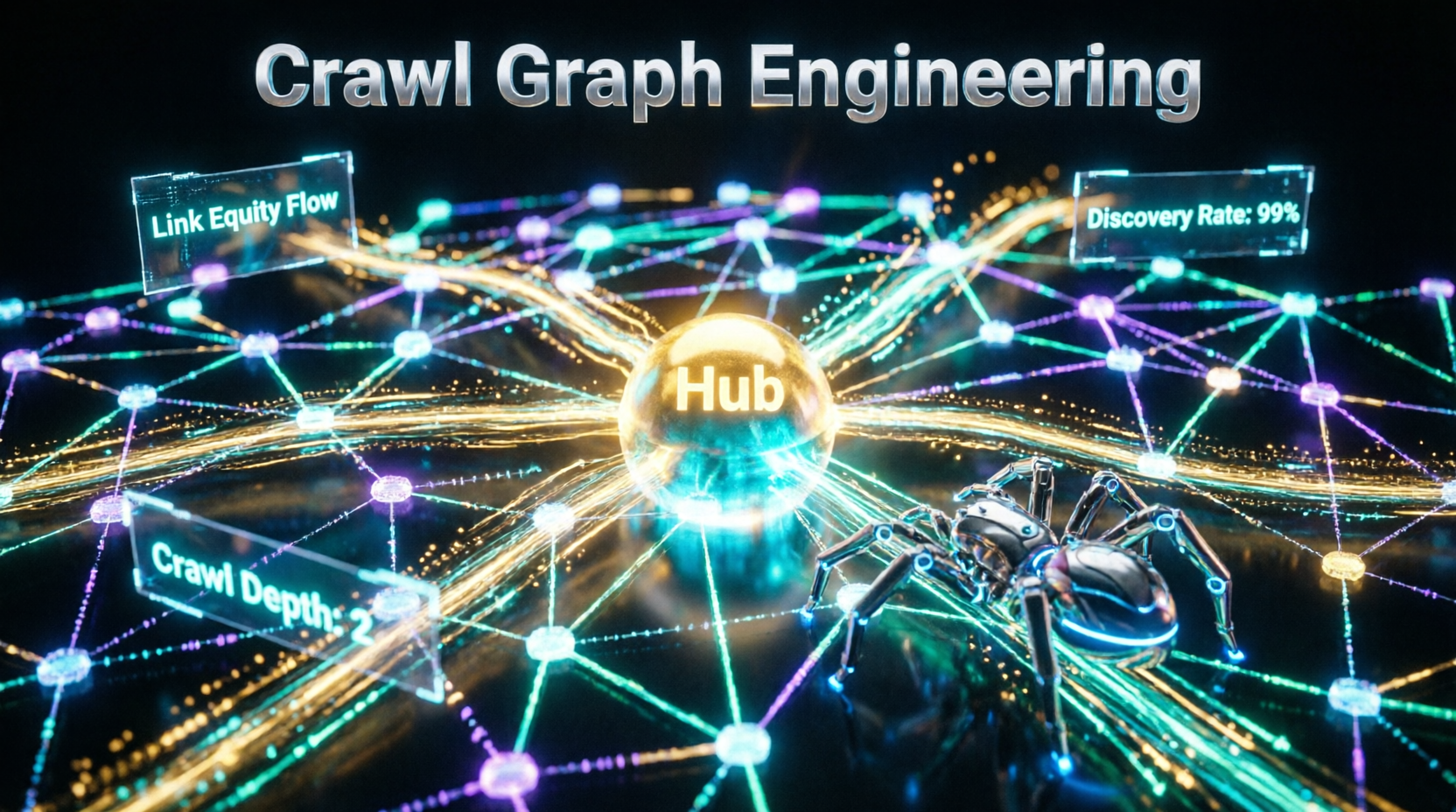
    Imagine every URL as a node and every internal link as an edge.

    Your website becomes a graph:

    Homepage → Category → Subcategory → Product → Supporting Content

    The quality of this graph can affect how efficiently search engines discover your important content.

    What Is Crawl Graph Engineering?

    Crawl graph engineering means analyzing:

    • link depth
    • internal link frequency
    • orphan URLs
    • crawl paths
    • category relationships
    • pagination
    • parameter URLs
    • redirects
    • canonical targets

    The goal is to create efficient discovery paths.

    Identify Orphan Pages

    An orphan page may exist in your sitemap but have few or no internal links pointing toward it.

    This creates a structural problem.

    Instead of asking only:

    “Is the page indexed?”

    ask:

    “How does a crawler naturally discover this page?”

    Analyze Click Depth

    Important commercial pages should not be buried behind excessive navigation layers.

    A typical architecture might look like:

    Homepage
    ↓
    Service Category
    ↓
    Service
    ↓
    Detailed Service Page

    The exact number of levels depends on the website, but the principle is simple: important content should have clear discovery paths.

    Reduce Crawl Waste

    Large websites can contain:

    • filters
    • tracking parameters
    • duplicate URLs
    • session URLs
    • endless calendars
    • internal search pages

    These can create enormous URL spaces.

    Google’s crawling guidance specifically recommends managing crawlability carefully, particularly for very large or frequently updated sites.

    Build Contextual Link Networks

    A blog about:

    “Technical SEO for Ecommerce”

    could naturally link to:

    • ecommerce SEO
    • crawl budget
    • faceted navigation
    • structured data
    • product SEO
    • JavaScript SEO

    This creates meaningful semantic relationships.

    Measure the Graph

    Advanced teams can track:

    • orphan URL percentage
    • average click depth
    • internal links per important page
    • redirected internal links
    • broken internal links
    • crawl frequency by URL group

    Final Takeaway

    Internal linking should not be treated as a last-minute SEO task.

    For large websites, it is part of the technical infrastructure that helps search engines discover and understand important content.

  • SEO Data Engineering: Building an Automated Technical SEO Data Warehouse

    SEO Data Engineering: Building an Automated Technical SEO Data Warehouse

    Introduction

    At enterprise scale, manually opening SEO tools is not enough.

    Large websites can contain:

    • millions of URLs
    • thousands of templates
    • constantly changing content
    • JavaScript applications
    • international versions
    • product databases
    • dynamic parameters

    The solution is to treat SEO as a data engineering problem.

    What Is an SEO Data Warehouse?

    An SEO data warehouse centralizes data from different sources.

    Possible inputs include:

    Google Search Console

    → clicks
    → impressions
    → queries
    → pages
    → countries
    → search appearance

    Google Analytics

    → users
    → conversions
    → engagement
    → revenue

    Crawler

    → status codes
    → canonicals
    → directives
    → links
    → page depth

    Server Logs

    → Googlebot activity
    → crawl frequency
    → response codes
    → resource requests

    Google recommends combining Search Console and Analytics data for a more complete view of search performance.

    Build a Common URL Identifier

    One major technical challenge is that different systems represent URLs differently.

    For example:

    https://example.com/page

    and

    https://www.example.com/page/

    could be interpreted differently by different systems.

    Normalize URLs before analysis.

    Create SEO Fact Tables

    An enterprise system can maintain tables such as:

    URL_Facts

    • URL
    • status code
    • canonical
    • indexability
    • word count
    • crawl date

    Search_Facts

    • query
    • URL
    • clicks
    • impressions
    • CTR
    • position

    Crawl_Facts

    • bot
    • timestamp
    • response
    • bytes
    • URL

    This allows cross-system analysis.

    Automate Anomaly Detection

    Instead of discovering problems weeks later, create automated alerts.

    Examples:

    Indexable URLs ↓ 20%

    5xx errors ↑ 300%

    Organic clicks ↓ 25%

    Crawl requests suddenly concentrated on parameter URLs

    These signals can trigger technical investigations.

    Create Executive SEO Dashboards

    A professional dashboard should connect technical metrics with business outcomes.

    For example:

    Technical issue → affected URLs → organic traffic → conversions → revenue

    This turns SEO from a marketing activity into a measurable business system.

    Final Takeaway

    The next generation of enterprise SEO will increasingly depend on data pipelines, automated analysis and real-time monitoring.

    Businesses that combine SEO expertise with data engineering can detect problems faster and prioritize changes based on measurable business impact.

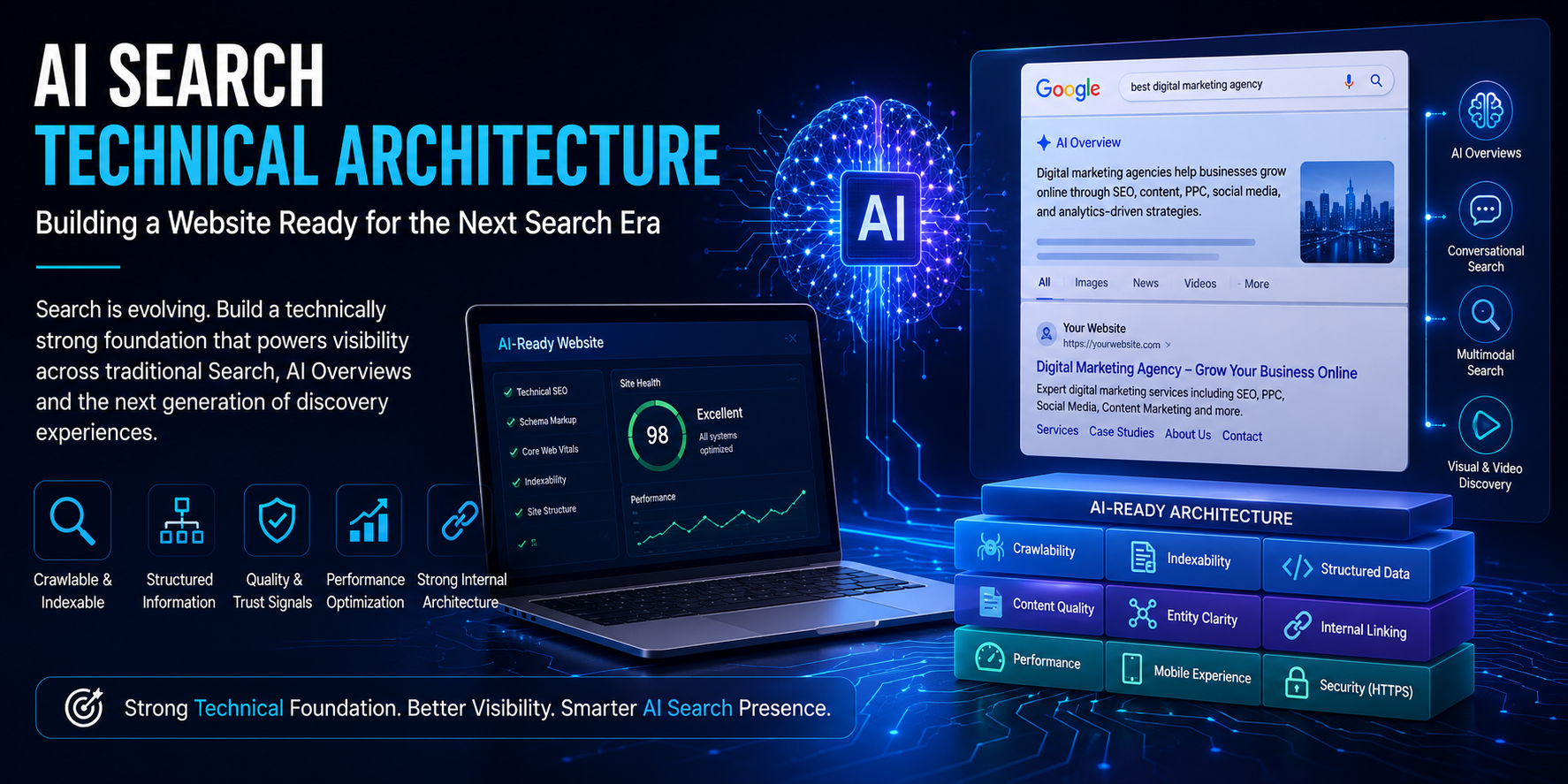
  • AI Search Technical Architecture: Building a Website Ready for the Next Search Era

    AI Search Technical Architecture: Building a Website Ready for the Next Search Era

    Introduction

    The future of search is becoming increasingly multi-layered.

    Users may discover a business through traditional results, AI-generated answers, visual search, video results or other search experiences.

    Businesses therefore need websites that are technically accessible and information-rich.

    Start With Indexability

    A page cannot provide search visibility if search engines cannot properly access and index it.

    Important technical foundations include:

    • Crawlable pages
    • Correct status codes
    • Logical URLs
    • Internal links
    • XML sitemaps
    • Mobile usability
    • Correct canonicalization

    Google’s current guidance explicitly states that pages need to be indexed to be eligible for generative AI search features, while existing SEO best practices remain relevant.

    Create Machine-Understandable Information

    Important business information should be clear and consistently represented.

    For example:

    Company → Services → Locations → Experts → Case Studies → Resources

    This structure helps users navigate and gives search systems clearer context.

    Build Non-Commodity Content

    AI can generate generic explanations very quickly.

    Businesses therefore need information that is harder to reproduce:

    • Original research
    • Expert experience
    • Unique case studies
    • First-hand insights
    • Proprietary data
    • Original frameworks

    Google’s current AI-search guidance specifically emphasizes creating valuable, non-commodity content rather than relying on generic material.

    Technical SEO + AI Search

    The strongest architecture is not a separate “AI SEO website.”

    It is a technically strong website that combines:

    Technical SEO + Quality Content + Entity Clarity + Structured Information + Strong Internal Linking + Measurement

    Businesses should also avoid tactics designed to manipulate generative AI results. Google’s spam policies apply to generative AI responses in Search as well as traditional Search.

    The Long-Term Strategy

    AI search will continue evolving.

    Specific interfaces may change, but the fundamentals remain:

    Make your website accessible.
    Make your information useful.
    Make your expertise clear.
    Make your brand trustworthy.
    Measure what actually produces business results.

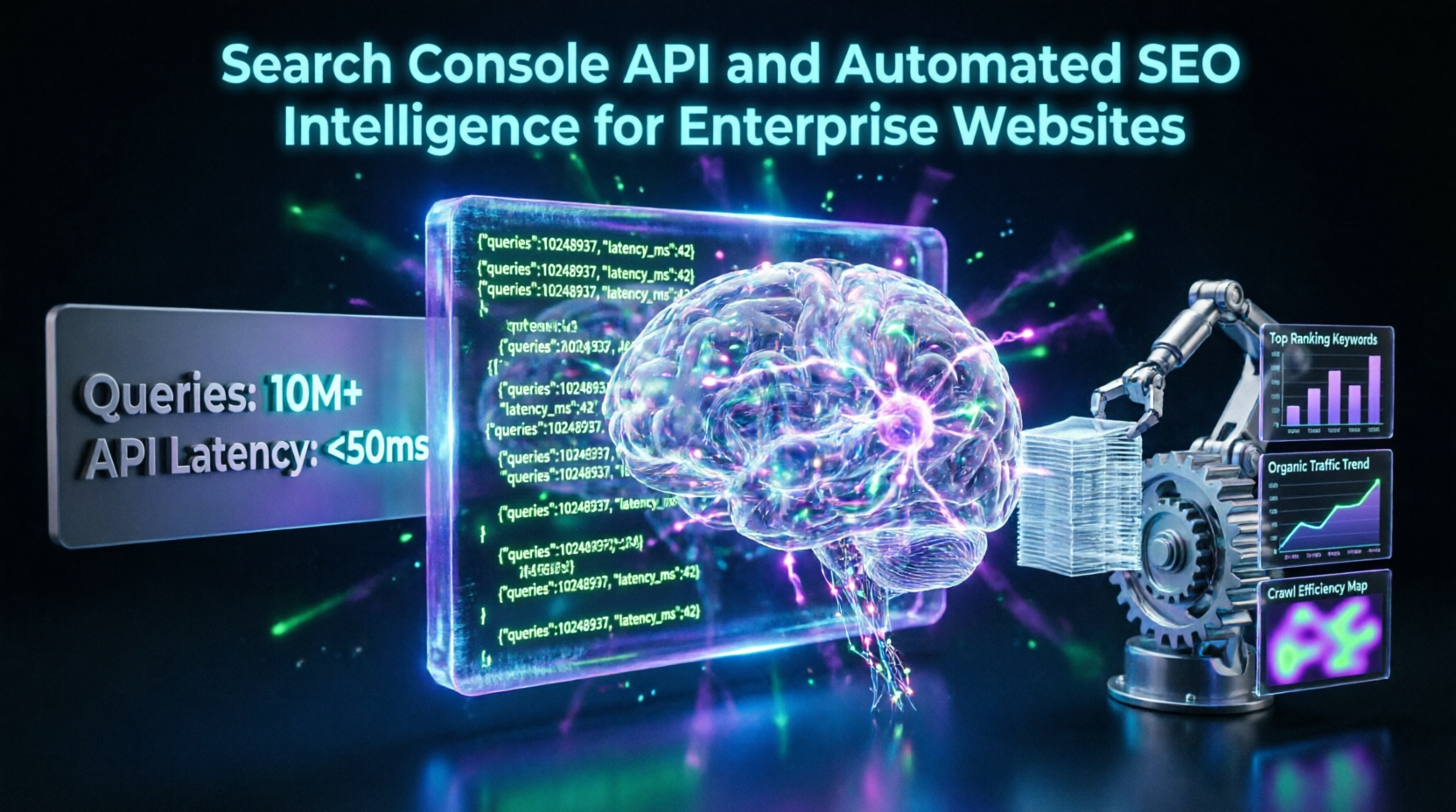
  • Search Console API and Automated SEO Intelligence for Enterprise Websites

    Search Console API and Automated SEO Intelligence for Enterprise Websites

    Introduction

    A website with thousands of pages can generate too much SEO data for manual analysis.

    Automation allows teams to transform raw search data into actionable intelligence.

    Google provides programmatic access to Search Console data through its API, while Search Console itself continues evolving to include newer search experiences. Google has also clarified that AI Mode data contributes to overall Search Console Performance totals.

    Build an Automated Pipeline

    A basic architecture can look like:

    Search Console API → Data Warehouse → Processing → Dashboard → Alerts

    Data can be segmented by:

    • URL
    • Query
    • Country
    • Device
    • Search appearance
    • Date
    • Page type

    Automated Anomaly Detection

    A system can alert marketers when:

    • Organic clicks fall sharply
    • Impressions suddenly decline
    • Important URLs disappear
    • CTR changes significantly
    • A page group loses visibility

    Combine Multiple Data Sources

    Enterprise SEO intelligence becomes stronger when Search Console data is combined with:

    • Analytics
    • Server logs
    • CRM data
    • Revenue data
    • Rank tracking
    • Crawling data

    This connects search visibility with business outcomes.

  • SEO Experimentation: How to Test Technical Changes Without Guessing

    SEO Experimentation: How to Test Technical Changes Without Guessing

    Introduction

    SEO teams frequently make changes without knowing whether those changes actually caused an improvement.

    Advanced SEO teams use experimentation to reduce uncertainty.

    Possible experiments include:

    • Title changes
    • Internal-link improvements
    • Template modifications
    • Content changes
    • Navigation changes
    • Structured-data implementation
    • Page-speed improvements

    Establish a Baseline

    Before making a change, record:

    • Organic clicks
    • Impressions
    • CTR
    • Rankings
    • Conversions
    • Indexed URLs
    • Revenue

    Define a Hypothesis

    For example:

    “Improving internal links to important service pages will increase their organic visibility.”

    Then implement the change in a controlled environment.

    Measure the Impact

    Compare performance before and after the change while accounting for:

    • Seasonality
    • Algorithm updates
    • Marketing campaigns
    • Website-wide changes

    A/B-style experimentation can be difficult in SEO because search engines and external variables introduce noise, so tests should be interpreted carefully.

    Build an SEO Testing Culture

    The goal isn’t to test everything.

    The goal is to identify high-impact assumptions and validate them with evidence.

  • SEO During Website Migration: Preventing Traffic Loss in Large Site Moves

    SEO During Website Migration: Preventing Traffic Loss in Large Site Moves

    Introduction

    Website migrations are among the highest-risk technical SEO projects.

    A migration may involve:

    • Domain changes
    • URL restructuring
    • CMS changes
    • HTTP to HTTPS
    • Platform migration
    • Website redesign
    • International restructuring

    Even small mistakes can cause significant traffic losses.

    Build a URL Mapping System

    Before launching, create a mapping table:

    Old URL → New URL → Redirect → Status → Validation

    Every valuable old URL should have a planned destination.

    Redirect Strategy

    Permanent redirects should point users and search engines toward the most relevant new page.

    Avoid redirecting thousands of unrelated URLs to the homepage.

    Pre-Launch Testing

    Test:

    • Canonical tags
    • Robots directives
    • XML sitemaps
    • Internal links
    • Status codes
    • Structured data
    • Mobile versions
    • Metadata

    Post-Launch Monitoring

    After migration, monitor:

    • Organic clicks
    • Impressions
    • Indexing
    • Crawl errors
    • Redirect chains
    • 404 responses
    • Rankings
    • Conversions

    Google’s 2026 documentation has continued updating site-move guidance, including handling domain variants during migrations.

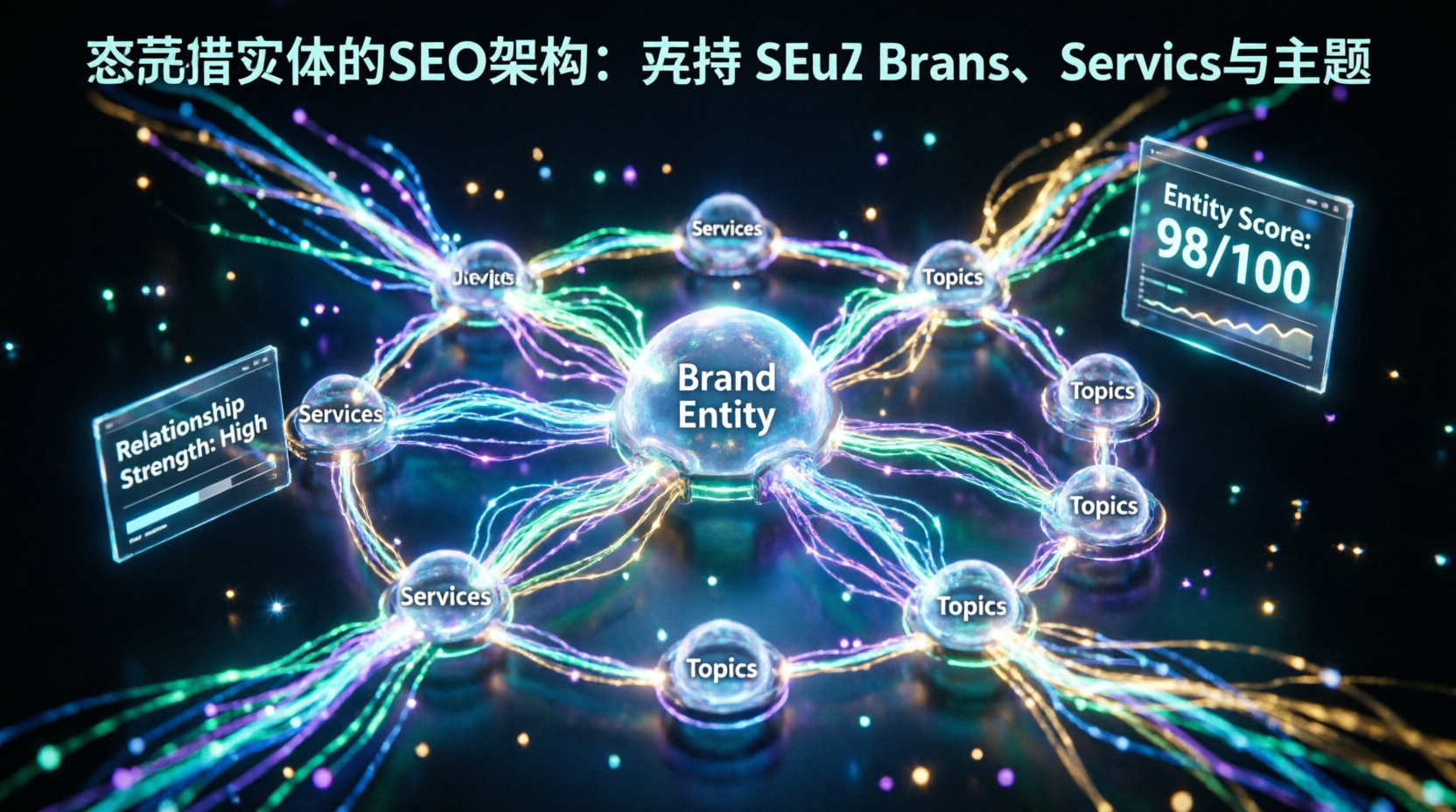
  • Entity-Based SEO Architecture: Connecting Your Brand, Services and Topics

    Entity-Based SEO Architecture: Connecting Your Brand, Services and Topics

    Introduction

    Keyword-focused SEO treats pages primarily as targets for search phrases.

    Entity-based SEO takes a broader approach.

    A digital marketing company, for example, may be associated with entities such as:

    Brand → Digital Marketing → SEO → PPC → Content → Analytics → Local SEO

    The website should make these relationships clear.

    Build Entity Relationships

    Create dedicated pages for important services and connect them through internal links.

    For example:

    Digital Marketing

    → SEO

    → Technical SEO

    → Local SEO

    → PPC

    → Content Marketing

    → Analytics

    This creates a semantic network.

    Use Consistent Business Information

    Your brand name, services and business information should remain consistent across your website and relevant external profiles.

    Structured Data

    Where appropriate, structured data can help machines interpret entities and relationships.

    However, markup should represent information actually present on the page.

    Entity SEO and AI Search

    Google’s current generative-AI guidance emphasizes that traditional SEO remains important because AI Search features rely on Google’s core Search systems and indexed content.

    This makes strong information architecture more valuable than chasing short-lived “GEO hacks.”

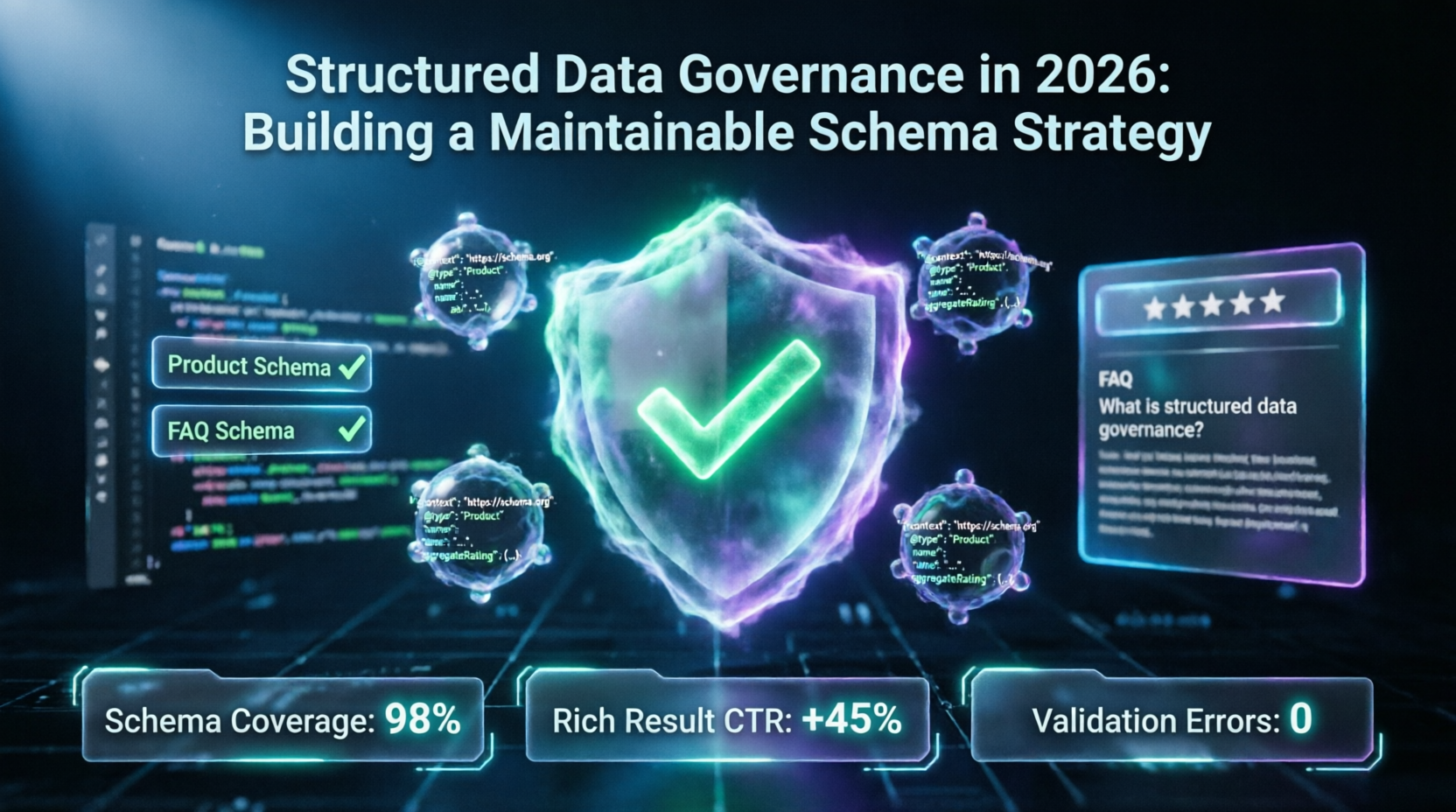
  • Structured Data Governance in 2026: Building a Maintainable Schema Strategy

    Structured Data Governance in 2026: Building a Maintainable Schema Strategy

    Introduction

    Structured data is often implemented once and then forgotten.

    That approach can become risky as websites, templates and Google’s supported search features change.

    Google has continued to simplify its structured-data ecosystem and has announced retirement or deprecation of several structured-data features.

    This makes structured-data governance increasingly important.

    Create a Schema Inventory

    Maintain a list containing:

    • Schema type
    • Page template
    • Properties used
    • Validation status
    • Business owner
    • Last review date

    This makes large websites easier to manage.

    Validate Markup Automatically

    Enterprise websites can integrate structured-data testing into development workflows.

    When developers change a template, automated checks can detect:

    • Missing required properties
    • Invalid values
    • Broken JSON-LD
    • Incorrect nesting
    • Template-specific errors

    Google recommends monitoring structured-data issues after major website changes.

    Avoid Unsupported Markup

    Not every schema type produces a visible search feature.

    Therefore, businesses should prioritize structured data that accurately represents the page and is supported by current search documentation.

    Future-Proof Architecture

    A strong schema system should be:

    Accurate → Valid → Relevant → Maintainable → Monitored

  • International SEO Architecture: Hreflang, Localization and Global Search

    International SEO Architecture: Hreflang, Localization and Global Search

    Introduction

    A business operating across multiple countries may have several versions of the same website.

    For example:

    • English
    • Urdu
    • Arabic
    • French
    • German

    Or country-specific versions such as:

    • Pakistan
    • UAE
    • UK
    • USA

    The technical challenge is helping search engines understand which version is intended for which audience.

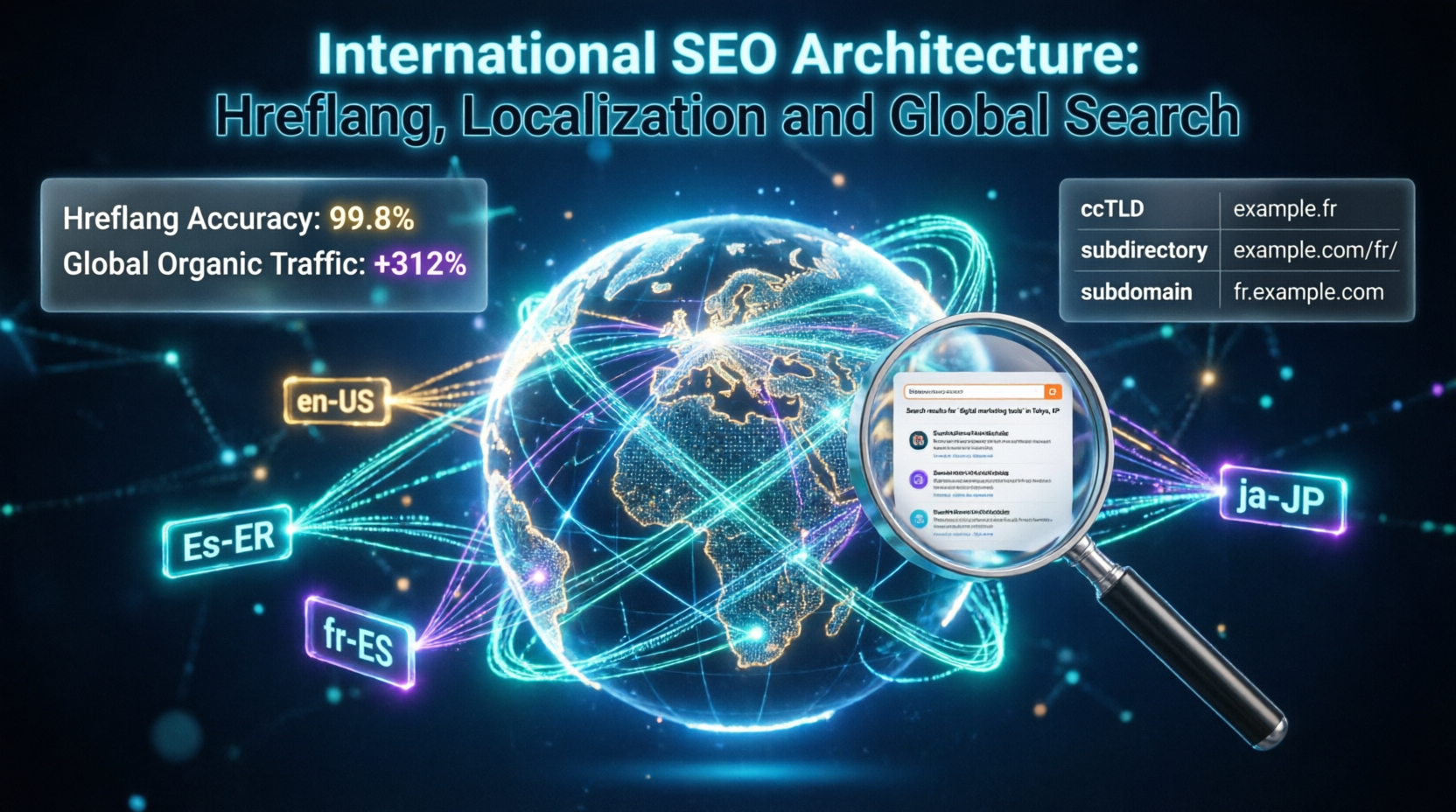
    Hreflang

    The hreflang system can communicate language and regional alternatives.

    For example:

    en-gb

    can represent English content intended for Great Britain.

    en-us

    can represent English content intended for the United States.

    Correct implementation requires reciprocal relationships between alternate pages.

    Localization vs Translation

    Simply translating text is not always enough.

    Localized pages may need:

    • Local currency
    • Regional terminology
    • Local contact details
    • Local shipping information
    • Country-specific regulations
    • Local examples
    • Appropriate spelling

    URL Architecture

    Common approaches include:

    Country subdirectories

    example.com/uk/

    Country subdomains

    uk.example.com

    Country-code domains

    example.co.uk

    Each architecture has technical and operational implications.

    Advanced Validation

    International SEO teams should test:

    • Hreflang reciprocity
    • Canonicals
    • XML sitemaps
    • Redirects
    • Language consistency
    • Regional internal links

    Google’s Search documentation continues to update technical guidance regularly, making ongoing validation important for international websites.