Author: Saad Ansari

  • Digital Marketing ROI: How to Measure the Real Value of Your Marketing

    Digital Marketing ROI: How to Measure the Real Value of Your Marketing

    Introduction

    One of the biggest digital marketing challenges is proving business value.

    A campaign may generate thousands of visitors but produce little revenue.

    That is why marketers need to measure outcomes rather than vanity metrics alone.

    Important Marketing Metrics

    Depending on the business, monitor:

    • Cost per lead
    • Conversion rate
    • Customer acquisition cost
    • Revenue
    • Return on ad spend
    • Customer lifetime value
    • Lead quality

    Example

    Suppose a campaign generates:

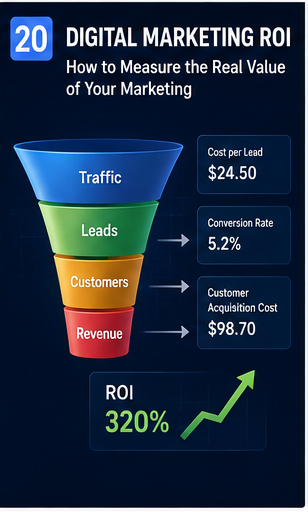
    1,000 visitors → 50 leads → 10 customers

    The business should analyze the entire funnel rather than looking only at the 1,000 visitors.

    Improve ROI

    Businesses can improve ROI by:

    • Targeting better audiences
    • Improving landing pages
    • Optimizing campaigns
    • Improving conversion rates
    • Retargeting qualified users
    • Reducing wasted advertising spend

    Conclusion

    Digital marketing should ultimately support business growth.

    The most effective strategy measures the complete journey from traffic → leads → customers → revenue.

    A professional digital marketing company can help businesses build measurable campaigns focused on real commercial results.

  • GA4 for Digital Marketing: What Businesses Should Track

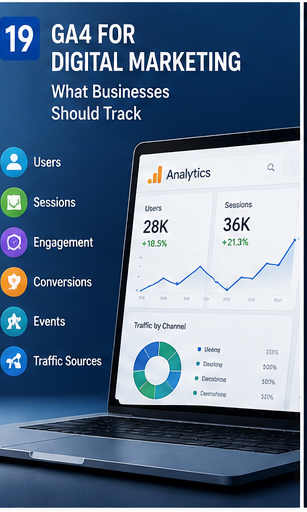
    GA4 for Digital Marketing: What Businesses Should Track

    Introduction

    Website traffic alone does not tell the complete story.

    Businesses need to understand what visitors do after arriving on a website.

    Important GA4 Data

    Businesses can analyze:

    • Users
    • Sessions
    • Engagement
    • Traffic sources
    • Landing pages
    • Events
    • Conversions
    • User journeys

    Track Business Events

    Instead of tracking everything equally, identify actions that matter commercially.

    Examples include:

    • Contact form submission
    • Phone-click
    • Purchase
    • Consultation booking
    • Newsletter registration

    Connect Marketing Channels

    Analytics becomes more useful when businesses compare performance across:

    • Organic search
    • Paid search
    • Social media
    • Email
    • Referral traffic

    Conclusion

    Effective analytics is about turning data into decisions.

    A digital marketing company can configure measurement systems and create reports that connect marketing activity with business outcomes.

  • Landing Page Optimization: Technical Elements That Increase Leads

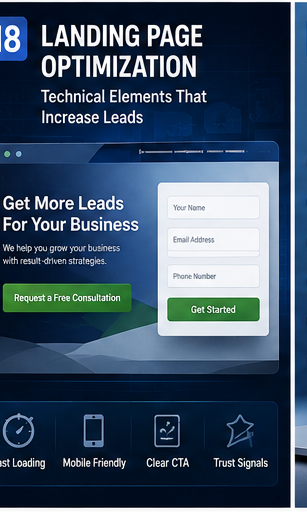
    Landing Page Optimization: Technical Elements That Increase Leads

    Introduction

    A landing page is often the final step between marketing traffic and a potential customer.

    Poor landing-page design can waste valuable SEO and advertising traffic.

    Important Elements

    Clear Headline

    Visitors should immediately understand the offer.

    Relevant Content

    The page should match the visitor’s intent.

    Strong CTA

    Tell users exactly what action to take.

    Trust Signals

    Use appropriate:

    • Reviews
    • Testimonials
    • Case studies
    • Certifications
    • Guarantees

    Fast Performance

    Slow pages can create unnecessary friction.

    Mobile Optimization

    The landing page should work correctly on phones and tablets.

    Conversion Tracking

    Track meaningful actions such as:

    • Form submissions
    • Calls
    • Purchases
    • Bookings

    Conclusion

    Landing-page optimization connects marketing traffic with business results.

    SEO, PPC, UX, analytics, and CRO should work together to create high-performing landing pages.

  • SEO Competitor Analysis: How to Find Your Competitors’ Digital Strategy

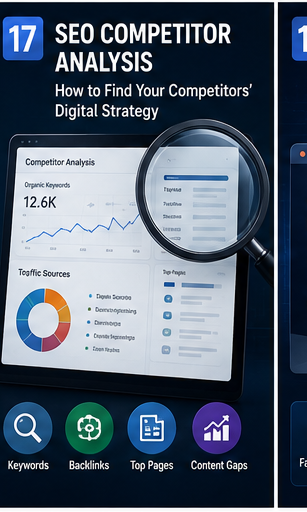
    SEO Competitor Analysis: How to Find Your Competitors’ Digital Strategy

    Introduction

    Your SEO strategy should not operate in isolation.

    Understanding competitors can reveal opportunities that your website has not yet targeted.

    What to Analyze

    Look at:

    • Target keywords
    • Content topics
    • Website architecture
    • Backlink profiles
    • Service pages
    • Internal links
    • Search visibility
    • Conversion strategies

    Find Content Gaps

    Compare your website with competing websites.

    Ask:

    What useful topics are competitors covering that we are not?

    These gaps can become opportunities for new content.

    Don’t Copy Competitors

    Competitor research should identify opportunities—not encourage duplication.

    Your website should add its own:

    • Expertise
    • Examples
    • Data
    • Experience
    • Brand perspective

    Conclusion

    Competitor analysis provides strategic information that can improve SEO planning.

    The strongest strategy combines competitor insights with your own audience research and business objectives.

  • Google Ads Quality Score: How to Improve PPC Campaign Performance

    Google Ads Quality Score: How to Improve PPC Campaign Performance

    Introduction

    Paid search success depends on more than increasing your advertising budget.

    Campaign structure, relevance, landing pages, and user experience all matter.

    What Is Quality Score?

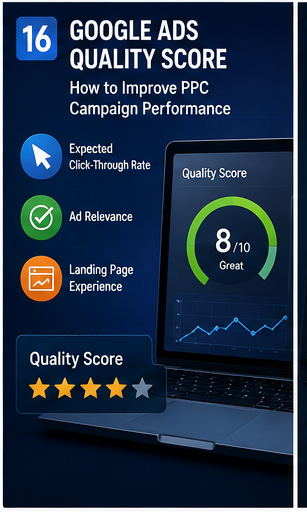
    Quality Score is a diagnostic metric associated with keywords in Google Ads.

    It considers factors related to:

    • Expected click-through rate
    • Ad relevance
    • Landing page experience

    How to Improve Campaign Quality

    Improve Ad Relevance

    The advertisement should closely match the user’s search intent.

    Optimize Landing Pages

    Landing pages should provide the information promised in the advertisement.

    Improve User Experience

    Pages should be:

    • Mobile-friendly
    • Fast
    • Easy to navigate
    • Relevant

    Use Specific Ad Groups

    Organizing closely related keywords into relevant ad groups can make campaigns easier to manage and optimize.

    Conclusion

    Successful PPC management requires continuous testing and optimization.

    A digital marketing company can analyze campaigns, landing pages, conversion tracking, and search terms to improve advertising efficiency.

  • Programmatic SEO: How Businesses Can Scale Search Traffic

    Programmatic SEO: How Businesses Can Scale Search Traffic

    Introduction

    Some businesses have thousands or millions of potential search combinations.

    Examples include:

    • Locations
    • Products
    • Services
    • Categories
    • Comparisons
    • Industry-specific pages

    Programmatic SEO can help businesses create these pages systematically.

    How It Works

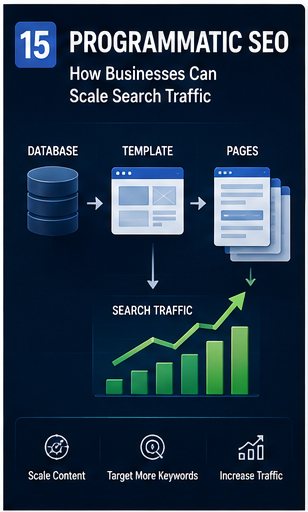
    A simplified workflow is:

    Database → Template → Unique Information → SEO Page → Internal Links

    Example

    A marketing company serving multiple cities could create genuinely useful location pages containing unique:

    • Services
    • Local information
    • Case studies
    • FAQs
    • Contact details

    The Biggest Risk

    Creating thousands of nearly identical pages without adding useful information can create a poor user experience.

    Programmatic SEO should therefore focus on usefulness and uniqueness.

    Conclusion

    Programmatic SEO can be powerful when a business has a legitimate need for many pages.

    The objective should be scalable quality—not simply scalable quantity.

  • Schema Markup and Structured Data: A Technical SEO Guide

    Schema Markup and Structured Data: A Technical SEO Guide

    Introduction

    Search engines need to understand what a webpage represents.

    Structured data provides machine-readable information about entities and content.

    Common Types of Structured Data

    Depending on the website, structured data may describe:

    • Organizations
    • Products
    • Articles
    • Events
    • Local businesses
    • Breadcrumbs
    • Reviews

    Why Schema Matters

    Correct structured data can help search engines better understand page content and may make eligible pages suitable for enhanced search features.

    However, schema markup is not a guaranteed ranking shortcut.

    Implementation Process

    A technical SEO team should:

    1. Identify suitable schema types.
    2. Add valid structured data.
    3. Test the implementation.
    4. Monitor errors.
    5. Keep information accurate.

    Common Mistakes

    Avoid:

    • Adding irrelevant schema
    • Marking up information that users cannot see
    • Using incorrect properties
    • Leaving outdated information
    • Adding excessive markup

    Conclusion

    Structured data should support a website’s overall SEO strategy rather than replace quality content and technical optimization.

  • Keyword Clustering in 2026: A Smarter Approach to SEO Content

    Keyword Clustering in 2026: A Smarter Approach to SEO Content

    Introduction

    Traditional SEO often focused on selecting one primary keyword for each webpage.

    Modern search engines understand topics, entities, synonyms, and relationships between queries.

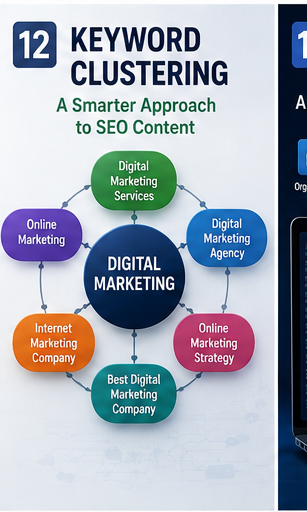
    Keyword clustering groups related search terms into meaningful topic groups.

    What Is Keyword Clustering?

    For example, a digital marketing company might group:

    • Digital marketing services
    • Online marketing services
    • Digital marketing agency
    • Internet marketing company

    These queries may represent similar search intent.

    Benefits

    Keyword clustering can help businesses:

    • Avoid unnecessary duplicate pages
    • Build topic authority
    • Improve content planning
    • Target related queries
    • Strengthen internal linking

    How to Create Keyword Clusters

    1. Collect relevant keywords.
    2. Analyze search intent.
    3. Group similar queries.
    4. Create a primary page for each major topic.
    5. Build supporting content.
    6. Link related pages together.

    Conclusion

    Keyword research should not simply produce a list of keywords.

    It should create a structured content strategy that connects related topics and search intents.

  • How to Build a Complete Digital Marketing Strategy for 2026

    How to Build a Complete Digital Marketing Strategy for 2026

    Introduction

    Digital marketing has become a connected ecosystem.

    A business may use:

    • SEO
    • Google Ads
    • Social media
    • Content marketing
    • Email marketing
    • Analytics
    • Automation
    • Conversion optimization

    The challenge is making these channels work together.

    Step 1: Define Business Objectives

    Start with measurable objectives.

    Examples include:

    • Generate 100 qualified leads per month
    • Increase online sales
    • Reduce customer acquisition cost
    • Increase organic traffic
    • Improve conversion rate

    Step 2: Understand the Audience

    Identify:

    • Customer problems
    • Search behavior
    • Buying motivations
    • Objections
    • Preferred platforms
    • Decision-making process

    Step 3: Build the Website Foundation

    Your website should have:

    • Clear navigation
    • Fast performance
    • Mobile compatibility
    • Strong calls to action
    • Useful content
    • Technical SEO
    • Analytics

    Step 4: Build Organic Visibility

    SEO should focus on relevant search intent and useful content.

    Google’s current Search guidance continues to emphasize technical accessibility and helpful content as important foundations.

    Step 5: Add Paid Advertising

    Paid campaigns can generate traffic quickly while organic strategies develop over time.

    Campaigns should be connected to:

    • Specific landing pages
    • Conversion tracking
    • Audience targeting
    • Budget controls
    • Performance reporting

    Step 6: Use Content Marketing

    Create content for different stages of the customer journey.

    Awareness: Educational articles

    Consideration: Comparisons and guides

    Decision: Case studies, testimonials, service pages

    Step 7: Measure Everything

    Monitor:

    • Traffic
    • Leads
    • Conversion rate
    • Cost per lead
    • Customer acquisition cost
    • Revenue
    • Return on advertising spend

    Step 8: Improve Continuously

    Digital marketing should operate as a cycle:

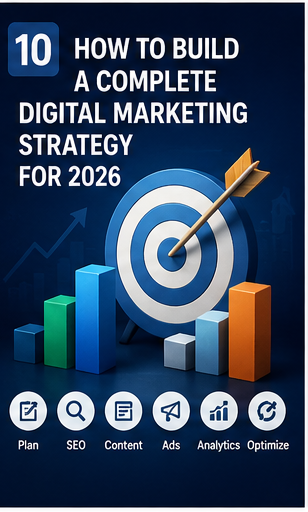
    Research → Strategy → Implementation → Measurement → Optimization

    This prevents businesses from spending money on channels simply because they are popular.

    Conclusion

    The strongest digital marketing strategy in 2026 combines technical foundations, AI-aware search optimization, high-quality content, paid acquisition, first-party data, automation, and conversion optimization.

    A professional digital marketing company can bring these components together into one measurable growth strategy rather than treating every marketing channel as a separate activity.
  • Local SEO in 2026: How Businesses Can Win More Customers From Nearby Searches

    Local SEO in 2026: How Businesses Can Win More Customers From Nearby Searches

    Introduction

    For businesses serving specific geographic markets, local SEO can be one of the most valuable digital marketing channels.

    A customer might search for:

    • Digital marketing agency near me
    • SEO company in Karachi
    • Web development agency near me
    • PPC agency in Pakistan

    The searcher’s location and intent can strongly influence the businesses they consider.

    Key Elements of Local SEO

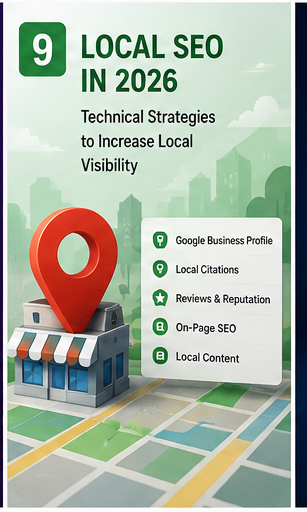
    Google Business Profile

    Businesses should maintain accurate information about:

    • Business name
    • Address
    • Phone
    • Website
    • Opening hours
    • Services

    Local Landing Pages

    Create genuinely useful location-specific pages rather than producing duplicate pages with only city names changed.

    Reviews

    Authentic customer reviews can strengthen trust and help potential customers evaluate a business.

    Local Content

    Create useful content related to the problems, industries, and customers you serve.

    Consistent Business Information

    Important business details should remain accurate and consistent across relevant online properties.

    Local SEO and AI Search

    As search becomes increasingly conversational, businesses need clear and trustworthy information across their digital presence.

    AI-powered search can change how users discover businesses, making accurate brand information increasingly important.

    Measuring Local SEO

    Track:

    • Local search visibility
    • Website visits
    • Calls
    • Form submissions
    • Direction requests
    • Qualified leads
    • Revenue

    Conclusion

    Local SEO is not simply about adding a city name to a webpage.

    It requires accurate business information, useful local content, technical SEO, reputation management, and conversion optimization.

    For service businesses, a well-planned local SEO strategy can become a reliable source of qualified leads.