Tag: AI

  • AI Overviews and SEO: How Businesses Can Increase Search Visibility

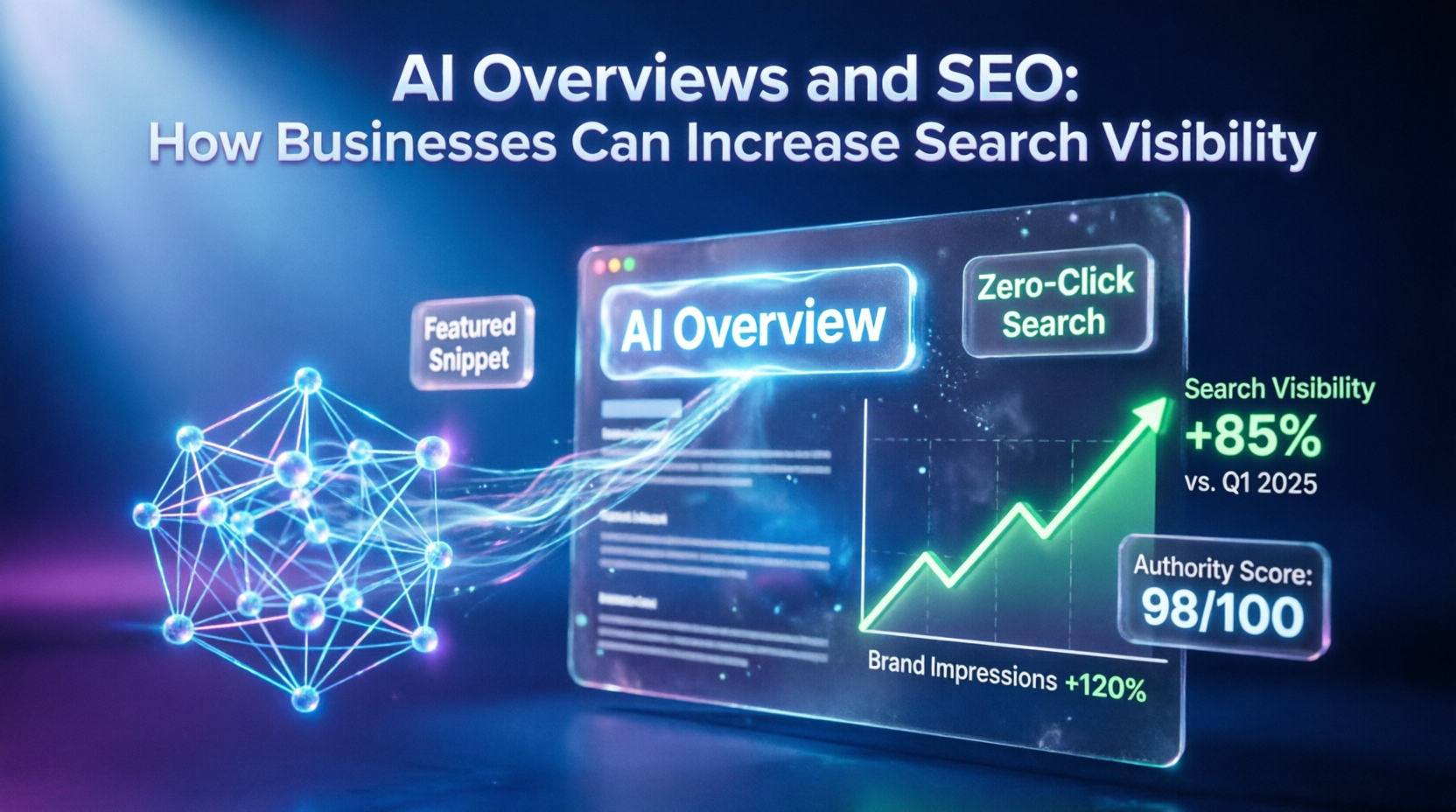
    AI Overviews and SEO: How Businesses Can Increase Search Visibility

    Introduction

    Search results are becoming more interactive. Instead of simply displaying a list of links, search engines can provide synthesized answers and additional sources for users.

    This creates a new SEO challenge: businesses need to compete for visibility within the search experience, not just traditional rankings.

    Google’s current guidance emphasizes that foundational SEO practices remain important for AI search experiences.

    Create Answer-Focused Content

    Businesses should identify the questions their customers actually ask.

    Instead of writing generic articles, create pages that provide:

    • Direct answers
    • Supporting explanations
    • Original examples
    • Relevant statistics
    • Expert opinions
    • Clear headings

    This makes information easier for users and search systems to understand.

    Build Topical Authority

    One article rarely establishes authority around an entire subject.

    For example, a digital marketing company could create a topic cluster covering:

    • SEO
    • Technical SEO
    • AI Search
    • PPC
    • Social Media
    • Content Marketing
    • Analytics
    • Conversion Optimization

    These pages can then be connected through strategic internal links.

    Measure AI Visibility

    AI search measurement is becoming increasingly important. Google has introduced reporting around visibility in generative AI search features, while the broader SEO industry is also seeing increased demand for AI visibility tracking.

    Businesses should therefore monitor traditional organic performance alongside emerging AI visibility signals.
  • AI-Powered SEO in 2026: How Artificial Intelligence Is Changing Search Optimization

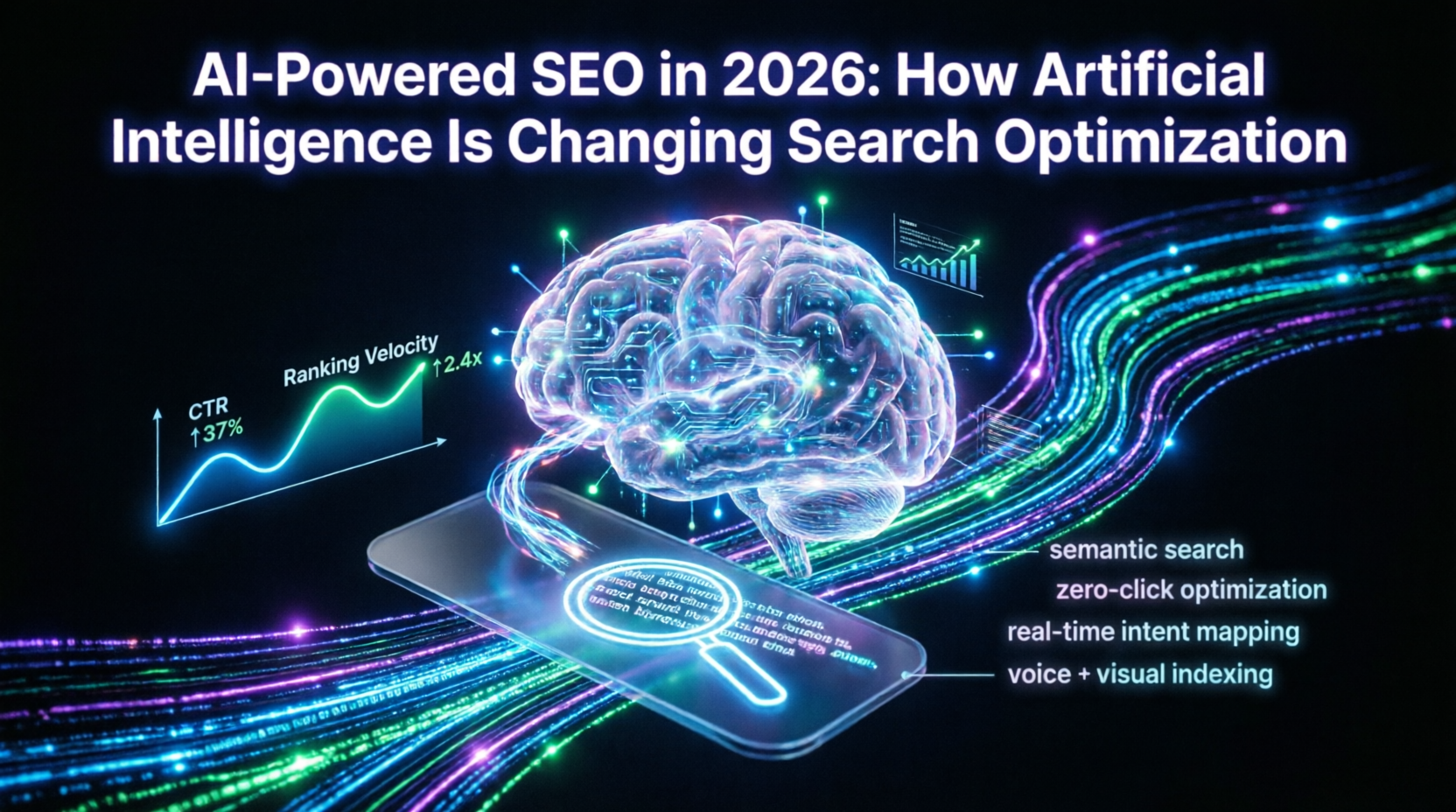
    AI-Powered SEO in 2026: How Artificial Intelligence Is Changing Search Optimization

    Introduction

    SEO in 2026 is no longer limited to choosing keywords and creating traditional blog posts. Search is becoming increasingly AI-driven, with users asking longer and more conversational questions and discovering information through AI-powered search experiences.

    Modern SEO therefore needs to focus on search intent, topical relevance, technical accessibility, trustworthy content and brand authority.

    AI can help marketers analyze search data, identify content opportunities, optimize technical issues and understand customer behavior. However, AI should support the SEO strategy rather than replace human judgment.

    How AI Is Changing SEO

    AI is influencing several parts of SEO:

    • Keyword and search-intent analysis
    • Content research
    • Competitor analysis
    • Technical SEO monitoring
    • Internal-link recommendations
    • Content optimization
    • Search performance analysis
    • Personalization

    The important difference is that automation should be combined with human review.

    A business website still needs original information, useful explanations, expert insights and a clear purpose.

    Technical SEO Still Matters

    AI search does not eliminate technical SEO.

    Search engines still need to discover, crawl and understand website content. Businesses should maintain:

    • Clean URL structures
    • Fast-loading pages
    • Mobile-friendly design
    • Internal linking
    • XML sitemaps
    • Correct canonical URLs
    • Proper indexing
    • Structured data where appropriate

    The Future of AI SEO

    The strongest strategy for 2026 is not simply “create content with AI.”

    It is:

    AI assistance + human expertise + technical SEO + useful content + measurement.

    Businesses that combine these elements can build a stronger foundation for traditional search as well as emerging AI-driven discovery.

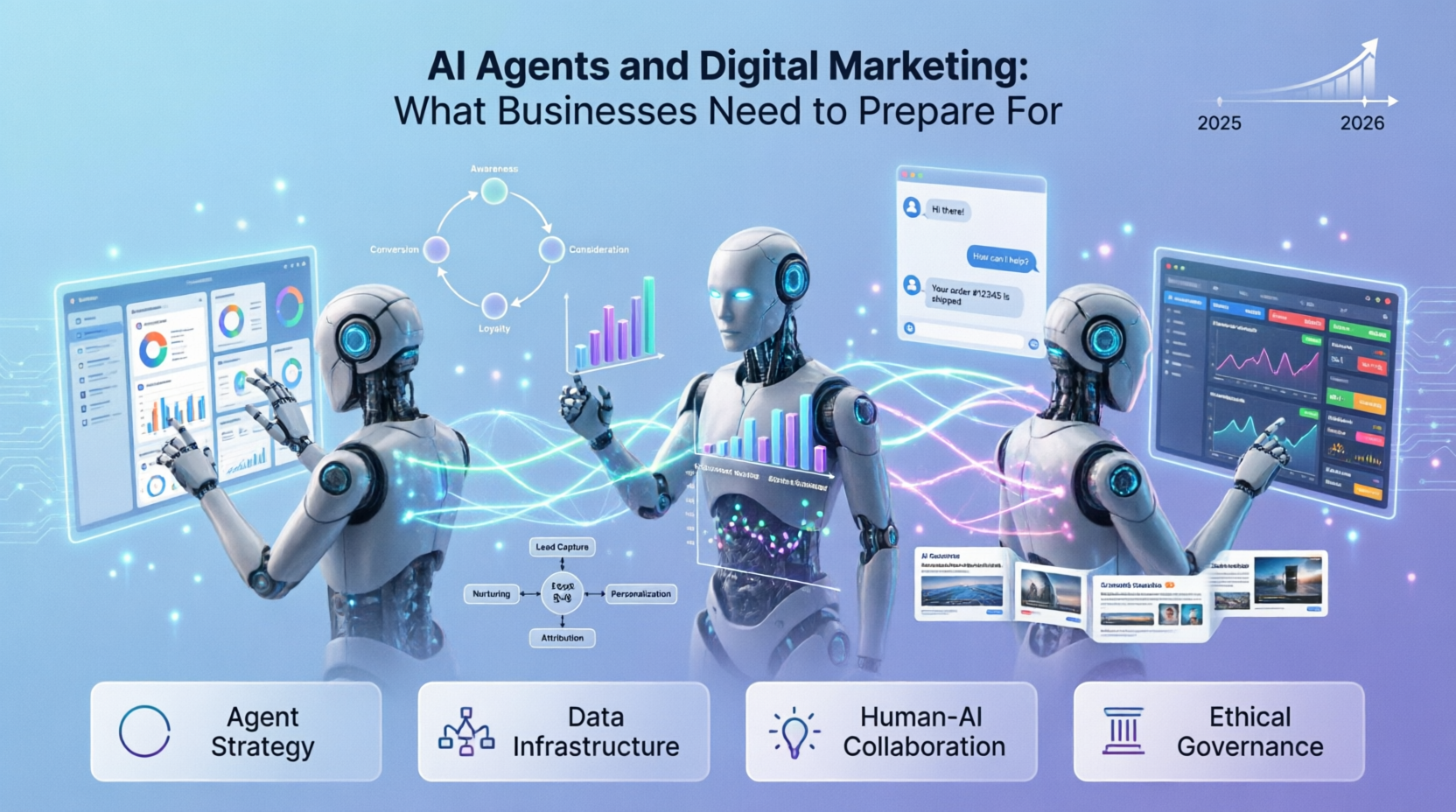
  • AI Agents and Digital Marketing: What Businesses Need to Prepare For

    AI Agents and Digital Marketing: What Businesses Need to Prepare For

    Introduction

    AI is moving beyond simple chat interfaces.

    AI agents can increasingly assist users with research, comparison, planning, and other digital tasks.

    Google’s 2026 generative AI search guidance includes initial discussion of AI agents as an emerging area.

    What Does This Mean for Businesses?

    Businesses need accurate and accessible digital information.

    Important information includes:

    • Services
    • Products
    • Prices where applicable
    • Business details
    • Contact information
    • Policies
    • Availability
    • FAQs

    Make Your Website Machine-Understandable

    Use:

    • Clear headings
    • Structured information
    • Logical navigation
    • Accurate metadata
    • Appropriate structured data
    • Consistent business information

    AI Agents and Conversion

    As AI-assisted journeys develop, customers may discover and evaluate businesses without visiting multiple websites manually.

    This makes brand accuracy and website authority increasingly important.

    Conclusion

    Businesses should prepare for a digital ecosystem where customers interact with both websites and AI systems.

  • Digital Marketing Automation: How AI Agents Are Changing Marketing Workflows

    Digital Marketing Automation: How AI Agents Are Changing Marketing Workflows

    Introduction

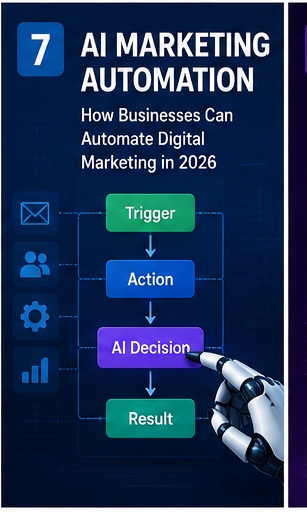
    Marketing automation has traditionally focused on predefined workflows.

    For example:

    Customer submits form → Email sent → Lead added to CRM → Sales notification

    AI is expanding this model by helping systems interpret information and support more complex marketing decisions.

    Recent industry analysis describes a shift from AI experimentation toward deeper integration across marketing workflows.

    What Can Modern Automation Support?

    Depending on the technology stack, businesses can automate:

    • Lead routing
    • Email sequences
    • Customer segmentation
    • Reporting
    • Campaign alerts
    • Content workflows
    • CRM updates
    • Customer support
    • Data analysis

    AI-Assisted Lead Qualification

    An automated system can evaluate incoming leads against predefined criteria.

    For example:

    Lead submits form → Data enrichment → Lead scoring → CRM assignment → Sales notification

    This reduces manual work and can help sales teams prioritize higher-value opportunities.

    Automation Should Not Mean Removing Humans

    Automation works best when repetitive processes are handled by systems while humans manage:

    • Strategy
    • Relationships
    • Complex decisions
    • Creative direction
    • Sensitive customer situations

    How to Build an Automation Strategy

    Start by mapping your current marketing workflow.

    Identify:

    1. Repetitive tasks
    2. Manual bottlenecks
    3. Data sources
    4. Customer touchpoints
    5. Decision points
    6. Reporting requirements

    Then automate the processes where technology can provide measurable value.

    Conclusion

    The future of marketing automation is not simply sending more automated messages.

    It is creating intelligent systems that connect marketing data, customer journeys, sales processes, and analytics.

    A digital marketing company can help businesses identify automation opportunities and build workflows around measurable commercial goals.

  • AI Content and SEO: How to Use Generative AI Without Sacrificing Quality

    AI Content and SEO: How to Use Generative AI Without Sacrificing Quality

    Introduction

    Generative AI has become an important part of modern marketing workflows.

    Businesses use AI to assist with:

    • Research
    • Content outlines
    • Data analysis
    • Content variations
    • Marketing ideas
    • Customer segmentation
    • Campaign development

    However, AI should support expertise rather than replace it.

    Google’s guidance emphasizes the importance of helpful content and evaluates content based on its value to users rather than simply whether AI was involved in its production.

    The Problem With Mass AI Content

    Publishing hundreds of automatically generated pages without adding meaningful value can create:

    • Repetitive content
    • Weak differentiation
    • Incorrect information
    • Poor user experience
    • Brand trust issues

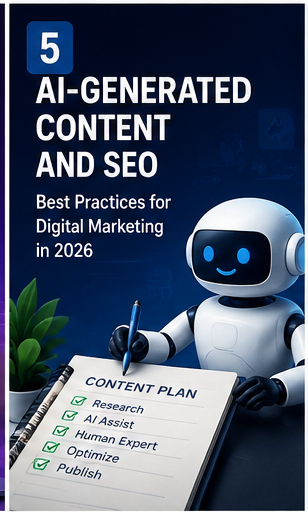
    A Better AI Content Workflow

    Step 1: Human research

    Identify the audience, search intent, competitors, and business expertise.

    Step 2: AI-assisted planning

    Use AI to organize ideas and identify potential questions.

    Step 3: Expert writing

    Add original knowledge, examples, opinions, data, and practical experience.

    Step 4: Fact checking

    Verify statistics, claims, technical information, and references.

    Step 5: SEO optimization

    Improve headings, internal links, metadata, structure, and search intent alignment.

    Step 6: Human editing

    Remove generic language and make the content genuinely useful.

    Why Human Expertise Matters

    AI can generate fluent text, but businesses differentiate themselves through experience.

    A digital marketing agency can add value by publishing:

    • Campaign case studies
    • Real performance insights
    • Client lessons
    • Original research
    • Industry analysis
    • Practical frameworks

    Conclusion

    The winning model is not AI versus humans.

    It is AI + human expertise.

    AI can improve speed and efficiency while marketers provide judgment, creativity, accuracy, and strategic thinking.