Blog

  • Server-Side Tracking for Digital Marketing: Benefits, Challenges, and Best Practices

    Server-Side Tracking for Digital Marketing: Benefits, Challenges, and Best Practices

    What Is Server-Side Tracking?

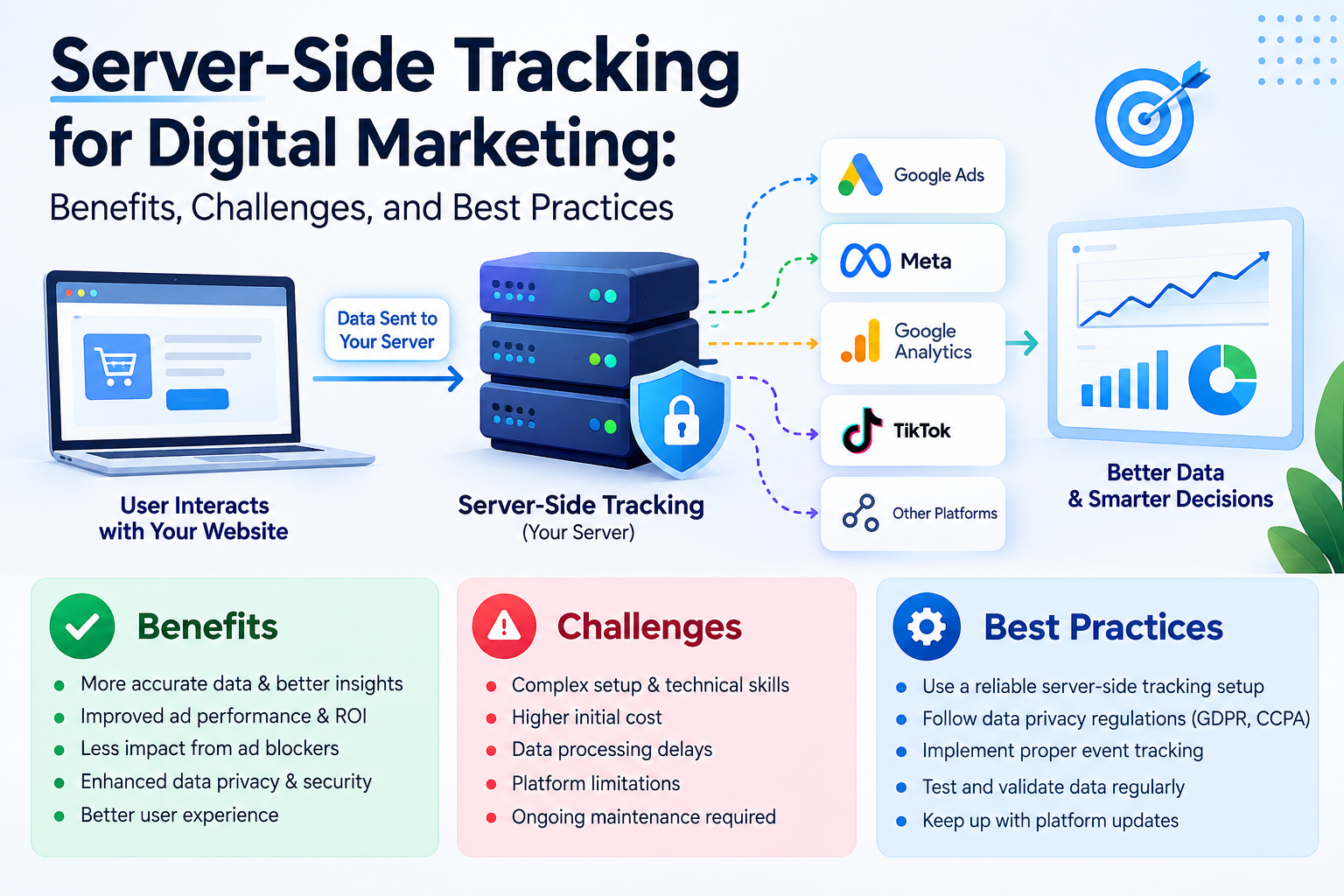
    Server-side tracking is a method of processing website or application events through a server before sending selected information to other platforms.

    Unlike traditional browser-based tracking, this approach allows businesses to manage certain data processing activities on the server.

    Why Server-Side Tracking Matters

    A properly implemented server-side tracking system can help businesses:

    • Improve control over data transmission
    • Organize marketing measurement
    • Filter unnecessary event parameters
    • Support more consistent analytics
    • Improve debugging and data management

    However, server-side tracking does not automatically guarantee accurate data or eliminate browser tracking limitations.

    Understand Client-Side and Server-Side Tracking

    Client-side tracking runs tracking code in a visitor’s browser.

    Server-side tracking processes selected events through a server environment before forwarding them to supported destinations.

    Both approaches have advantages and limitations. Businesses should select a setup based on their technical resources, measurement requirements, and privacy obligations.

    How to Implement Server-Side Tracking

    Follow these steps to get started:

    1. Identify the website events you need to measure.
    2. Review your existing analytics setup.
    3. Choose an appropriate server-side tagging solution.
    4. Configure the necessary event parameters.
    5. Test event delivery and conversion accuracy.
    6. Review consent requirements and privacy settings.
    7. Monitor the system after implementation.

    Common Mistakes to Avoid

    Businesses should avoid:

    • Sending unnecessary personal information
    • Assuming server-side tracking bypasses consent requirements
    • Recording duplicate conversions
    • Ignoring data security
    • Failing to test event accuracy
    • Implementing tracking without a clear business purpose

    Measure Tracking Performance

    Depending on your setup, monitor:

    • Event delivery accuracy
    • Conversion tracking consistency
    • Duplicate event rates
    • Analytics data quality
    • Reporting discrepancies
    • System maintenance costs
  • How to Improve Local SEO and Attract More Nearby Customers

    How to Improve Local SEO and Attract More Nearby Customers

    What Is Local SEO?

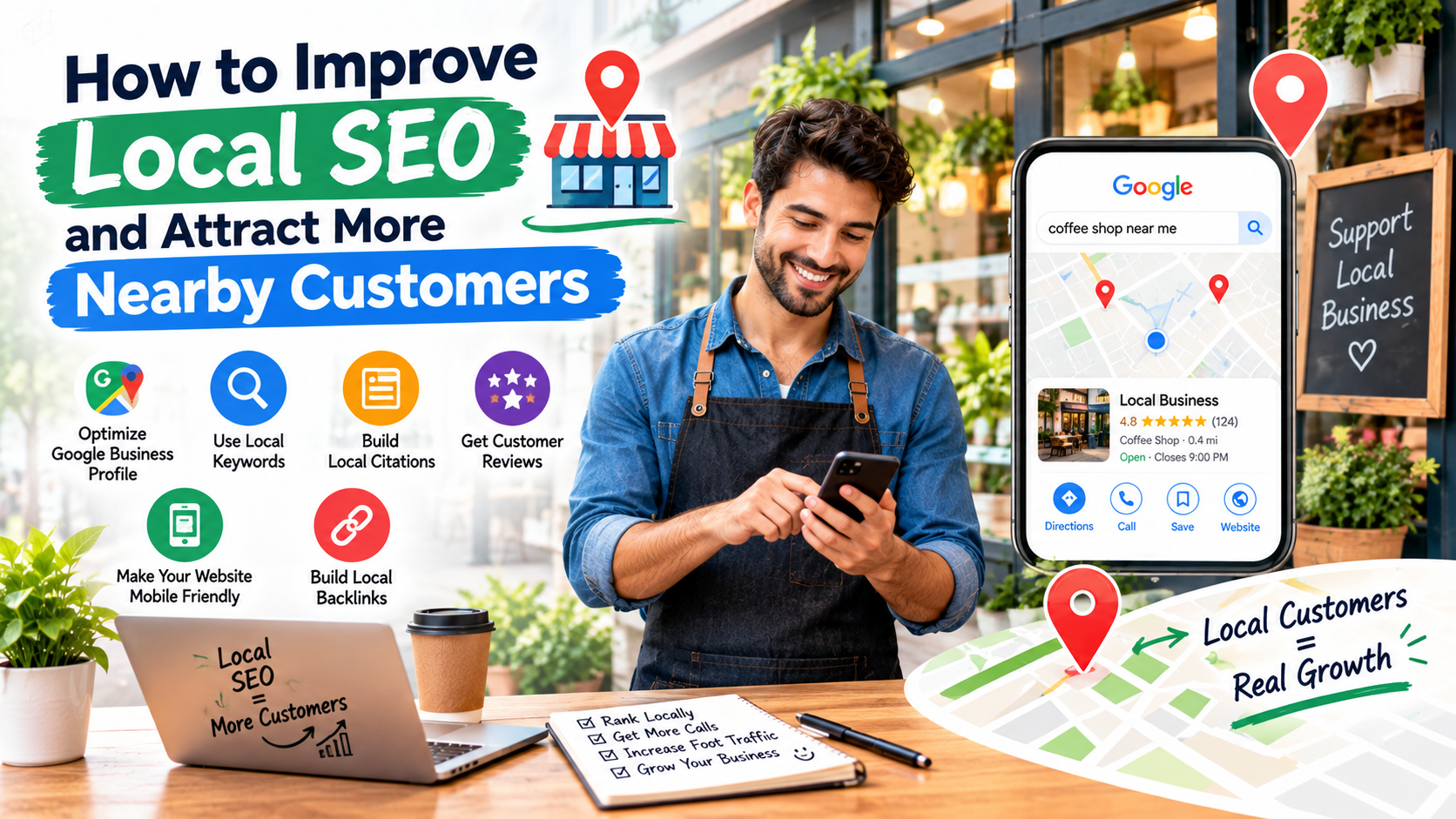
    Local SEO is the process of improving a business’s online presence so it can appear in relevant searches connected to a geographic area. For example, someone might search for a plumber in Lahore, a dentist near them, or a digital marketing agency in Karachi.

    Search engines use several signals to determine which businesses and pages may be useful for a local search. These can include the relevance of the business information, the searcher’s location, and the prominence of the business online.

    Local SEO is useful for small businesses, service providers, retailers, and companies that want to reach customers in specific locations.

    Optimize Your Google Business Profile

    A complete and accurate Google Business Profile can help eligible businesses appear in Google Search and Maps. Start by ensuring that your business name, address, phone number, website, and opening hours are accurate.

    Choose the most relevant business category and describe your services clearly. Add genuine photographs that help customers understand your business, products, or location.

    Keep your profile updated when your hours or services change. If customers ask questions or leave reviews, respond professionally and provide helpful information.

    Businesses should follow Google’s profile guidelines and avoid adding misleading details or unnecessary keywords to their business name.

    Use Location-Relevant Keywords

    Keyword research helps identify how potential customers search for businesses and services in a particular area. Instead of targeting only broad phrases, consider relevant location-based terms.

    For example, a web design company might target phrases related to website design services in its city. A local repair service could create pages explaining the services it provides in the areas it genuinely serves.

    Use location keywords naturally in page titles, headings, service descriptions, and relevant website content. Avoid repeating city names excessively or creating large numbers of nearly identical pages for different locations.

    The goal is to provide useful information that clearly explains where your business operates and how it can help customers.

    Create Helpful Local Content

    Content can help a business demonstrate its local knowledge and answer questions from potential customers. Consider publishing service guides, frequently asked questions, local project examples, or articles about issues relevant to your audience.

    For example, a home maintenance company could explain how seasonal weather affects property maintenance in its region. A marketing agency might share a practical guide for local businesses that want to improve their online presence.

    Keep the content accurate, specific, and useful. Avoid publishing articles that mention a location without providing meaningful information about it.

    A consistent content plan can help businesses cover relevant topics and give potential customers more reasons to explore their websites.

    Keep Business Information Consistent

    Customers should be able to find the same essential business details wherever they encounter your company online. Check your website, business directories, professional profiles, and other relevant listings for accurate contact information.

    Differences in phone numbers, addresses, or business names can confuse customers. Update outdated listings and remove incorrect information where possible.

    Consistency does not mean submitting your business to every directory available. Focus on legitimate, relevant platforms that customers may actually use.

    Earn Customer Reviews and Build Trust

    Reviews can help potential customers understand other people’s experiences with your business. Encourage genuine customers to share honest feedback after receiving your product or service.

    Make the process simple by providing a review link when appropriate. Never purchase fake reviews or offer incentives in exchange for positive ratings. Follow the policies of the platform where reviews are collected.

    Respond to feedback politely, including negative reviews. When a customer raises a concern, acknowledge the issue and offer a reasonable way to resolve it.

    A professional approach to customer feedback can demonstrate that your business values service quality and customer relationships.

    Improve Your Website for Mobile Users

    Many people search for nearby services using their smartphones. Your website should therefore be easy to use on smaller screens.

    Make sure pages load efficiently, text is readable, and navigation is straightforward. Display essential information such as services, contact details, business hours, and service areas where appropriate.

    Include clear calls to action, such as calling your business, requesting a quote, or booking an appointment. Test important forms and links to ensure they work properly.

    A helpful mobile experience makes it easier for visitors to move from discovering your business to contacting you.

    Track Local SEO Performance

    Monitor your performance to understand which improvements are producing useful results. Google Business Profile performance data, Google Search Console, and website analytics can provide insights into customer interactions and search visibility.

    Useful indicators include website visits, calls, direction requests where available, search impressions, clicks, and enquiries. Compare performance over time instead of relying on a single day’s results.

    Use the information to identify opportunities. If visitors reach your website but do not contact you, review your service pages, contact options, and calls to action.

  • Customer Retention Marketing: How to Increase Repeat Business

    Customer Retention Marketing: How to Increase Repeat Business

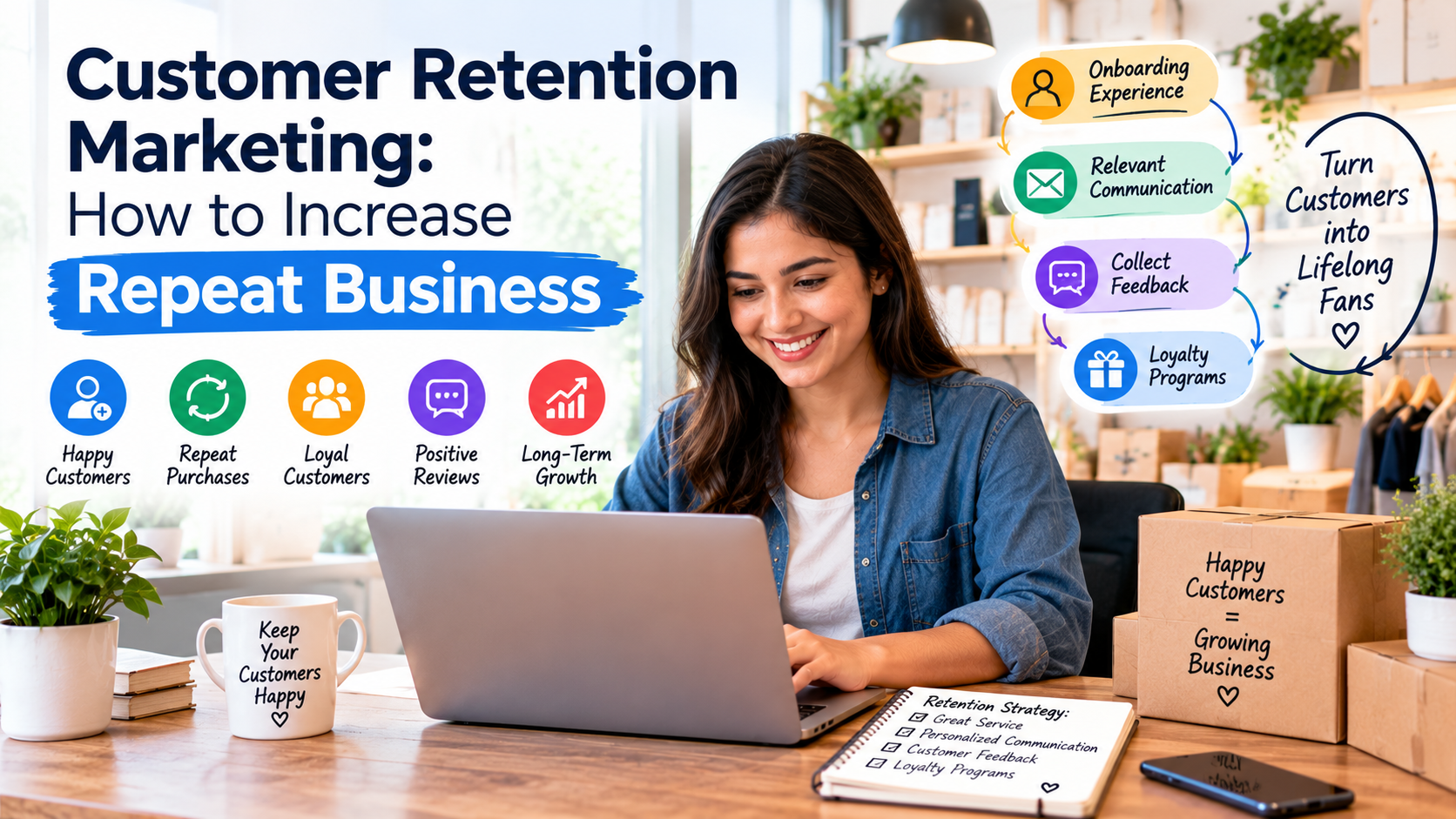
    Why Customer Retention Matters

    A strong retention strategy can help businesses:

    • Build customer loyalty
    • Encourage repeat purchases
    • Generate referrals
    • Identify customer problems earlier
    • Improve long-term customer value

    Build a Strong Onboarding Experience

    Explain how your service works, provide clear next steps, and make support easy to access.

    For a digital marketing agency, onboarding might include a kickoff meeting, an agreed strategy, reporting expectations, and a project timeline.

    Use Relevant Communication

    Send useful updates, educational resources, and service recommendations based on customers’ needs and preferences.

    Avoid excessive or irrelevant messaging.

    Collect Customer Feedback

    Surveys, support conversations, and review discussions can reveal problems and opportunities for improvement.

    Measure Retention

    Depending on your business model, track:

    • Repeat purchase rate
    • Customer retention rate
    • Churn rate
    • Renewal rate
    • Customer lifetime value
    • Customer satisfaction
  • How Small Businesses Can Grow Online With SEO and Digital Marketing

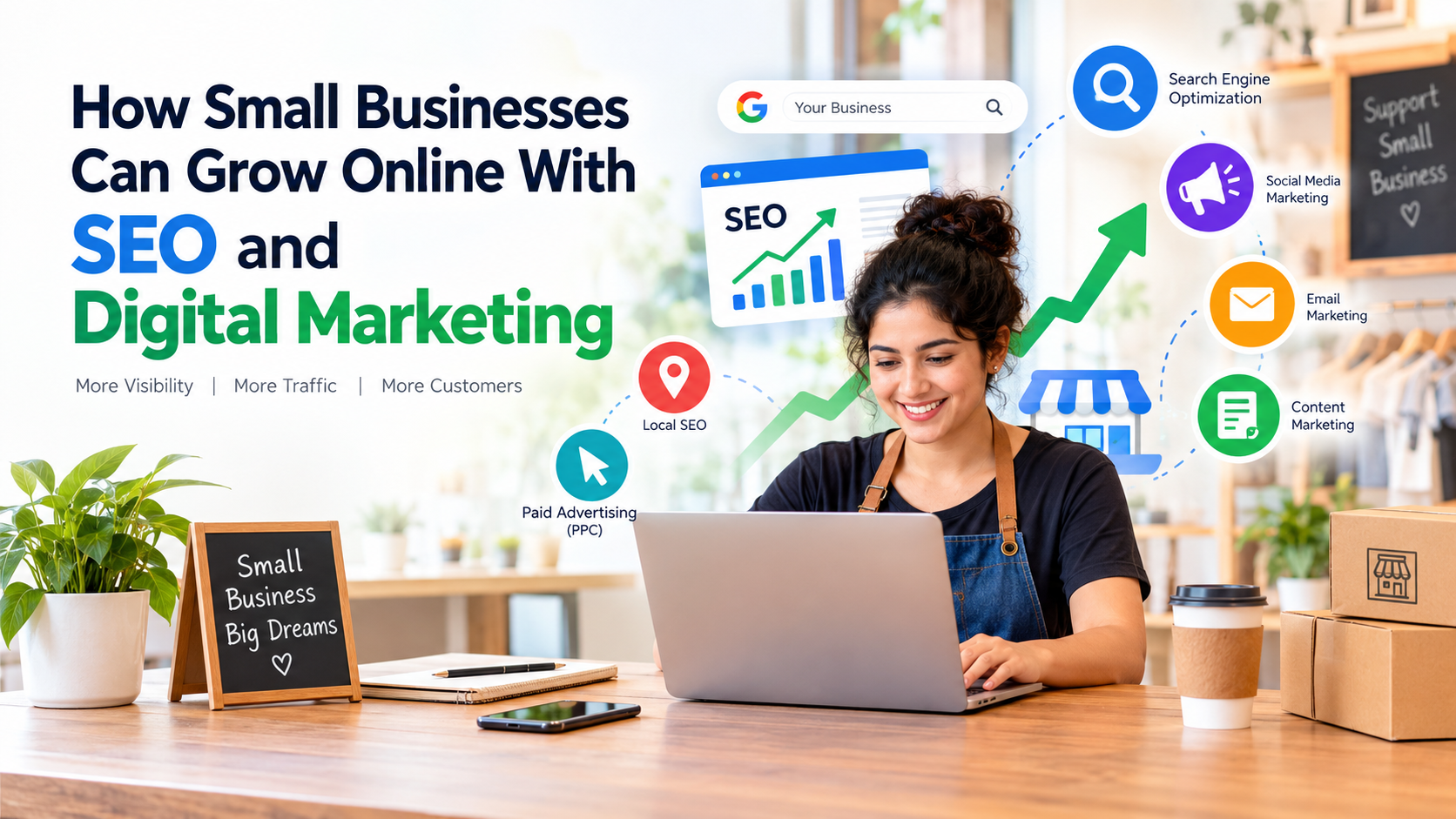
    How Small Businesses Can Grow Online With SEO and Digital Marketing

    Understand Your Target Audience

    Before investing in digital marketing, identify the people most likely to need your products or services. Consider their interests, common problems, purchasing habits, and the questions they ask before making a decision.

    Customer research can help you choose relevant topics, create useful website pages, and develop marketing messages that speak directly to your audience.

    For example, a local service provider may want to reach customers searching for solutions in a specific city. An online store may focus on people comparing product features, prices, and customer reviews.

    When you understand your audience, you can create more relevant content and avoid wasting resources on visitors who are unlikely to become customers.

    Build a Strong SEO Foundation

    SEO helps search engines understand your website and helps users discover your pages through relevant searches. A strong foundation begins with keyword research, a logical website structure, descriptive page titles, useful headings, and clear URLs.

    Choose keywords that reflect what your audience actually wants to know. Some people search for general information, while others are ready to compare services or make a purchase. Your content should match the purpose behind each search.

    Technical SEO is equally important. Make sure your website works well on mobile devices, loads efficiently, uses secure HTTPS connections, and allows important pages to be crawled and indexed.

    For a deeper understanding of optimization, businesses should develop a consistent SEO strategy that connects technical improvements with useful content and measurable goals.

    Create Valuable and Helpful Content

    Content marketing gives businesses an opportunity to answer customer questions and demonstrate their knowledge. Blog posts, tutorials, product guides, frequently asked questions, and case studies can help visitors understand their options.

    Rather than publishing articles only to include keywords, focus on providing clear and practical information. Use descriptive headings, short paragraphs, examples, and relevant images to make content easier to read.

    A useful content plan should also connect related topics. For instance, a business offering website services could publish articles about website design, site performance, online security, and search optimization.

    Consistent, helpful content can support search visibility while giving potential customers more reasons to trust your business.

    Use Social Media to Increase Brand Awareness

    Social media can help businesses introduce their services, share useful information, and communicate with customers. However, every business does not need to be active on every platform.

    Choose channels that suit your audience and business type. A company serving other businesses may benefit from professional networking platforms, while a visual brand may find image- and video-focused channels more suitable.

    Share a mix of educational content, company updates, product information, and answers to common questions. Respond to comments and messages professionally, and use customer feedback to improve your communication.

    Social media works best when it supports a wider digital marketing strategy rather than operating as an isolated activity.

    Improve the Website Experience

    Attracting visitors is only part of the process. Your website should make it easy for people to find information and understand what to do next.

    Use clear navigation, readable text, relevant images, and straightforward calls to action. Important information such as services, pricing details where appropriate, contact options, and frequently asked questions should be easy to find.

    Check your website on smartphones, tablets, and desktop computers. Broken links, confusing layouts, and slow-loading pages can frustrate visitors and reduce the likelihood that they will contact your business.

    A helpful website experience can support both customer satisfaction and marketing performance.

    Build Trust and Earn Relevant Backlinks

    Trust is essential for long-term online growth. Businesses can strengthen credibility by publishing accurate information, displaying clear contact details, responding to customer questions, and sharing genuine examples of their work.

    Relevant backlinks can also help users discover your content through other websites. Consider contributing expert articles to suitable publications, creating useful resources that others may reference, and building genuine relationships with businesses in related industries.

    Avoid relying on large quantities of irrelevant or manipulative links. Prioritize editorial relevance, useful content, and links that make sense for readers.

    Measure Your Marketing Performance

    Digital marketing should be reviewed regularly to understand which activities are producing useful results. Website analytics and search performance tools can help you monitor organic traffic, search impressions, click-through rates, enquiries, and conversions.

    Focus on metrics connected to your business goals. If you want more enquiries, track form submissions and calls rather than relying only on page views or social media likes.

    Review your results to identify successful pages, improve underperforming content, and adjust your priorities. Marketing plans should evolve as your audience, competition, and business objectives Chang
  • A/B Testing in Digital Marketing: A Data-Driven Optimization Guide

    A/B Testing in Digital Marketing: A Data-Driven Optimization Guide

    What Is A/B Testing?

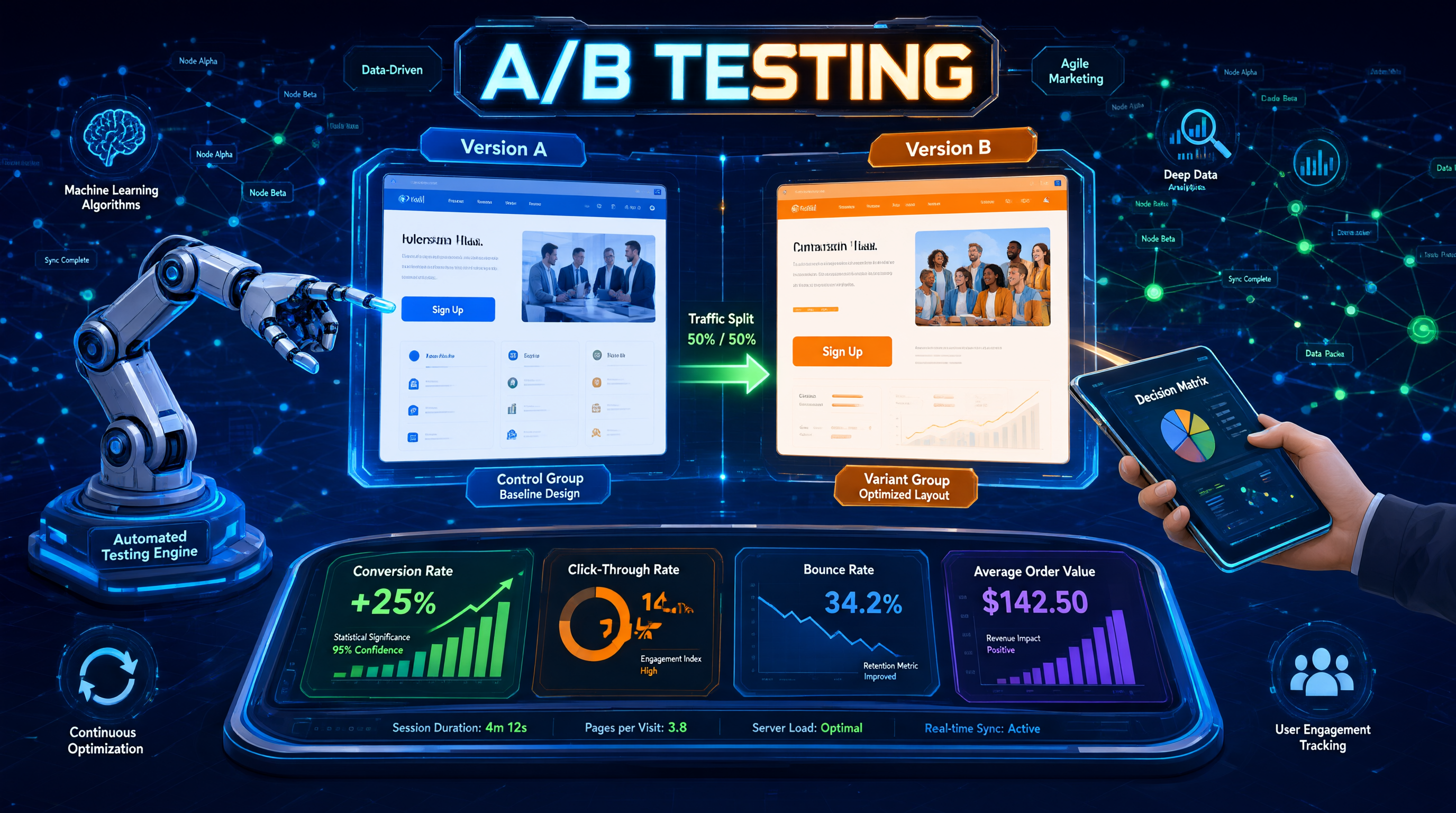
    A/B testing typically compares a control version with an alternative version. Eligible users are assigned to each version, and their behavior is measured.

    What Can You Test?

    Examples include:

    • Headlines
    • Call-to-action wording
    • Form length
    • Page layouts
    • Email subject lines
    • Pricing presentation

    How to Run a Test

    Step 1: Identify a Problem

    For example, a landing page may receive traffic but generate few inquiries.

    Step 2: Create a Hypothesis

    A shorter form might increase submissions without reducing lead quality.

    Step 3: Choose a Primary Metric

    Select a metric such as completed forms or purchases.

    Step 4: Collect Enough Data

    Plan the test based on expected traffic, baseline performance, and the size of improvement worth detecting.

    Step 5: Analyze the Results

    Consider uncertainty, sample size, and potential differences between audiences before choosing a winner.

    Common Mistakes

    Avoid ending tests too early, changing multiple variables without a plan, and focusing only on clicks when the real goal is revenue or qualified leads.

  • B2B Digital Marketing: Strategies to Generate Qualified Business Leads

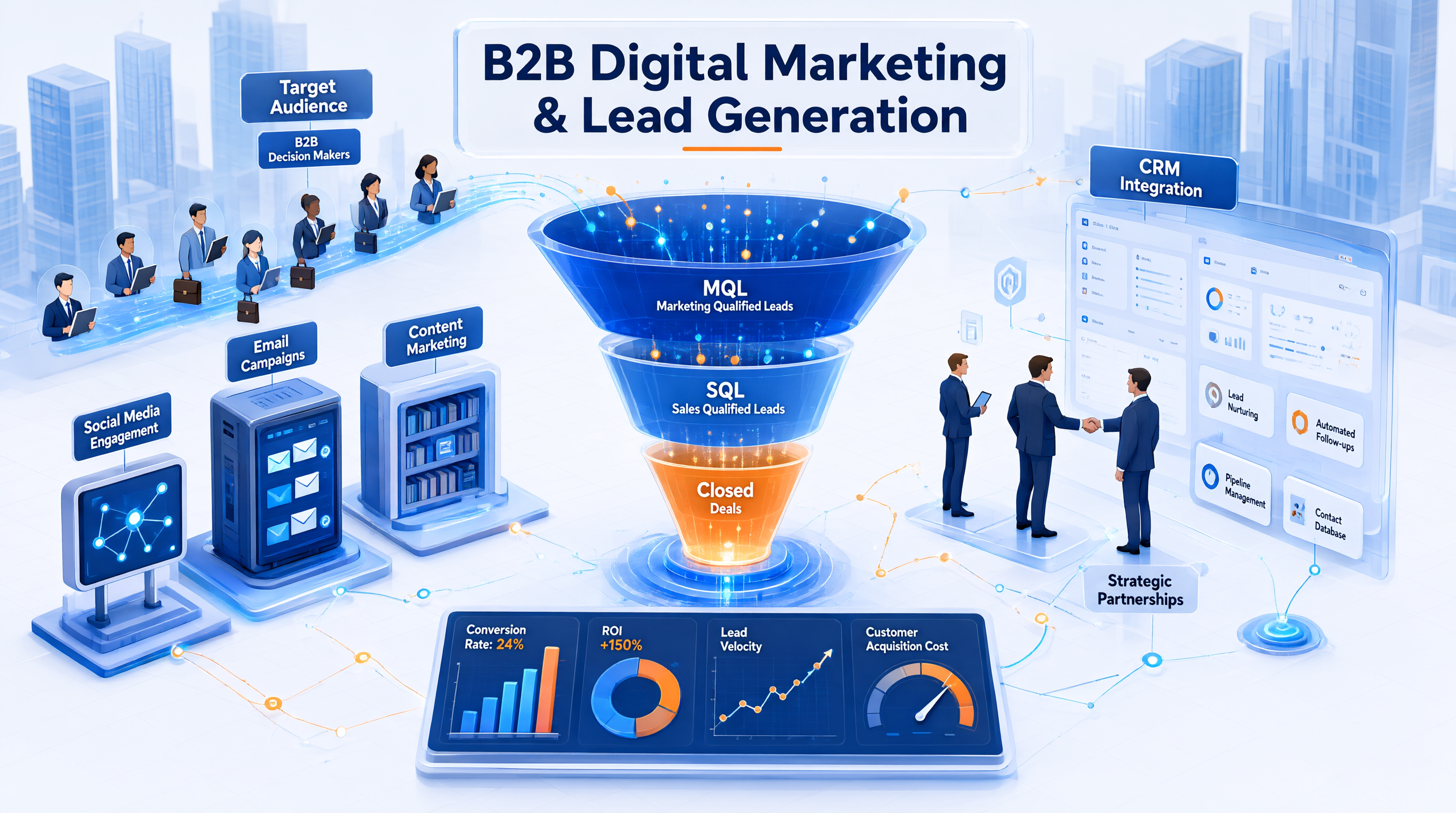
    B2B Digital Marketing: Strategies to Generate Qualified Business Leads

    Understand Your Ideal Customer

    Define your target industries, company sizes, business challenges, and relevant decision-makers. This helps you create more useful content and targeted campaigns.

    Use SEO for Buyer Research

    Create articles and service pages that address commercial questions, technical problems, pricing considerations, and solution comparisons.

    Publish Case Studies

    Where you have permission, explain the customer’s challenge, the work performed, and the measurable outcomes. Use accurate figures and avoid unsupported claims.

    Use LinkedIn and Paid Campaigns

    Professional social platforms and paid campaigns can help reach relevant audiences. Choose targeting criteria based on your business objectives and monitor lead quality.

    Build a Lead-Nurturing Process

    Provide useful follow-up resources, answer questions, and coordinate marketing with the sales team.

    Measure Business Outcomes

    Monitor qualified leads, sales opportunities, conversion rate, customer acquisition cost, and revenue—not just impressions.

  • Website Security and SEO: HTTPS, Malware, and Technical Protection

    Website Security and SEO: HTTPS, Malware, and Technical Protection

    Implement HTTPS

    Use a valid TLS certificate to secure connections between visitors and your website. Ensure HTTP URLs redirect appropriately to the preferred HTTPS versions.

    Keep Software Updated

    Update your content management system, themes, plugins, frameworks, and server software. Remove components that are no longer needed.

    Apply Access Controls

    Use strong unique passwords, multi-factor authentication where available, and appropriate user permissions.

    Maintain Backups

    Keep reliable backups and test the recovery process. A backup is only useful if it can be restored successfully.

    Monitor for Security Issues

    Use appropriate security tools and review unusual activity, unauthorized changes, suspicious redirects, and unexpected new pages.

    If Google identifies a security issue, review the relevant Search Console reports and follow the recommended cleanup process.

    Security and SEO

    HTTPS is a lightweight ranking signal, but security should primarily be treated as a fundamental requirement for protecting users and business operations.

    No security plugin alone can guarantee that a website is safe.

  • Lead Generation Strategies for Digital Marketing Companies

    Lead Generation Strategies for Digital Marketing Companies

    Create Focused Service Pages

    Develop dedicated pages for important services, such as SEO, PPC management, and content marketing. Explain your process, deliverables, and the problems each service solves.

    Offer Valuable Resources

    Useful resources can include SEO checklists, marketing templates, educational guides, and website audit summaries.

    If you collect contact information in exchange for a resource, explain how the information will be used.

    Optimize Contact Forms

    Keep forms straightforward. Ask only for details needed to respond appropriately, such as name, business email, service interest, and an optional message.

    Use Clear Calls to Action

    Examples include:

    • Request an SEO audit
    • Book a consultation
    • Discuss your marketing goals

    Make sure the action is clear and the next step is explained.

    Qualify and Nurture Leads

    Use a CRM to organize inquiries, track follow-ups, and distinguish qualified opportunities from general questions. Respond promptly and provide relevant information.

    Measure Performance

    Track lead volume, qualified lead rate, cost per lead, consultation bookings, and customer acquisition.

  • Google Business Profile Optimization for Local Companies

    Google Business Profile Optimization for Local Companies

    Complete Your Business Information

    Make sure your business name, address or service area, phone number, website, hours, and categories accurately represent your real business.

    Choose the most relevant primary category and add appropriate secondary categories where available.

    Describe Your Services

    Add clear descriptions of the services you genuinely provide. Keep the information specific and useful for potential customers.

    Use Quality Photos

    Upload authentic photos of your premises, team, work, or products where relevant. Keep images current and representative of your business.

    Manage Customer Reviews

    Encourage genuine customers to share honest feedback. Respond professionally to positive and negative reviews, and never purchase fake reviews.

    Monitor Performance

    Depending on the available reporting, review searches, profile interactions, website visits, calls, and direction requests.

    Common Mistakes

    Avoid creating fake locations, keyword-stuffing your business name, or publishing misleading information.

  • E-commerce SEO: How to Optimize Online Stores for Organic Traffic

    E-commerce SEO: How to Optimize Online Stores for Organic Traffic

    Optimize Product Pages

    Each important product page should have a descriptive title, useful product information, clear images, availability details, and an easy purchasing process.

    Avoid copying generic manufacturer descriptions when you can provide original information that helps customers make decisions.

    Improve Category Pages

    Organize products into logical categories and subcategories. Add useful introductory content where it benefits shoppers.

    Manage Duplicate URLs

    Filters, sorting parameters, and tracking parameters can create multiple URLs for similar content. Review canonical tags, crawling rules, and indexation carefully before changing them.

    Use Structured Data

    Where eligible, product structured data can describe details such as price, availability, and product ratings when those ratings meet Google’s requirements.

    Always ensure structured data matches the visible page information.

    Improve Mobile Shopping

    Check product images, navigation, cart functionality, payment steps, and form usability on mobile devices.

    Measure Results

    Track organic product-page traffic, add-to-cart actions, purchases, conversion rate, and revenue.