Blog

  • How to Build an Effective SEO and Digital Marketing Strategy

    How to Build an Effective SEO and Digital Marketing Strategy

    Building a successful online presence requires more than simply creating a website. Businesses need to attract the right audience, publish useful content, improve search visibility, and consistently measure their results.

    This is where SEO and digital marketing work together. SEO helps a website become more visible in search engines, while digital marketing uses multiple channels to reach, engage, and convert potential customers.

    What Is an SEO and Digital Marketing Strategy?

    An SEO and digital marketing strategy is a structured plan for improving a brand’s online visibility and reaching its target audience.

    It can include:

    • Search engine optimization
    • Keyword research
    • Content marketing
    • Social media marketing
    • Email marketing
    • Link building
    • Website optimization
    • Performance tracking

    Rather than treating each activity separately, businesses can connect these channels to create a more consistent online marketing system.

    Start With Your Target Audience

    Before creating content or choosing marketing channels, understand who you want to reach.

    Consider questions such as:

    • What problems does your audience have?
    • What information are they searching for?
    • Which products or services are they interested in?
    • What questions do they commonly ask?
    • Where do they spend time online?

    Understanding your audience helps you create content that is more relevant and useful.

    Perform Keyword Research

    Keyword research is an important part of SEO. It helps identify the terms and questions people use when searching for products, services, or information.

    For example, a business offering online marketing services might research terms related to:

    • Digital marketing services
    • SEO services
    • SEO strategy
    • Online marketing
    • Content marketing
    • Website optimization

    The goal is not to use keywords repeatedly. Instead, keywords should help guide content toward topics that match user needs and search intent.

    Create High-Quality Content

    Content is one of the most important parts of a long-term digital marketing strategy. Useful content can educate visitors, answer questions, demonstrate expertise, and encourage people to explore a website.

    Businesses can publish:

    • Blog articles
    • How-to guides
    • Tutorials
    • Case studies
    • FAQs
    • Industry reports
    • Checklists
    • Educational resources

    Good content should provide genuine value rather than being created only to target search engines.

    Optimize Important Website Elements

    On-page SEO helps search engines understand the purpose and relevance of individual pages.

    Important areas to review include:

    Page Titles

    Create clear titles that accurately describe the page and naturally include the primary topic.

    Headings

    Use headings and subheadings to organize information and make longer articles easier to read.

    URLs

    Keep URLs simple, descriptive, and relevant to the page topic.

    Internal Links

    Link related pages together to help visitors discover additional information and make website navigation easier.

    Images

    Use relevant images and descriptive alternative text where appropriate.

    Improve Technical SEO

    Technical SEO focuses on the underlying performance and structure of a website.

    Businesses should regularly review:

    • Mobile usability
    • Page loading performance
    • Website security
    • Broken links
    • Crawlability
    • Indexing
    • Site structure
    • Duplicate content issues

    A technically healthy website provides a stronger foundation for other SEO activities.

    Use Content Marketing and Social Media

    SEO should not operate alone. Content can also be promoted through social media, email newsletters, online communities, and other relevant channels.

    For example, after publishing a detailed blog post, a business can share key points on social platforms and include the article in an email campaign.

    This gives the content additional opportunities to reach its intended audience.

    Build Relevant Backlinks

    Backlinks are links from other websites to your website. Relevant and trustworthy backlinks can support a website’s authority and provide referral traffic.

    Businesses can work toward earning backlinks by:

    • Publishing original research
    • Creating useful resources
    • Contributing relevant guest articles
    • Building industry relationships
    • Producing content that other websites want to reference

    Link building should focus on relevance and quality rather than simply collecting large numbers of links.

    Track Your Marketing Performance

    A strategy becomes more useful when its results are measured regularly.

    Depending on business goals, useful metrics may include:

    • Organic traffic
    • Search visibility
    • Keyword performance
    • Engagement
    • Leads
    • Conversions
    • Referral traffic
    • Content performance

    Tracking these metrics can help identify what is working and where improvements may be needed.

    Avoid Common Digital Marketing Mistakes

    Businesses often make avoidable mistakes when developing their online strategy.

    Some common problems include:

    • Publishing content without understanding the audience
    • Using keywords unnaturally
    • Ignoring technical SEO
    • Focusing only on quantity instead of content quality
    • Building irrelevant backlinks
    • Neglecting mobile users
    • Failing to measure results
    • Expecting immediate results from SEO

    Avoiding these problems can create a more sustainable approach to online marketing.

    Keep Improving Your Strategy

    Digital marketing is an ongoing process. Search behavior, customer expectations, competitors, and online platforms can change over time.

    For this reason, businesses should periodically review their content, SEO performance, website experience, and marketing channels.

    Small improvements made consistently can contribute to stronger long-term results.
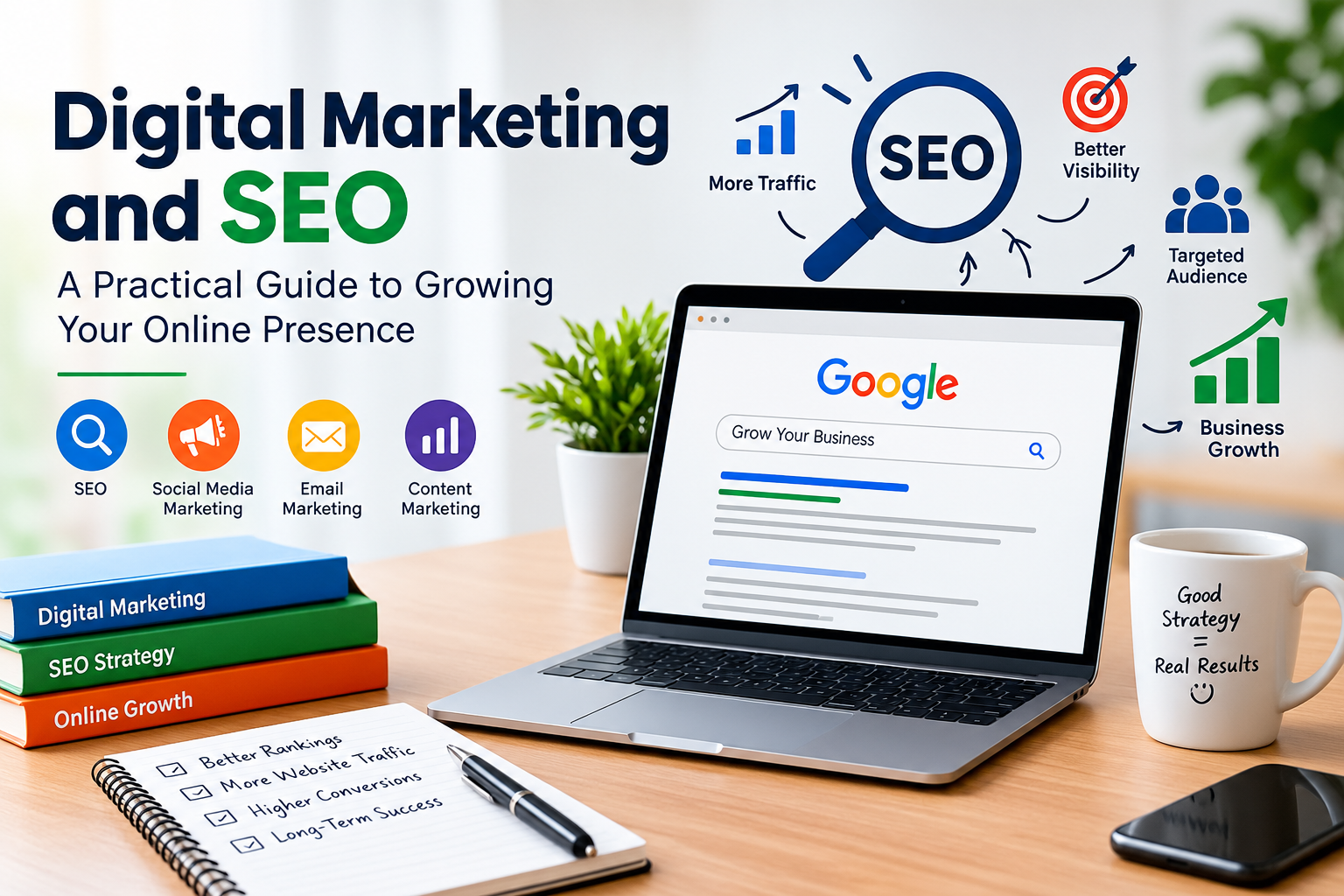
  • Digital Marketing and SEO: A Practical Guide to Growing Your Online Presence

    Digital Marketing and SEO: A Practical Guide to Growing Your Online Presence

    n today’s digital world, having an online presence is important for businesses, brands, and individuals looking to reach a wider audience. However, simply creating a website is not enough. Businesses need a strategy that helps people discover their content, understand their products or services, and eventually become customers.

    This is where digital marketing and SEO play an important role. Digital marketing covers a broad range of online promotional activities, while search engine optimization focuses on improving a website’s visibility in search engine results.

    Understanding how these two areas work together can help businesses build a stronger and more sustainable online presence.

    What Is Digital Marketing?

    Digital marketing refers to marketing activities that use digital channels and technologies to reach an audience. These channels can include search engines, websites, social media platforms, email, online advertising, and content marketing.

    A digital marketing strategy may include several different methods, such as:

    • Search engine optimization
    • Content marketing
    • Social media marketing
    • Email marketing
    • Search advertising
    • Display advertising
    • Influencer marketing
    • Video marketing

    The right combination depends on the business, target audience, goals, and available resources.

    What Is SEO?

    Search engine optimization, commonly known as SEO, is the process of improving a website and its content so that search engines can better understand and index it.

    A strong SEO strategy can help relevant pages appear when people search for information, products, or services related to a business.

    SEO generally involves several areas, including:

    On-Page SEO

    On-page SEO focuses on elements that exist directly on a website. These can include page titles, headings, content structure, internal links, images, URLs, and the overall usefulness of the content.

    Well-organized pages make it easier for both users and search engines to understand the subject of a page.

    Technical SEO

    Technical SEO focuses on the technical aspects of a website that can affect crawling, indexing, performance, and usability.

    Important areas can include website speed, mobile usability, site architecture, structured data, crawlability, and indexation.

    A technically healthy website gives search engines a clearer path to discover and understand its content.

    Off-Page SEO

    Off-page SEO involves activities outside a website that can contribute to its online visibility and reputation.

    Link building is one commonly discussed part of off-page SEO. When other relevant websites reference useful content, those links can help users discover the site and may contribute to how search engines understand the site’s reputation.

    However, link building should focus on quality and relevance rather than simply collecting a large number of links.

    Why Content Matters for SEO

    Content is one of the central elements of a successful SEO strategy.

    Search engines aim to provide users with useful results. For that reason, creating content primarily for search engines rather than people can lead to a poor user experience.

    Effective SEO content should:

    • Address a clear search intent
    • Provide useful and accurate information
    • Be easy to read
    • Use descriptive headings
    • Naturally include relevant terminology
    • Answer common questions
    • Provide original value
    • Be updated when information changes

    Instead of repeatedly inserting the same keyword, content should cover the topic naturally and comprehensively.

    Keyword Research and Search Intent

    Keyword research helps marketers understand what people are searching for online.

    For example, someone searching for “SEO basics” may be looking for educational information, while someone searching for “SEO agency” may be looking for a service provider.

    Understanding this difference is known as search intent.

    Common types of search intent include:

    • Informational intent
    • Navigational intent
    • Commercial investigation
    • Transactional intent

    Creating content that matches the intent behind a search query can make a website more useful to its target audience.

    How Digital Marketing and SEO Work Together

    SEO can bring organic search visibility, while other digital marketing channels can help distribute content and reach potential customers.

    For example, a business might publish an informative SEO article on its website, promote it through social media, include it in an email newsletter, and use paid advertising to reach a specific audience.

    Each channel can serve a different purpose.

    SEO can support long-term organic visibility, while paid campaigns may provide faster exposure. Social media can help build engagement, while email marketing can help businesses communicate directly with existing audiences.

    A coordinated strategy can therefore be more effective than treating every marketing channel as a completely separate activity.

    Building an Effective SEO Strategy

    Businesses starting with SEO can benefit from following a structured process.

    1. Define Your Audience

    Understand who you are trying to reach. Consider their interests, problems, questions, and purchasing behavior.

    2. Research Relevant Keywords

    Identify phrases that are relevant to your business and useful to your target audience. Focus on relevance and search intent rather than choosing keywords solely because they have high search volume.

    3. Create Useful Content

    Develop original content that genuinely answers the questions and needs of your audience.

    4. Improve Website Structure

    Make your website easy to navigate. Use logical categories, descriptive URLs, internal links, and clear page structures.

    5. Work on Technical SEO

    Regularly review website performance, mobile usability, indexing, and other technical factors.

    6. Build Relevant Online References

    Promote useful content and develop relationships with relevant websites and publications. Avoid manipulative link-building practices and focus on genuine relevance.

    7. Measure Results

    Use appropriate analytics and search performance tools to understand how your website is performing and where improvements may be needed.

    Common Digital Marketing and SEO Mistakes

    Some businesses make the mistake of expecting immediate results from SEO. Organic search growth can take time and depends on factors such as competition, website quality, content, authority, and consistency.

    Other common mistakes include:

    • Creating low-quality content in large quantities
    • Overusing keywords
    • Buying poor-quality backlinks
    • Ignoring mobile users
    • Publishing content without understanding search intent
    • Neglecting technical SEO
    • Focusing only on rankings instead of users
    • Failing to update outdated information

    A sustainable strategy generally focuses on providing value while following search engine guidelines.

    The Importance of Consistency

    Digital marketing is not a one-time activity. Search trends, customer expectations, competitors, and online platforms continue to change.

    Publishing useful content consistently, monitoring performance, improving existing pages, and adapting marketing campaigns can help businesses maintain their online presence over time.

    Consistency does not necessarily mean publishing every day. A realistic schedule that allows a business to maintain quality is often more practical.

    Final Thoughts

    Digital marketing and SEO work together to help businesses build visibility, reach relevant audiences, and create stronger online experiences.

    SEO can help people discover useful content through search engines, while digital marketing provides additional channels for promoting that content and communicating with potential customers.

    The most sustainable approach is to focus on the audience first: understand what people need, create genuinely useful content, maintain a technically sound website, and promote valuable resources through relevant channels.

    With a clear strategy and consistent effort, businesses can build a stronger digital presence while creating content that provides lasting value to their audience.

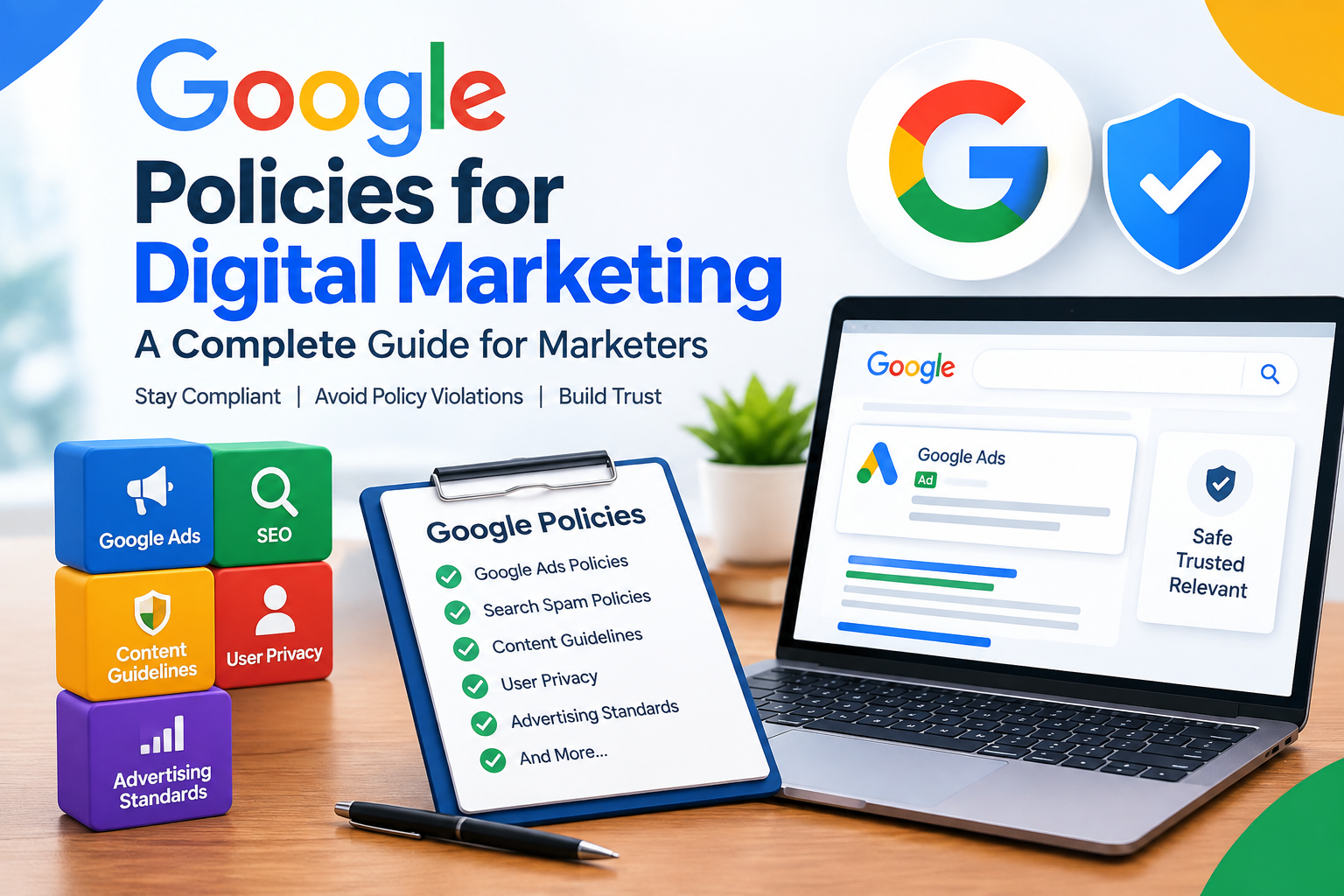
  • Google Policies for Digital Marketing: A Complete Guide for Marketers

    Google Policies for Digital Marketing: A Complete Guide for Marketers

    Digital marketing is one of the most effective ways for businesses to reach potential customers online. However, when using Google Ads, Google Search, remarketing, SEO, and other Google platforms, marketers need to follow Google’s policies and guidelines.

    Google’s policies are designed to create a safe, transparent, and trustworthy online advertising and search environment. Breaking these policies can result in ads being disapproved, campaigns being restricted, websites losing visibility in search results, or, in serious cases, an advertising account being suspended.

    In this guide, we will explain the most important Google policies that digital marketers should understand.

    1. Google Ads Advertising Policies

    Google Ads policies cover the advertisements businesses create and the websites or landing pages users reach after clicking an ad.

    Google broadly divides its advertising policies into four areas:

    • Prohibited content
    • Prohibited practices
    • Restricted content and features
    • Editorial and technical requirements

    These rules help ensure that advertisements are useful, clear, safe, and relevant to users.

    2. Prohibited Content

    Some products, services, and types of content cannot be advertised through Google Ads.

    Examples can include counterfeit goods, certain dangerous products or services, products that enable dishonest behavior, and inappropriate content.

    For example, Google does not allow advertising that promotes certain dangerous products or services, hacking-related services designed to enable dishonest behavior, or counterfeit products.

    Digital marketers should therefore check Google’s policies before creating campaigns for a particular industry.

    3. Misleading Advertising Is Not Allowed

    One of the most important Google policies for marketers is the prohibition against misleading users.

    Advertisements should accurately describe the product or service being promoted. Marketers should not hide important information, create false impressions, or misrepresent their business.

    For example, an advertiser should not pretend to be affiliated with another company or government organization when no such relationship exists.

    4. Avoid False or Unrealistic Claims

    Digital marketers should avoid promising results that cannot reasonably be guaranteed.

    For example, a marketing agency should be careful about statements such as:

    • “Guaranteed #1 position on Google”
    • “Guaranteed 1 million visitors”
    • “Guaranteed sales in 7 days”
    • “Guaranteed Google Ads approval”

    Google’s policies specifically prohibit false, misleading, or unrealistic claims, including guarantees of top placement in Google Ads or organic Google Search results.

    Instead, marketers should use accurate language and explain that results can vary depending on competition, budget, industry, website quality, audience, and other factors.

    5. Landing Page Quality Matters

    Google doesn’t only evaluate the advertisement itself. The destination or landing page is also important.

    The landing page should be relevant to the advertisement and provide users with the information promised in the ad.

    For example, if an advertisement promotes a particular service, users should be able to easily find that service after clicking the advertisement.

    Google’s policies also address unclear relevance, unavailable offers, misleading design, and other issues involving advertisements and destinations.

    6. Transparent Pricing

    Digital marketers should make pricing information clear when it is relevant to the offer.

    Businesses should not use pricing practices that create a false or misleading impression about what customers will actually pay.

    Important costs, fees, payment conditions, and other material information should not be deliberately hidden from users.

    7. Data Collection and User Privacy

    Digital marketing often involves collecting information such as names, email addresses, phone numbers, and information from website visitors.

    Google requires advertisers to handle user information responsibly. Data should not be collected or used in ways that violate Google’s policies.

    Marketers using personalized advertising should also understand Google’s requirements for first-party and third-party data and restrictions involving sensitive interest categories.

    8. Personalized Advertising

    Remarketing and audience targeting can be powerful digital marketing techniques, but they are subject to additional rules.

    Google places restrictions on personalized advertising involving sensitive interest categories. Advertisers should review the current targeting requirements before creating campaigns that use personalized targeting.

    Google also updated and clarified its personalized advertising policies during 2026, so marketers should regularly check the latest policy documentation.

    9. SEO and Google Search Spam Policies

    Google policies are not limited to paid advertising.

    SEO professionals should also understand Google’s Search spam policies.

    Google considers spam to include techniques intended to deceive users or manipulate its Search systems to obtain better rankings. Websites that violate Search spam policies may receive lower visibility or may not appear in search results at all.

    This means SEO professionals should focus on creating useful content and improving the overall user experience rather than trying to manipulate Google’s ranking systems.

    10. Avoid Manipulative SEO Techniques

    A digital marketer should avoid techniques designed primarily to manipulate search rankings.

    Examples of risky practices can include:

    • Artificially generating website traffic
    • Manipulating search rankings
    • Using deceptive techniques to hide the true destination of users
    • Creating content primarily for search-engine manipulation
    • Using prohibited spam techniques

    Google’s Search spam policies are intended to protect the quality of search results and users’ search experience.

    11. Google Business and Digital Marketing

    Businesses also need to provide accurate information when promoting their services through Google’s ecosystem.

    Digital marketers should ensure that business information, contact details, services, and claims are accurate and consistent.

    Marketers should never falsely claim to be Google or falsely represent themselves as having a special relationship, endorsement, or authorization from Google.

    12. What Happens When Google Policies Are Violated?

    Depending on the type and severity of a violation, Google may take different actions.

    Possible consequences can include:

    • Advertisement disapproval
    • Restrictions on advertising
    • Removal of content
    • Reduced visibility in Google Search
    • Account suspension in serious cases

    Google states that serious violations of certain advertising policies can result in account suspension without prior warning. Other policy violations may involve warnings before suspension.

    13. How Digital Marketers Can Stay Compliant

    To reduce the risk of policy problems, digital marketers should follow these practices:

    Be Honest

    Always provide accurate information about your company, products, services, prices, and qualifications.

    Avoid Guaranteed Results

    Do not promise rankings, sales, traffic, or advertising results that cannot reasonably be guaranteed.

    Create Relevant Landing Pages

    Make sure the landing page matches the advertisement and provides the information users expect.

    Protect User Data

    Collect and use customer information responsibly and follow applicable privacy and data-protection requirements.

    Review Google Policies Regularly

    Google updates and clarifies its policies over time. Marketers should check the official Google Ads and Google Search documentation before launching important campaigns.

    Conclusion

    Understanding Google policies is an essential part of professional digital marketing. Whether you are working with Google Ads, SEO, remarketing, or website promotion, following Google’s guidelines can help you build trustworthy campaigns and provide a better experience for users.

    The key principles are simple: be honest, avoid misleading claims, protect user information, create relevant landing pages, and follow Google’s advertising and Search policies.

    Because Google policies can change, digital marketers should always consult the latest official Google documentation before launching or modifying campaigns.

    Official Resources:

    Google Ads Advertising Policies: Google Ads Advertising Policies

    Google Search Spam Policies: Google Search Spam Policies

    Google Ads Policies Center: Google Advertising Policies Center

  • Semantic Retrieval Engineering for SEO: Optimizing Content for Vector-Based Search Systems

    Semantic Retrieval Engineering for SEO: Optimizing Content for Vector-Based Search Systems

    Introduction

    Traditional SEO often focused on matching a target keyword with a page. Modern search is considerably more sophisticated. Search systems can interpret concepts, relationships, entities and user intent rather than depending exclusively on exact keyword matches.

    Google’s current guidance for generative AI search emphasizes that AI features are built on Google’s existing Search ranking and quality systems. It also highlights query fan-out, where a complex query can lead to multiple related searches to find information from different sources.

    This creates a new technical opportunity: semantic retrieval engineering.

    What Is Semantic Retrieval?

    Semantic retrieval attempts to find information based on meaning rather than exact wording.

    For example, a user searching:

    “How can a small company get customers online?”

    may be looking for information about:

    • SEO
    • paid advertising
    • conversion optimization
    • social media
    • local search
    • content marketing

    A technically strong website should make these relationships clear.

    Build Topic-Level Content Architecture

    Instead of creating dozens of pages targeting tiny keyword variations, build a structured information architecture.

    For example:

    Digital Marketing
    → SEO
    → Technical SEO
    → Local SEO
    → Content Marketing
    → PPC
    → Conversion Optimization

    Each section should contain authoritative pages connected through meaningful internal links.

    Optimize for Concepts, Not Keyword Density

    Advanced SEO should focus on:

    • entities
    • relationships
    • terminology
    • supporting concepts
    • user questions
    • original evidence
    • contextual internal links

    Avoid artificially inserting keywords into every paragraph.

    Google explicitly states that there is no requirement to rewrite content specifically for AI systems or create artificially short “chunks” for AI.

    Build Retrieval-Friendly Pages

    A technically strong page should have:

    1. A clear primary topic
    2. Descriptive headings
    3. Strong contextual relationships
    4. Supporting evidence
    5. Relevant internal links
    6. Structured information where appropriate
    7. Crawlable and indexable HTML

    Structured data can help search engines understand page information, although it is not a special requirement for appearing in generative AI features.

    Final Takeaway

    The future of SEO is not about repeating keywords. It is about making your website understandable as an information system.

    A professional digital marketing company can help businesses build semantic content architectures that improve discoverability across traditional search and emerging AI search experiences.

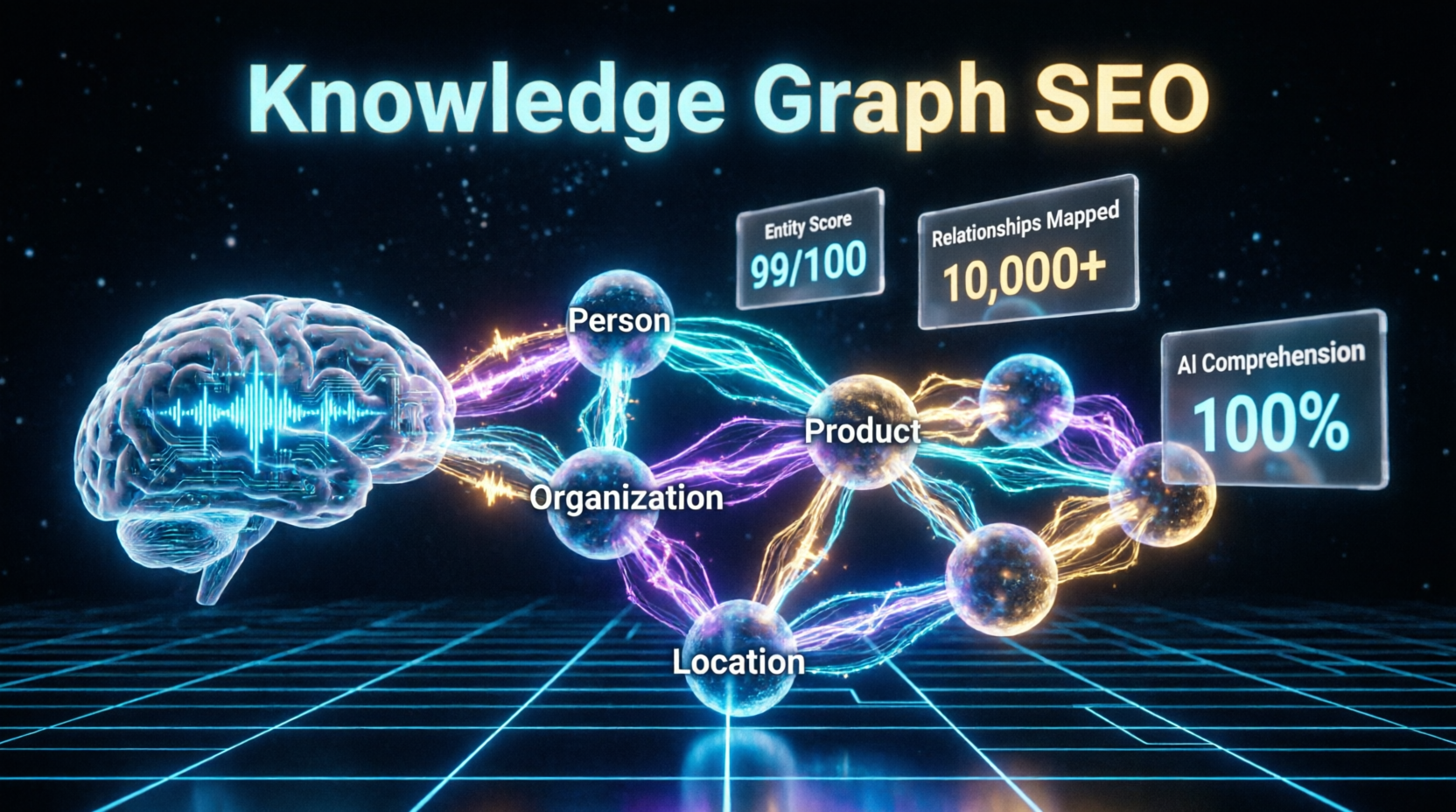
  • Knowledge Graph SEO: Building Entity Relationships for Search Engines and AI Systems

    Knowledge Graph SEO: Building Entity Relationships for Search Engines and AI Systems

    Introduction

    A website is no longer just a collection of pages.

    For advanced search systems, it can be viewed as a network of:

    Entities → Relationships → Attributes → Evidence → Content

    This makes entity architecture an important part of advanced technical SEO.

    What Is an Entity?

    An entity is a clearly identifiable thing such as:

    • a company
    • person
    • product
    • service
    • location
    • organization
    • software
    • topic

    For a digital marketing company, important entities might include the company itself, SEO, PPC, technical SEO, content marketing, Google Ads and specific locations served.

    Build a Consistent Entity Identity

    Your company’s:

    • name
    • website
    • logo
    • business description
    • services
    • locations
    • social profiles
    • author information

    should communicate a consistent identity.

    Structured data can help Google understand information about organizations and other entities. Google supports structured data for organization information and other search features.

    Create Entity Relationships

    Instead of simply publishing:

    SEO Services

    connect the topic to meaningful supporting concepts:

    Company → provides → SEO Services

    SEO Services → includes → Technical SEO

    Technical SEO → improves → Crawling and Indexing

    Local SEO → supports → Local Business Visibility

    These relationships should be reflected naturally through your content and internal linking.

    Use Structured Data Carefully

    JSON-LD can provide machine-readable information about supported entities and page types.

    However, structured data must accurately represent visible page content and follow Google’s guidelines. Misleading or hidden structured data can make a page ineligible for rich results.

    Entity Consistency Across the Web

    Your entity signals should also be consistent across legitimate external sources.

    Examples include:

    • business directories
    • professional profiles
    • industry publications
    • company profiles
    • authoritative mentions

    The goal is not to manufacture mentions. Google specifically warns against focusing on inauthentic mentions as an AI Search strategy.

    Final Takeaway

    Advanced SEO increasingly requires businesses to think beyond keywords.

    Your website should clearly communicate:

    Who you are → what you offer → who you serve → where you operate → what expertise you have → how your services relate to broader topics.

    That creates a stronger foundation for modern search understanding.

  • Enterprise SEO Automation: Building an AI-Powered Technical SEO Operations System

    Enterprise SEO Automation: Building an AI-Powered Technical SEO Operations System

    Introduction

    Enterprise SEO cannot depend entirely on spreadsheets and manual audits.

    Large organizations need systems that continuously answer:

    • What changed?
    • Where did it change?
    • How many URLs are affected?
    • Is organic traffic affected?
    • Which issue should be fixed first?
    • Did the deployment create an SEO problem?

    The Enterprise SEO Stack

    A mature system can combine:

    Crawler

    → technical URL information

    Search Console

    → search visibility

    Analytics

    → users and conversions

    Server Logs

    → crawler behavior

    CMS

    → content changes

    Deployment System

    → code changes

    AI Analysis

    → issue classification and prioritization

    Automate Technical Audits

    Automation can detect:

    • broken links
    • redirect chains
    • canonical inconsistencies
    • noindex problems
    • sitemap anomalies
    • structured-data errors
    • duplicate content patterns
    • sudden indexing changes
    • server errors

    Google recommends using tools such as Search Console and URL Inspection for technical investigation, while structured data should also be monitored after website changes.

    Add AI-Assisted Prioritization

    Not every technical issue deserves the same priority.

    Consider:

    Issue A

    100 broken URLs with almost no traffic.

    Issue B

    500 server errors affecting pages generating 40% of organic revenue.

    An intelligent system should prioritize Issue B.

    Create SEO Change Detection

    Every major deployment can automatically compare:

    Before vs After

    • indexability
    • canonicals
    • internal links
    • metadata
    • structured data
    • response codes
    • page rendering
    • organic performance

    This creates an SEO quality-control layer inside the development lifecycle.

    Human Review Still Matters

    AI should assist SEO professionals rather than blindly making every change.

    For example:

    AI detects anomaly → SEO specialist investigates → developer fixes → automated system validates

    This is safer than automatically changing thousands of URLs.

    Build an SEO Command Center

    A mature enterprise SEO dashboard could display:

    Technical Health

    Crawl Health

    Indexation

    Organic Visibility

    AI Search Visibility

    Revenue Impact

    Open SEO Incidents

    This transforms SEO into an operational discipline.

    Final Takeaway

    Enterprise SEO is moving toward continuous systems rather than periodic audits.

    The strongest architecture combines:

    Data + Automation + Technical SEO + AI Assistance + Human Expertise

    Google’s 2026 Search guidance continues to emphasize foundational SEO and valuable content even as AI Search experiences evolve.

  • Search Retrieval Architecture: How Modern Search Systems Discover, Rank and Retrieve Web Content

    Search Retrieval Architecture: How Modern Search Systems Discover, Rank and Retrieve Web Content

    Introduction

    To optimize advanced websites, marketers need to understand the search pipeline.

    At a simplified level:

    Crawling → Processing → Indexing → Retrieval → Ranking → Search Experience

    Google describes Search as an automated system where crawlers discover pages, content is processed and pages may become part of the Search index.

    Stage 1: Discovery

    Search engines need ways to discover URLs.

    Discovery can come through:

    • internal links
    • external links
    • sitemaps
    • previously known URLs

    A technically isolated page may be harder to discover efficiently.

    Stage 2: Processing

    The search system processes page resources and content.

    For JavaScript websites, rendering becomes particularly important because content can depend on browser-side execution. Google provides dedicated JavaScript SEO guidance for this reason.

    Stage 3: Indexing

    A URL being crawled does not automatically guarantee that it will appear in Search.

    Google explicitly states that it does not guarantee that every page will be crawled, indexed or served, even when a website follows Search Essentials.

    Stage 4: Retrieval

    For a query, search systems identify potentially relevant documents.

    Modern AI Search can expand complex queries through related searches. Google calls this query fan-out.

    This makes topical depth and clear relationships increasingly important.

    Stage 5: Ranking

    Candidate documents are evaluated using Google’s ranking systems.

    This is why technical SEO alone cannot guarantee rankings.

    Technical accessibility creates eligibility and discoverability; content quality, relevance and other signals influence performance.

    Stage 6: Search Experience

    The final result may include:

    • traditional results
    • images
    • videos
    • rich results
    • AI Overviews
    • AI Mode

    Google launched dedicated Search Console reporting for visibility from generative AI features in June 2026.

    Final Takeaway

    Advanced SEO requires understanding the entire retrieval pipeline rather than optimizing isolated page elements.

    A successful website should be:

    Discoverable → Crawlable → Renderable → Indexable → Understandable → Relevant → Valuable

  • Information Gain SEO: Engineering Content That Adds New Knowledge Instead of Repeating the Web

    Information Gain SEO: Engineering Content That Adds New Knowledge Instead of Repeating the Web

    Introduction

    Publishing another article that says the same thing as thousands of existing pages is becoming less valuable.

    The stronger strategy is:

    Don’t just summarize existing information. Add something new.

    Google’s current guidance emphasizes unique, valuable, non-commodity content and recommends focusing on helpful, reliable, people-first information.

    What Creates Information Gain?

    Examples include:

    • original research
    • customer surveys
    • proprietary datasets
    • experiments
    • case studies
    • expert interviews
    • original screenshots
    • industry benchmarks
    • unique calculations
    • firsthand experience

    Example

    Instead of publishing:

    “What Is SEO?”

    create:

    “We Analyzed 500 Local Business Websites: The Technical SEO Issues Most Often Associated With Poor Visibility.”

    The second concept provides original evidence.

    AI Makes This More Important

    Generative AI can produce generic explanations quickly.

    That means businesses should compete through information AI cannot easily reproduce from common knowledge.

    A digital marketing company could publish:

    “Our 2026 Technical SEO Audit Benchmark: 1,000 Issues Categorized Across Client Websites.”

    That creates a stronger content asset.

    Build Evidence Layers

    Advanced content can contain:

    Claim

    ↓
    Evidence

    ↓
    Methodology

    ↓
    Interpretation

    ↓
    Practical recommendation

    This creates content with depth rather than superficial keyword coverage.

    Avoid Scaled Low-Value Publishing

    Google warns that generating many pages with AI without adding value can violate its spam policies concerning scaled content abuse.

    AI can assist with research, structure and analysis, but the final content should contribute real value.

    Final Takeaway

    The question for every advanced SEO content project should be:

    “What does this page provide that users cannot easily get from ten other pages?”

    If the answer is unclear, the content probably needs more original value.

  • AI Agent Optimization: Designing Websites for Autonomous Search and Browser Agents

    AI Agent Optimization: Designing Websites for Autonomous Search and Browser Agents

    Introduction

    The next search interface may not always be a list of ten blue links.

    Users can increasingly interact with AI-powered search experiences that retrieve information from multiple sources.

    Google’s 2026 documentation describes AI Search experiences such as AI Overviews and AI Mode and explains that these systems rely on Search’s existing ranking and quality systems.

    This creates a broader technical question:

    Can an AI system reliably understand and navigate your website?

    Build Machine-Understandable Pages

    Important information should be available through accessible HTML.

    Avoid making critical information available only through:

    • inaccessible interactive elements
    • images without text alternatives
    • complex JavaScript states
    • hidden navigation
    • authentication barriers where public access is expected

    Design Clear Actions

    For transactional websites, clearly identify actions such as:

    • contact
    • request quote
    • book consultation
    • compare services
    • view pricing
    • download information

    Clear architecture helps both users and software systems understand what each page does.

    Use Structured Data Where Appropriate

    Structured data can help search engines understand supported content types.

    However, Google does not require special AI markup for generative AI visibility. Its current guidance specifically says there is no special structured-data requirement for AI Search.

    Therefore, businesses should avoid chasing unofficial “AI markup hacks.”

    Build Reliable Information

    AI systems need trustworthy information to retrieve.

    Your website should clearly communicate:

    • company identity
    • service information
    • expertise
    • contact details
    • policies
    • authorship where relevant
    • evidence supporting important claims

    Final Takeaway

    AI agent optimization is not about manipulating AI systems.

    It is about building websites that are:

    Accessible + crawlable + understandable + structured + trustworthy + useful.

    Those principles also support traditional SEO.

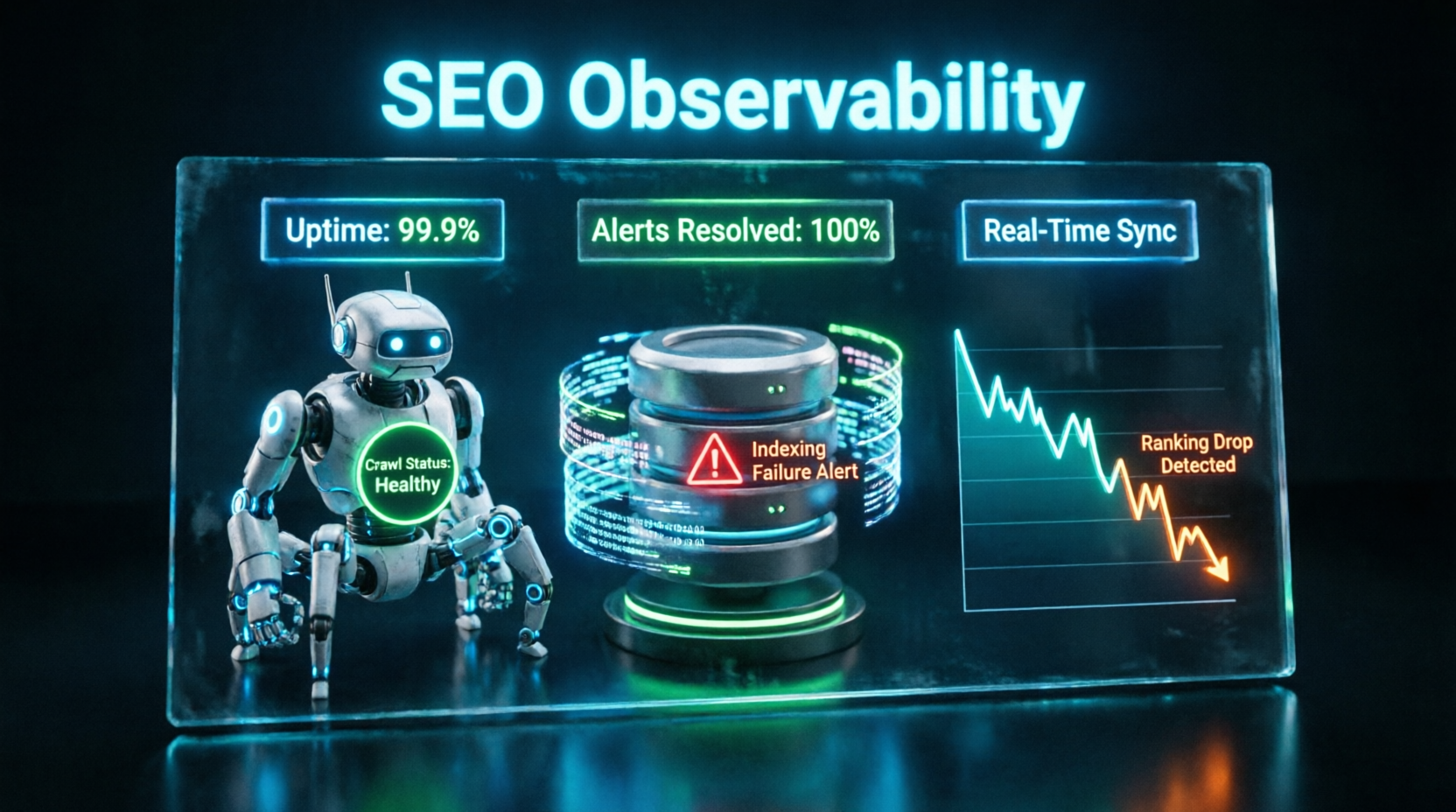
  • SEO Observability: Building Real-Time Monitoring for Crawling, Indexing and Ranking Failures

    SEO Observability: Building Real-Time Monitoring for Crawling, Indexing and Ranking Failures

    Introduction

    Imagine your website suddenly returns:

    500 errors on 30% of product pages.

    A traditional SEO process may discover the problem after traffic falls.

    An observable SEO system can detect the anomaly immediately.

    What Is SEO Observability?

    SEO observability means continuously monitoring the technical signals that influence search accessibility and performance.

    Important monitoring layers include:

    Infrastructure

    • uptime
    • server errors
    • response time

    Crawling

    • bot activity
    • crawl patterns
    • status codes

    Indexing

    • indexed URLs
    • excluded URLs
    • canonical changes

    Search Performance

    • impressions
    • clicks
    • CTR
    • visibility

    Google’s Search Console reporting can help site owners monitor search performance, including dedicated reporting for generative AI visibility introduced in 2026.

    Build SEO Alerts

    Examples:

    Alert: Organic clicks decreased 30%

    Alert: 404 responses increased 400%

    Alert: Canonical mismatch detected

    Alert: Indexable URLs decreased

    Alert: Robots.txt changed

    These alerts can be routed to technical teams.

    Use Baselines

    A simple threshold is not always enough.

    For example, traffic naturally changes by:

    • weekday
    • season
    • holidays
    • promotions
    • market

    A smarter monitoring system compares current performance with historical baselines.

    Connect Technical and Business Data

    The most valuable alert isn’t:

    “500 error detected.”

    It is:

    “500 errors detected on 8,500 product URLs representing 34% of organic revenue.”

    This changes prioritization immediately.

    SEO Disaster Prevention

    Observability can also monitor deployment changes.

    Before and after a website release, compare:

    • indexability
    • canonicals
    • robots directives
    • internal links
    • structured data
    • response codes

    This creates an SEO safety layer around development.

    Final Takeaway

    SEO should not operate like a monthly inspection.

    For large businesses, SEO observability can transform technical SEO from reactive troubleshooting into continuous operational monitoring.