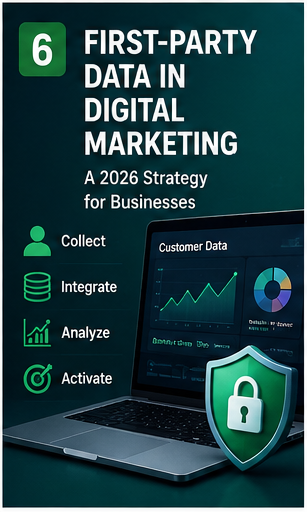
Introduction
Digital marketing is increasingly moving toward data that businesses collect directly from their customers.
This is known as first-party data.
Examples include:
- Email subscribers
- Customer purchases
- Website interactions
- CRM records
- Form submissions
- Loyalty-program activity
- Customer preferences
Why First-Party Data Matters
Direct customer data can help businesses understand audiences without depending entirely on external targeting systems.
It can support:
- Personalization
- Customer segmentation
- Email marketing
- Retargeting strategies
- Customer retention
- Predictive analysis
Industry analysis in 2026 continues to identify first-party data as an important response to changing privacy and tracking conditions.
How to Build a First-Party Data Strategy
Create useful conversion points
Offer valuable resources, newsletters, consultations, or tools that encourage voluntary sign-ups.
Connect data systems
CRM, website analytics, email platforms, and sales systems should work together where appropriate.
Segment customers
Not every customer has the same needs.
Segment audiences according to meaningful business criteria.
Respect consent
Data collection should be transparent and aligned with applicable privacy requirements.
First-Party Data and AI
AI can help marketers identify patterns within properly collected and governed data.
For example, businesses can analyze:
- Customer behavior
- Purchase history
- Lead quality
- Campaign performance
- Engagement patterns
Conclusion
The future of data-driven marketing is not simply about collecting more information.
It is about collecting useful information responsibly and turning it into better customer experiences.
A digital marketing company can help businesses build an integrated strategy connecting data, CRM, advertising, analytics, and conversion optimization.